

A visually spectacular motion picture with a killer score that’s the storytelling equivalent of a bridge to nowhere. Denis Villeneuve’s DUNE: PART TWO is perhaps the most movie you will watch this year, as there is such a prolific amount of a variety of subplots and conflict that all converge in a single intersection to create figurative gridlock on the highway of cinematic storytelling. There is no argument, Dune: Part Two delivers cinematic scale and scope, but the grand potential of this modern-era epic is hampered by poor screenwriting.
Paul Atreides unites with Chani and the Fremen while seeking revenge against the conspirators who destroyed his family. Facing a choice between the love of his life and the fate of the universe, he must prevent a terrible future only he can foresee.
Word to the wise, be sure to rewatch the first movie before watching Part 2, because you will likely feel as lost as I was in trying to follow the central characters and main plot. With so much going on, the plot map is all over the place; in fact, one can hardly call it a map, as it’s lacking any meaningful direction. Think of an entire limited run series, jampacked into a single movie. I spent most of my time feeling completely lost in attempting to follow the outside/action plot. Fortunately, there is more action in this second installment compared to Dune: Part 1, but, ironically, more action makes for an even less engaging movie. And since the first part was sleep inducing enough, I was shocked it was possible to achieve twice.
The real star of this movie isn’t one of the A or B-listers, it isn’t the director or writer, but it’s Hans Zimmer. Zimmer’s score is mesmerizing and immersive. It truly feels like a character in and of itself. There is a beautiful otherworldly quality about his score that draws you in (too bad there’s nothing of great substance into which to be drawn) to the Duniverse. An extension of the environment is how the score plays throughout the movie.
Not even the movie’s performative dimension is sufficiently engaging, save Austin Butler, his deplorable character of Feyd-Rautha is the most entertaining out of the ensemble. Except for a few moments here or there, the performative dimension is completely uneven as some actors over-act, others under-act, some are clearly phoning-in, whilst others are visibly bored with their character. Character development, or lack thereof, is another storytelling process that is rushed in some places and creeping along in others. Ultimately, there lacks any characters with whom the audience can empathize or with which to connect as there isn’t a single likable character in the whole Duniverse. But perhaps that’s the idea: sometimes in the real world, it can be difficult to identify the most likable side in a conflict, and that is what we have here. One of life’s complexities.
During the second act (and I use that term loosely as it feels like one big second act) of the movie, there is a sequence of scenes that take place on a grayscale planet–and it looks gorgeous!!! This was probably my favorite part of the movie because it felt like an old-school gladiator-like epic in a classic sword and sandle picture.
If there were miniatures used in the film, I had difficulty identifying them. Nearly everything that wasn’t a sand dune felt like it was computer-generated. When the special/visual effects, ships, and palaces feel more computer than practical, it takes me out of the movie. That’s not to say the CGI isn’t high fidelity–it certainly is. Speaking to the quality of Dune: Part Two‘s CGI, it is exceptionally well-made. But the problem is, and yes, I know I’ve said it a hundred times, you cannot replace the way real light bounces off real objects into the camera lens. Had this movie leaned into practical effects, models, and sets more, then used the CGI for extreme wide shots or to fill in what couldn’t be made through craftsmanship, then it may have helped to compensate for the poor writing.
It’s well-known that Frank Herbert’s novel was a response to the global powers and conflict during the Cold War. That thematic idea is carried into David Lynch’s original Dune in 1984 and even in the SyFy Channel limited run series from 2000. Even though there are elements of the Cold War commentary in this adaptation of Dune, the socio-political themes and critiques are far less cohesive. While I greatly appreciate the ability to read a film differently over the years and identify what a film’s message or commentary could mean at that given time, the ability to be read differently over time does not negate the need for coherency, cohesion, and consistency. What Villeneuve and Jon Spähts’ movie is missing is consistency in representation in their interpretation of the socio-political commentary they find is more important or relevant to spotlight today.
On a side note, one of the parts of the movie that I did find surprising was Rebecca Furguson’s character’s (I don’t even remember her name) unborn baby being treated like a person. There is even a scene in which it is all but acknowledged that a human exists within her character’s womb. Certainly caught me off-guard, because the manner in which this part of the movie is presented challenges the dominant ideology so often found in media and pop culture today.
If you plan to watch it, definitely watch it in cinemas in a premium format such as Dolby. I must say, I am glad I screened it in Dolby because the score, sound design, and the grand scale is what I enjoyed most.
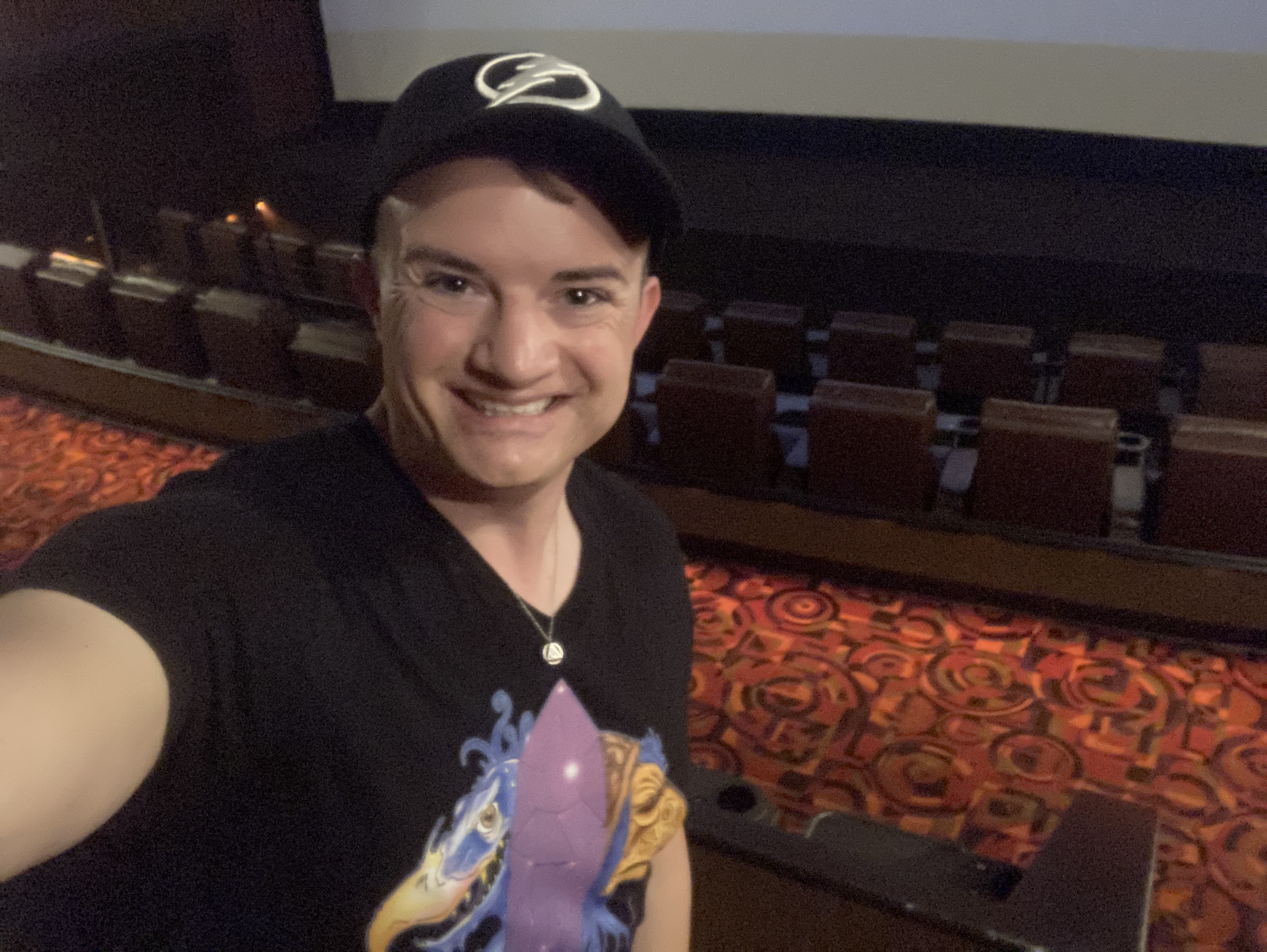
Ryan teaches Film Studies and Screenwriting at the University of Tampa and is a member of the Critics Association of Central Florida and Indie Film Critics of America. If you like this article, check out the others and FOLLOW this blog! Interested in Ryan making a guest appearance on your podcast or contributing to your website? Send him a DM on Twitter. If you’re ever in Tampa or Orlando, feel free to catch a movie with him.


 R.L. Terry ReelView