Deliver Us from Evil

Deliver_Us_From_Evil_3Once again, this year boasts another excellently produced and directed supernatural-supense-crime drama-horror film. It’s very seldom (except for this year, it seems) that a suspense/horror film receives high praise from many critics and fans. Often, with horror, and related films, the fans thoroughly enjoy them while the critics (like yours truly) poke holes and criticize its glamor of blood, gore, poorly written plots, etc. But, this movie has surprises around every corner and great acting to accompany the plot, cinematography, score, and excellent direction.

At first glance, it looks like just another cliché supernatural horror movie (of course, it doesn’t help that it comes from the same director as Sinister). Certainly, I went expecting that I would be accosted with a horror movie I would regret spending money on; but, to my pleasant surprise, it was remarkable. Even for those in the evangelical or catholic community who may at first glance dismiss this as another cookie-cutter gore-glorification and misrepresentative of the spiritual realm, it is a movie they can enjoy as well. So seldom can a movie actually effectively integrate several genres and be pieced together as perfectly as a puzzle, but this movie proves it’s possible. It’s truly a well executed supernatural-suspense-crime drama-horror film.

The movie is based on the real life events of Ralph Sarchie, a New York cop who meets a Castilian/Hungarian renegade priest, Mendoza, when he is pulled into a case — a case which the priest convinces him, against the officer’s religious beliefs, is demonically related. Together, they work to solve the case and combat the paranormal forces working against them as New York slowly descends into chaos. Sarchie embarks on a journey that will test his physical, mental, and spiritual strength in this roller coaster of a spiritual journey into the darkness where evil is looking for gateways to terrorize anyone it deems a threat.

From the sand hills of Iraq to the bustling and grimy streets of the Bronx, Deliver Us from Evil takes the audience on an unforgettable journey. One of the elements of a film, that I am most drawn to, is the element that is grounded in the very writing of the screenplay–character development. Normally, I do not look to this mashup of genres to provide me with a central character and central antagonist (opposition to the goal) I can either love or love to hate. But this film does a brilliant job at both visually and in-dialog showcasing the internal journey of Sarchie. Even though his conversion to Christianity was a bit rushed, it was interesting to see a man who fell out of love with the Church return in the most unconventional of ways. Not only does he make a personal spiritual journey, but he also makes a personal/interpersonal journey in regards to the relationship with his wife and daughter. In his body language and spoken words, he is a prime example of how true character development can be successfully and effective woven into a horror story.

If this film were to be compared to any others, it would most closely share key elements with SevenExorcism of Emily Rose, and the original The Exorcist. It’s by no means a copy cat or is trying to be any other film. It truly stands on its own as a beacon of hope for supernatural-suspense-horror-crime dramas. Whether you are interested in the movie for the crime mystery or a fan of Director Scott Derrickson’s penchant for horror, you will find two hours of enjoyment in this film. The movie is rated R mostly for language and some gore; but is rather tame compared to Sinister. Prepare yourself for an exciting journey into the Summer blockbuster season.

Edge of Tomorrow

Edge of Tomorrow PosterI am a little behind on this one, but I am definitely glad I made the time to  watch it over the weekend. Edge of Tomorrow is a new take on the “groundhog day” plot, made popular by the incomparable Bill Murray in the classic Groundhog Day. It’s an all-around good action science-fiction movie to usher in the summer blockbuster season. And, although one may expect the movie to be predictable, as these genre of movies go, it was equipped with some twists and turns that were unexpected. Just when you were ready to give up on the summer blockbuster season, this movie swoops in to save the day. By satisfying genre requirements and delivering a star-driven narrative that’s smart, sexy, and surprisingly good, Edge of Tomorrow is definitely leading the pack of movies to hit theaters this summer holiday season.

This epic action movie unfolds in a near future in which an alien race has hit the Earth in an unrelenting assault, unbeatable by any military unit in the world. Major William Cage (Tom Cruise) is an officer who has never seen a day of combat when he is unceremoniously dropped into what amounts to a suicide mission. Killed within minutes, Cage now finds himself inexplicably thrown into a time loop-forcing him to live out the same brutal combat over and over, fighting and dying again…and again. But with each battle, Cage becomes able to engage the adversaries with increasing skill, alongside Special Forces warrior Rita Vrataski (Emily Blunt). And, as Cage and Rita take the fight to the aliens, each repeated encounter gets them one step closer to defeating the enemy.

The most surprising thing about this movie is that you would expect it to be another massive budgeted Tom Cruise sci-fi action movie; but, with Director Doug Liman at the helm, you get a well-rounded cinema experience fun for the whole family. Of course, that is what one should expect given that Liman directed the successful Bourne Identity and Mr. and Mrs. Smith. With the aid of the excellent performances of Tom Cruise and Emily Blunt, the movie manages to show us events that we expect to be one way, and we get it from a whole other direction.

The movie has a very fast-moving plot, and with many elements of the movie being a mashup of War of the Worlds and Groundhog Day, there are times that the viewer does not know what’s going on or why. The unforeseen complexities push up against the corners of the mind and cause it to short-circuit sometimes. However, this plot is not nearly as complex or confusing as Inception.

Keeping us going at those moments, and all others, is Liman’s confidence and intuition as a director–his filmmaking bravado, if you will. Working with cinematographer Dion Beebe, editor James Herbert and visual effects supervisor Nick Davis, Liman is so adroit at layering in action and tension that we are swept away by his brisk cinematic tide even when we lose track of where it’s taking us.

Aside from the brilliant direction from Liman, the biggest key to the film’s success is the spot-on performance from Cruise, who gets to play one of the rare blockbuster protagonists whose character is allowed to believably transform right in front of our eyes. Believe it or not, this sci-fi action movie demonstrates that character development in this genre is possible! The continual repetition may sound boring, but Liman and his team have worked out multiple permutations and iterations to get us into each new recurrence, and both stars are strong actors fully committed to their roles.

The Fault in Our Stars

Fault in Our Stars PosterEvery once in a while there comes a movie that is simply very well done. It’s not always an Oscar contender or will one day make the AFI best movies of all time list. But, I can honestly say that “The Fault in Our Stars” is a great example of a movie that exceeds genre expectations on all levels. However, not having read the book, I cannot speak to its accuracy. And, for the purposes of this review, I did not want to read up on the book. That way, I can evaluate the movie as a movie. This movie makes an excellent addition to the long-running cannon of doomed star-crossed lovers. From Shakespeare’s “Romeo and Juliet” to James Cameron’s “Titanic,” and now another best-selling novel comes to the cinema.

Natural beauty Shailene Woodley plays Hazel Grace, a young lady who is afflicted with cancer that affects her ability to breath. In order for her mother, played by Jurassic Park’s Laura Dern, to help her daughter not fall into depression–meanwhile Hazel denies being depressed–she takes her to a cancer support group held in a local church. It is there that she meets Augustus (Gus) Waters, played by the heartthrob Ansel Elgort. At first turned off by his cavalier optimism, Hazel begins to fall for his genuine charm and beautiful smile (as does the audience), and their similar attitudes for the disdain of societal convention. Their love story is one that sweeps them off their feet and even tests their ability to love amidst the pain of dealing with cancer. Despite the fact Hazel tries to distance herself from Gus, after he proclaimed his love for her, and attempts to logically reason why they should not be together, Gus still remains by her side. Even when Hazel’s mom refers to the two of them as a couple, Hazel responds “we’re just friends” followed by the quick reply from Gus “she is; I’m not.” Their journey of love will go through many peaks and valleys. It’s difficult to discuss a full summary of the plot without going into some detail that is best left for the movie to reveal.

The characters in “The Fault in Our Stars” were cast brilliantly. If only other movies matched actors with characters as well as this one. Director Josh Boone did an excellent job at crafting this story for the screen. And, his attention to the little things really shows through. Still a newcomer, he he proven himself to be competent and a director that Hollywood should continue to use, especially in romantic dramas. “Beasts of the Southern Wild” cinematographer Ben Richardson shines brilliantly as he truly exhibits excellence in using the lens to visually tell the story through the eyes of the director. As I am not sure how close the screenplay is to the novel, I cannot speak to the accuracy, but the screenplay was written very well and it’s not often that movies have a perfect balance of character development, structure, and pace. Writers Scott Neustadter and Michael J Weber did just that. From start to finish, this movie will have you undoubtedly laughing and crying.

A word of auction to parents of young people that are flocking to see the movie. There is a “G-D” and an “F-bomb” in the movie. And, there is an intimate scene between Gus and Hazel (however, no full nudity can be seen). You may also want to pick a time to attend the cinema at which most young people are in school because you will want to enjoy the movie without the giggles, raging hormones, tears, and comments from the young female audience members–it was very distracting to concentrate on the artistic and technical elements of the movie with the peanut gallery behind me. “The Fault in Our Stars” could easily be this year’s “Perks of Being a Wall Flower” or this generation’s “The Notebook.” If you are looking for a great movie for date night, no matter your age, then this is a solid one to choose.

Ordinarily, I find that I can usually find the areas of improvement in a movie fairly easily. However, this time around, it was much more difficult because the movie was, all around, produced very well. Thankfully, I screened the movie with my fellow filmmaker and friend Director Raul Navedo, and we were able to discuss where the movie could have improved. But, for this, I have to get into some spoilers, so this is your SPOILER WARNING.

There appears to be a real ethical dilemma in one of the scenes toward the end of the second act and prior to the third act. Gus and Hazel have retired to Gus’ hotel room following their truly dynamic day in Amsterdam. As one may expect, just like a scene taken from a Nicholas Sparks novel turned movie, the two of them make passionate love to each other (due to the PG-13 rating and the fact this is a novel for teens and young adults, there is no full nudity). That is not the problem. Where the ethical dilemma comes into play is because earlier in the movie, Gus tells Hazel that the only way we get hurt by other people is by allowing them to hurt us. Furthermore, the following morning after Gus and Hazel lose their virginity to each other, Gus tells Hazel that his cancer is ravaging his body and has been like that for some time, and he has a very short time to live. Gus is clinging to his grand romance delusions, but he is basically lying to Hazel. So, in essence, he just hurt Hazel because she was under the impression that they would be together for a long time, if not forever. Should they have had sex since he knew that he would most likely not be around much longer and should have allowed Hazel to lose her virginity to someone who could have been her life-long love? On one hand, it’s very romantic–like the type of story we would all like to tell. But on the other hand, he was kind of deceptive and risked hurting Hazel. Perhaps it’s up to the reader or audience member to decide if the scene is truly romantic or deceptive.

Maleficent

MaleficentThe biggest weekend draw at the box office was the highly anticipated, overly produced/directed, summer Disney movie Maleficent that centers in and around one of Disney’s most iconic villains, and the only one to ever call upon the powers of Hell. Casting a compelling and rivoting spell, Angelina Jolie plays the sorceress and takes the stage to tell her side of the classic fairy tale Sleeping Beauty. Think of this movie as another in a long lineup of an emerging “post-Wicked” genre of revisionist backstories to classic and timeless tales.

Maleficent is a movie about the untold story of what “really” happened in the classic Grimm fairy tale Sleeping Beauty. Note, any studio or production company can adapt the fairy tale for their own movie because it benefits from having fallen into the public domain. No one has the exclusive rights to produce movies featuring Grimm and Hans-Christian-Andersen fairy tales. Anyway, I digress. Unlike the original Disney classic, this movie opens up with Maleficent as a young enchantress fairy in a magical land outside the kingdom of men. She befriends a young man and forms an intimate relationship with him. But, all is not what it seems (a common theme throughout the movie). He betrays Maleficent and takes the kingdom of men for his own. Like in the original, Maleficent shows up at the christening of Aurora (Briar Rose/Sleeping Beauty) and places a curse upon the child. Until the child’s 16th birthday, she is raised by incognito fairies to protect her from the curse of pricking her finger upon the spindle of a spinning wheel. During these years, Aurora forms a remarkable and unlikely friendship with Maleficent. But, fate has a way of working her magic despite human precautions. And, Aurora falls into her deathlike sleep on the eve of her 16th birthday, just as Maleficent cursed her. As this is a revisionist plot, you will see very little of your Sleeping Beauty left from the original Disney classic. In many ways, this tale surpasses its predecessor. So, prepare yourself for a wild adventure with twists and turns around every corner.

The biggest and most outstanding reason to see this movie is to witness Jolie portray Maleficent with uncanny brilliance! Everything from her smile, to her body language, to the manner in which she delivers her poetic lines is fantastic. Suffice it to say, it is highly unlikely that Disney could have found any other actress that both had the look and feel of the very essence of Maleficent. It is as though the audience is watching Maleficent herself, and not an actress playing her. However, the other actors pale in comparison to Jolie. With the exception of Jolie, the entire move was nearly completely miscast and static. Not that it was expected for other performers in the movie to be on par with Jolie, but they should have at least been able to capture the very essence of their respective characters as well. Now, the young girl who plays Aurora when she is a child was quite good–but that’s it. Disney should re-evaluate how they cast chief and supporting players when featuring such a prominent actress. But, had this movie come out during Oscar season, it would not be surprising to find Jolie nominated for her role as Maleficent.

Sweeping landscapes and brilliant lighting design captured by the lens in epic cinematography…too bad most of the movie exists in After Effects. Seems to me, it would have been easier just to make the entire movie animated. Unfortunately, Maleficent suffers from overly employing the use of CGI in nearly every scene. And not in small ways that help to make an existing landscape more authentic or keeping it to the story, but in big ways. It’s nearly as bad as the planet Pandora. From the moment the movie opens to the time it closes, very few moments go by in which CGI is not featured prominently in the scene. Whatever happened to finding landscapes that essentially have the look the studio is going for, then adding some CGI here and there to create movie magic? Why create an entire world in After Effects when there are plenty of qualifying locations on this planet to choose from? In fact, the graphics in this movie were sub-par compared to even the ones from The Phantom Menace. And the score did not fare so well either. Nearly forgettable is the best way to describe the music from the movie. From a technical perspective, the movie showcases a lack in imagination and a barrage of chaotic imagery backed by a canned orchestral par-for-the-course score.

Unfortunately, first-time director Robert Stromberg has just proven that he needs to stick to focussing on production design and not venture into the director’s chair just yet. Had it not been for Angelina Jolie’s amazing performance as the villain, his movie would have gone by of John Carter or The Lone Ranger. Had he focussed more on the production design, the graphics artist may not have had to design entire landscapes for long shots that were way too lengthy with digital renderings overtaking the silver screen. Not sure whether this movie has too much or too little production design. Depends on your perspective, I suppose. Whatever the case, the movie did not live up to the expectations that come with a Disney movie based on their own material, so to speak.

Whether you enjoy revisionist stories or just want to spend a couple hours on a date or with your family, this movie is a decent way to spend an afternoon or evening. Don’t bother seeing it in 3D, though; standard 4K will suffice. Maleficent puts a new twist on an all-too-familiar story about how we live now, and the importance self-discovery in the here-and-now, as opposed to how we live “once upon a time.” And it does so by suggesting, among other things, that young and older women are not natural rivals or arch-nemicists, even if that is the perpetuated idea of what predominantly exists in fairy tales, Hollywood, Broadway, and the world. And while that may sound sappy, it is precisely the kind of hokey that, story by story, may finally make a real difference in the lives of the young and old alike.

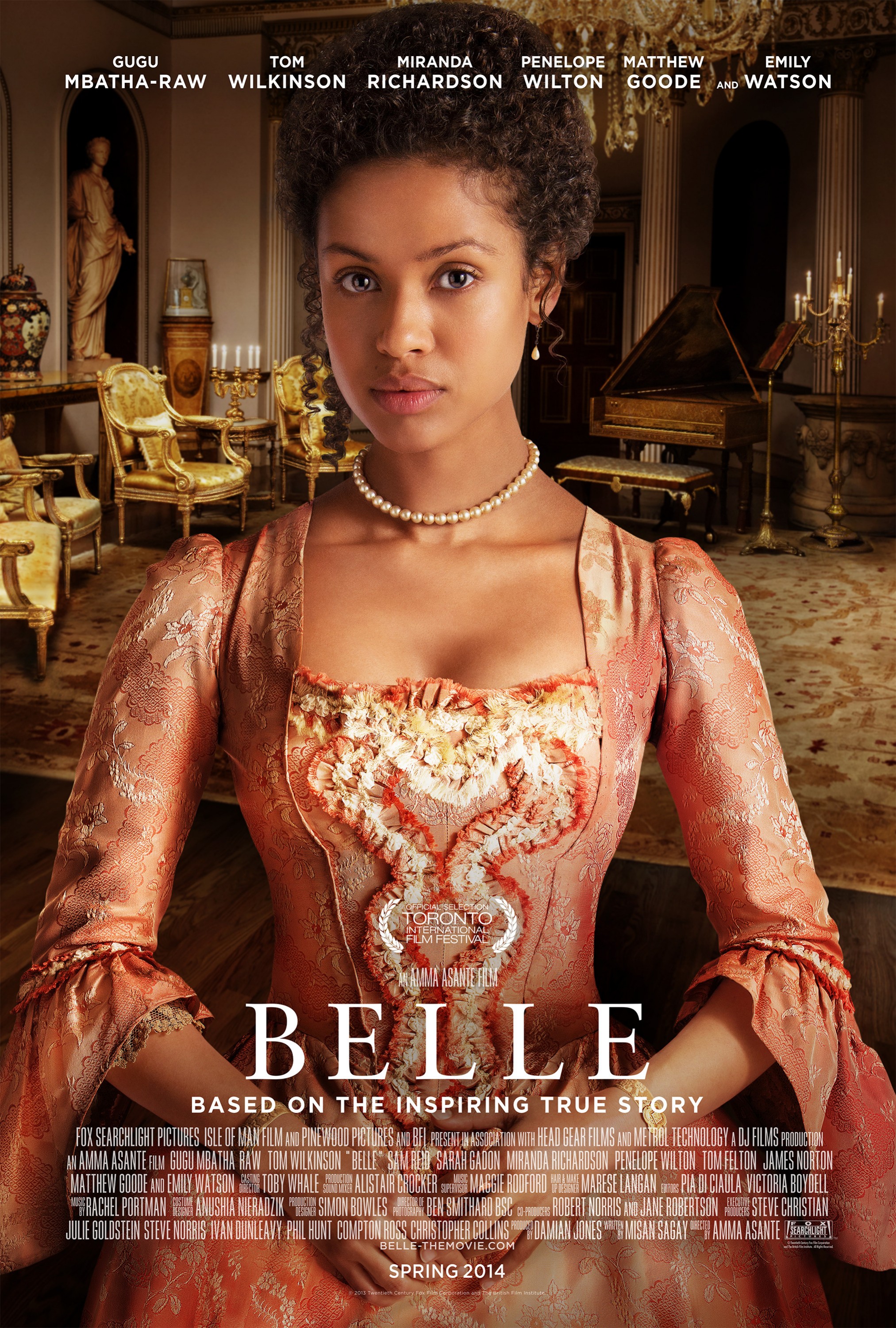
Belle

Belle_MovieDefinitely one of the best movies of the year! If you’re a fan of period romantic-drama, then you must see this movie. This film focusses on an area that is the source for the affluence of Jane Austen’s many characters but is never spoken of. Slavery and the slave trade in England. Like last year’s Lee Daniel’s The Butler, this movie will likely fly under the radar and see not a major win or nomination from motion picture awards. However, it is the first movie of the year that seriously deserves consideration for an accolade or two, including Best Actress, Best Picture, and Best Supporting Actor. Although, the placement of the movie in the calendar year puts it at a disadvantage compared to “Oscar” season, which is typically the Fall and Holiday Season.

Belle is inspired by the true story of Dido Elizabeth Belle Lindsay, the illegitimate mulatto daughter (born of one white and one black parent) of Admiral Sir John Lindsay. Through a series of events, Dido (as she is referred to 99% of the movie) comes to live at Mansfield Park with Lindsay’s uncle and aunt–Lord Chief Justice and Lady Mansfield. Dido’s aristocratic blood heritage affords her many privileges, not even the lower class white citizens of England enjoy as part of their lives; however, her mulatto racial status prevents her from the full life she is entitled to based on the traditions of the noble class social system. While her cousin Elizabeth chases suitors for marriage, Dido is left on the sidelines wondering if she will ever find love. After meeting an idealistic young vicar’s son bent on changing society, he and Dido help shape Lord Mansfield’s role as Lord Chief Justice to end slavery in England.

One of the most astonishing elements of this movie is the impeccable acting from nearly all the cast, and definitely the leads. Not that other elements aren’t worth highlighting first; but, of all the elements that make up a movie especially a period piece, the acting is key to the movie’s overall success at the box office. Playing the title role of Belle, actress Gugu Mbatha-Raw, portrays the character of Dido (Belle) passionately and with breathtaking grace. Her delivery and commitment to character is outstanding. After watching her performance in this movie, this newest actress of color’s career should be followed very closely. Unsure whether it’s director Asante’s ability to coax this powerful performance out of her or her inherent talent, there is no doubt that her screen presence in this film is huge. Although the central character is Dido, the most defined character arc and dynamic performance belongs to Tom Wilkerson in his portrayal of Lord Mansfield. Very few performers in the past have shown they can as effectively navigate the vast array of the character’s conflicted sentiments, as Wilkerson has demonstrated, throughout the course of his character’s transformation in the film. In addition to the stellar performances delivered by Dido and Lord Mansfield, they are supported by a cast equally committed to the authentic preservation of character.

Written by Misan Sigay, this romantic drama transcends the predictable outcome of love triangles often associated with period romance films–much in the vain of an Austen or Bronte adaptation. That thread is supplemented by the recurring themes of liberty and restriction. Director Amma Asante is a newcomer, but proves her ability to effectively craft a beautiful work of cinema in this film. Although some of the shots she chooses are to be expected and even cliche, they are outweighed by the many other shots and scenes she uses and the direction of the characters. But, she serves as a shining reminder that women, like Kathryn Bigelow, can be strong directors and take their movies to new heights. However, while Belle is of undeniable interest in many respects, its overall execution restricts it from being quite as engaging as it wants to and could have very well been. But, can serve as a solid foundation from which Asante can correct her short-comings and improve throughout her bright career.

From the moment the movie opens, it packs way too much into the first few minutes–to the point it feels rushed. However, the quick pace of the opening scenes to pave the way for a pace that will eventually settle into a nice rhythm. If you’re looking for a powerful dynamic period story of love and socio-political intrigue, this is the movie for you. In addition to having a solid story, you also get all the other requisites of a well-executed period drama: a strings-heavy score, lavishly designed costumes, and characters that show the flaws of humans and how they can change.