“Crimson Peak” movie review

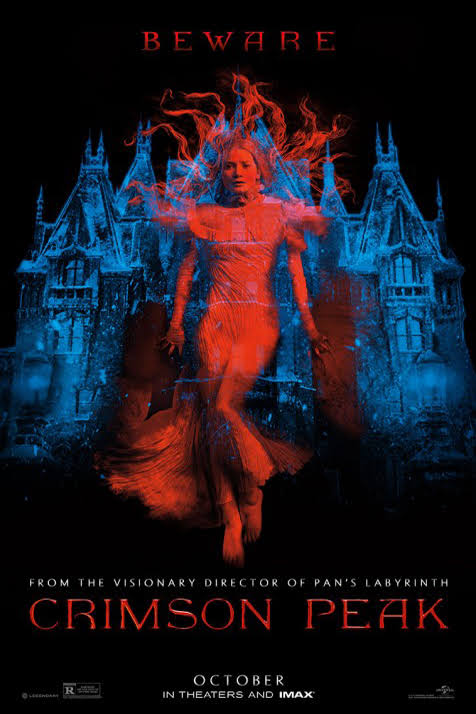
CrimsonPeakNo flowers in this attic. From the studio that pioneered the horror film back in the early days of cinema, comes the truly avant-garde German expressionist film Crimson Peak. Universal and Legendary Pictures provide us with a thought-provoking classically produced horror film that contains prolific imagery that invites interpretation, even from the most veteran of film scholars. Visionary director Guillermo Del Toro lives up to his reputation as a master of the macabre. Although the dialog and acting are weak, the film is beautifully shot and will constantly have you on the edge of your seat in anticipation of what is about to happen. This is definitely one of those horror films that will undoubtedly make its way into film appreciation classes because of the vast material there is to dissect and explore. There is also a very self-reflexive element in the movie that is quite fascinating to think about. Not your traditional Halloween fair or ghost movie, this one part ghost story and one part mystery film is still a remarkable addition to the horror library because of the adherence to the very essence of what makes a horror film great.

Crimson Peak is about Edith Cushing (Mia Wasikowska), the daughter of a wealthy engineer in Buffalo, NY who is swept off her feet by the charming old English money Baronet Sir Thomas Sharpe (Tom Hiddleston). Following tragedy in Edith’s life in Buffalo, she marries Sir Thomas and moves to the countryside estate of Allerdale Hall in Cumberland, England with Thomas and his highly aristocratic sister Lady Lucille Sharpe (Jessica Chastain). Despite Sir Thomas’s family name, he and his estate, built upon clay mining, are virtually bankrupt. Hoping that she can help to revitalize Thomas’ family estate, Edith begins to move her assets over to England; however, after a series of encounters with specters of the night in the dark and dank mansion, she begins to feel like something is terribly wrong and her very life may be in danger of meeting the same fate as the ghosts and ghouls.

One of the most noticeable elements of the movie Crimson Peak is the commitment to a truly classically produced horror film in the vein of German expressionism and the avant-garde. Interestingly, it is highly appropriate that Universal Pictures released this film because the founder of Universal Carl Laemmle made it a staple of early horror films released by the then fledgling studio. Although there is no one single definition of what indicates a German expressionist film, common characteristics are: using extreme distortions in the production design to indicate inner feelings or subtext, a very dark and moody style of filmmaking, strategic placement of lighting to create harsh shadows, unique and emotional architecture, and creating a sense of disorientation. Tell tale signs of this cinematic influence in Crimson Peak‘s production design can be seen in the very design of Allerdale Hall. Due to the very artistic nature of German expressionism, there is also a high degree of avant-garde because of the experimental production style, particularly in how it relates to the mystery at the center of this movie.

Although there are many positive elements in this film, some of the negative elements are the underdeveloped dialog and, by extension, the acting, lack of exposition, and at times sloppy editing. Common in German expressionism and avant-garde cinema are these characteristics. Note, that does not excuse the film for not delivering but does help to understand why they can be found in such a high budget movie directed by such an accomplished director. Had the dialog been better developed and even fifteen more minutes of exposition (or backstory) has been added, then I feel the acting would have increased in quality and delivery. As far as the occasional sloppy editing, there is no explanation and could have definitely been carried out with more finesse. Part of what makes this such a beautifully macabre film is the cinematography and production design. There are even sequences that will genuinely make you squirm and cringe at the highly visceral action with a hint of gore.

If you are looking for a traditional ghost story, this is definitely not the movie for you. To quote Edith, “the ghosts are a metaphor.” However, if you are looking for a great movie that embodies the thrills and chills of the Halloween season, then this is one to catch in theaters this month. Because of the expressionistic style of filmmaking, I can definitely see the advantage of and recommend watching it in IMAX (provided it’s the 2D version). It has a little of everything that a well-written horror film needs: death, romance, disorientation, and mystery. For the filmmakers or film scholars out there, prepare to have your mind stimulated as you attempt to interpret what the various symbols mean beyond the more superficial plot of the story.

“The Martian” movie review

TheMartianHouston, we have a problem…with Ridley Scott’s directing. Despite the fact that his is an extremely well-known name among directors and both “Alien” and “Gladiator” are critically acclaimed films, Scott just keeps proving over and over again that he can create a very visual movie with a star-studded cast; but, his films over the last decade have just not held up to the hype behind his name or the caliber of director he used to be. The Martian is a prime example of when junior executives at motion picture studios decide that a given plot/sub-genre is popular and keep cranking them out. The problem is, by the time the studios pick up on what the public wants, when the next copycat film gets released, often times the public is tired of that kind of movie. This makes the third epic space movie in three years. Pretty sure both Matt Damon and Jessica Chastain just used their same costumes from Interstellar. One thing’s for sure, if NASA was looking for a film to showcase their brand in an indirect effort to increase funding and rally support for the essentially mission-less organization, this may not have been the best one. In many ways, it just showcased their bureaucracy and inefficiency. Perhaps, space travel should be mostly conducted by private organizations with some infrastructural support on the federal level.

The Martian is about rescuing Mark Watney (Damon) a stranded astronaut-botonist on Mars after a research expedition was abruptly cut short due to an unforeseen storm. The Mars research team, led by Commander Lewis (Chastain), heads back to earth on not knowing that the comrade they thought dead was now completely abandoned on the red planet. Following some minor self-surgery, Watney realizes that he will have to learn to survive on Mars until he can be rescued by growing his own food and repairing the communication technologies in order to make contact with NASA. After NASA discovers the Watney is alive and in reasonably good condition, they must mount an effort to deliver supplies and get him home. Following some failed attempts, NASA eventually teams up with the most unlikely of players in the space game as a collaborative effort to work together for the greater good.

Now I know what you may be saying, ‘this guy doesn’t like most high concept, popular movies.’ That is definitely not the case at all. However, I feel that high concept films often suffer from under-developed plots and poorly executed directing. Just because you have a handful of hits such as AlienBlade Runner, and Gladiator, doesn’t mean that you should be given a pass for all subsequent films. That’s what I and other critics have noticed with his theatrical releases over the last decade. I just don’t think movie-going audiences needed another space movie after Gravity and Interstellar. Certainly not a film about a rescue mission or one with two of the same actors in similar roles from last year. The Martian is definitely beautifully shot, and that is of no surprise, since Scott’s films are often filled with stunning cinematography and production design. If only the actors were just as exemplary in their respective roles. Most of the more prominent roles were just under-developed. Don’t highlight a particular character if there is no real reason for the special attention.

Although you may be thinking that I didn’t like this movie at all, you would be mistaken to rush to that conclusion. In fact, there are definitely a few reasons why I liked certain elements of the film. I thoroughly enjoyed the commitment to real science in this science-fiction story. That was my biggest negative criticism of the plot of Interstellar. In the plot of the aforementioned, we were asked to constantly engage in the suspension of disbelief and blindly accept scientific information that was never explained or even made logical sense within the world of the film. Fortunately, The Martian played out as a believable film that is taking place not that far into our future. Throughout the film, the science is explained in carefully crafted exposition that is seamlessly integrated into the plot. Never does it feel that we are to blindly accept some science or logic just for the sake of moving the plot along. The believability of the plot and production design is what helps this film succeed as a good example of a science-fiction theatrical release.

As we gear up for Oscar season, I hope that this isn’t what we are to expect: movies that have many great elements paired with poor direction overall. If for no other reason, The Martian shows us how we could colonize Mars and travel back and forth. Although his performance wasn’t stellar, Damon pretty much holds the audience’s attention through the use of comedic relief during some of the most stressful times in the movie. For the aeronautical and and jet propulsion communities, this is a good example of research and development in the area of space exploration.

“Maze Runner: The Scorch Trials” movie review

MazeRunner2Charged with middle child syndrome; verdict: guilty of being an aimless, but certainly not boring, sequel in a YA franchise. Maze Runner: The Scorch Trials is an exciting second chapter in the Maze Runner trilogy. Unfortunately, the non-stop action and thrilling nature of the movie is paired with a mediocre plot frocked with a lack of narrative direction, character development, and exposition. No doubt, the movie is far more entertaining than the first one; however, it just plays off as a filler movie with little to offer up in the way of supporting and moving the story along. Although we finally get a closer look into WCKD and what their goals are, there is still no explanation as to why a maze or how some are immune to the scorch virus and others are not. I suppose we have to wait for the third movie to find that out. In terms of sequel quality, this falls somewhere between Insurgent and Catching Fire. I feel the biggest problem with similar movies is that it perpetuates the idea that teenagers are extra special and adults don’t/refuse to understand them (although, these guys are clearly in their 20s).

Maze Runner: The Scorch Trials takes place right after The Maze Runner as our group of guys and girl are rescued from the maze. Dylan O’Brien reprises his role as Thomas, the courageous leader, and attempts to adjust to his new surroundings. Thinking that WCKD is behind them Thomas meets Aris (Jacob Lofland) and discovers that all is not as it seems in their new home. After witnessing teenagers leaving and not returning, Thomas and Aris lead our glade survivors on a mission to break out of the facility. Nearly stopped by the leader of the facility Janson (Game of Thrones’ Aidan Gillen), Thomas and his friends escape the clutches of WCKD once again. Only this time instead of the lush glade, they are confronted with an unforgiving landscape of scorching sun and towering sand dunes. After encountering zombie-like creatures, Aris and Thomas lead the group toward the WCKD resistance in the mountains. Despite defeating the ravenous creatures from the maze and once again escaping from WCKD, nothing has prepared the group for what lies in the desert.

The best feature this woeful sequel has going for it is that it is never boring. From the moment the movie opens to the time it closes, you will probably never yawn and even jump from time to time. Think about this installment as I am Legend meets The Hills Have Eyes meets The Divergent Series. There is even a scene that looks like it leaped right out of the trailers on The Lost World: Jurassic Park. I’ve often commented that sequels in a trilogy are required to be the meat of the series. It often should include the backstory, exposition, and character development needed to launch the series into the final chapter. In many ways, The Scorch Trials is an efficient sequel in the YA franchise, but it lacks the inspiration required to be a good or great sequel. Excellent examples of sequels that were both effective and inspirational are The Empire Strikes Back, The Two Towers, and The Prisoner of Azkaban. I was hoping to see some growth amongst the characters, but all of them pretty well seemed to be just as they were in the first film.

One of the fun ways to approach typical YA movies is by reading them as depicting real-world situations as an analogy. Caution: this may give away a reveal in the movie a little, but I feel that this movie can be read as social commentary on the current state of the U.S. social security dilemma. Won’t go into anymore detail than that because I do not want to spoil one of the turning points. Not that YA movies provide answers to real-life problems, but they can often allow us to look at hot-button sociopolitical topics from new perspectives. Another positive element of this genre is that it has inspired young adults to read who otherwise may not have desired to read for pleasure. Beyond the pages of the books that inspire YA movies, the movies are often produced in such a way that they are fun to watch no matter if you are 15 or 45. Even though I don’t feel The Scorch Trials was a great sequel and showcases obliquely motivated characters aimlessly moving from one place to another and very little actually advances the plot or shows direction, it is a fun movie to watch and will definitely keep you entertained for the more than 2hr runtime.

Unsure as to why 20th Century Fox chose mid-September for the release of this movie that feels like it should have been released in May, it is definitely one to catch in theaters because it will lose a lot of its appeal on the smaller screens in our homes. Be sure to re-watch the first one because it picks up right where the previous one ended. Oh yeah, you’ll definitely like the high caliber visual and special effects that are usually not associated with this genre.

“The Visit” movie review

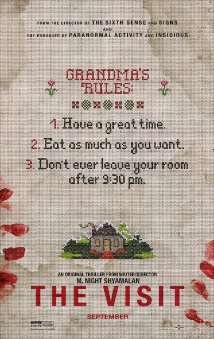
TheVisitOver the river and through the woods to grandmother’s house we go…You’ll never think of visiting your grandparents in the same way ever again. I just have to say, congratulations M. Night Shyamalan for making a triumphant return to the horror genre. Blumhouse and Universal Pictures’ The Visit is a found footage/documentary style horror film that has a lot to offer as we slowly gear up for the Halloween season in the coming weeks. The film successfully pairs blood curdling thrills with belly laughs. What can be more terrifying than a visit to grandma and grandpa’s that has gone terribly wrong??? Sometimes the best horror films are those that take what is otherwise non-descript or safe and twist it around and turn it inside out. And, that is what you get with The Visit. One of the best parts of the movie is that the–what you thought were spoilers in the trailer–are not quite as they seemed and will still catch you off guard. Perhaps next time you visit your grandparents, you may not want to leave your room after 9:30 in the evening. This is especially true if your grandparents live way out in the sticks where the only connection to the internet is an ethernet cable.

After years of separation and ignoring one another, a single mother (Kathryn Hahn) makes contact over social media with her estranged parents in the woods of Pennsylvania. Reluctantly, she decides to allow her kids Becca (Olivia DeJonge) and Tyler (Ed Oxenbould) to take a train to visit their newly discovered grandparents against Mom’s better judgment. The timing works out because Mom has a new boyfriend that has invited her on a cruise to escape the snow and bask in the sun. Upon arrival in their grandparents’ jerkwater hamlet, Becca and Tyler soon become concerned about their grandparents’ bizarre behavior. Rules like stay out of the basement and don’t leave your room after 9:30 in the evening are just the beginning of the strange and terrifying encounters that lurk behind corners and under porches. Fearful for their lives and virtually cut off from the outside world, Becca and Tyler must carefully and skillfully escape the warm kitchen, delightful cookies, and old world that has them trapped.

Okay, at first I was disappointed that it was going to be another found footage or point-of-view documentary style movie. Unless I had missed something, the preview did not lead me to believe that it would be shot POV. I was hoping for a traditional narrative that was shot mostly objectively. However, as I watched the movie, I actually found the documentary style shoot to work for the film quite well. Took a little getting used to, but in the end, it was a great method for telling this terrifying tale of a visit to grandma’s. Although the pacing does start off on the slow side, it picks up and will have you sucked in before you know it. From the moment that you meet grandma and grandpa, you know that there is just something not right. And, just like a good horror or suspense movie should, you won’t know that that is until the end of the movie during the climax–you most likely won’t see it coming.

One of the many positive elements of the movie is Shyamalan’s ability to integrate humor with the terror. One minute you will be laughing along with the kids, and the next you will shoot right up out of your seat with fright. There are even parts that will gross you out while other parts of the film contain mouth-watering homemade delights. They all work together to disorientate the audience. One of the best methods to ensure a scare is to keep the audience off balance. This way, you can hit them with a jump scare here, a warm moment there, and sneak in from behind and scare them. The disorientation allows for the narrative to build up to the most horrific elements of the movie. It’s like, the audience is in the midst of a horror movie before they know it. Building suspense is paramount to a well-written horror film. Not that jump scares aren’t important, but a film should very rarely ever build a foundation upon solely them. Building suspense lasts, a jump scare is like a firecracker–lows up quickly and dissipates just as fast.

If you are in the mood for a fun horror film before hitting Halloween Horror Nights at Universal Studios Florida/Hollywood or Howl-O-Scream at Busch Gardens Tampa/Williamsburg, or just want to put on the movie movie on your boyfriend or girlfriend, then definitely check out The Visit while it is in theaters.

“Everest” Movie Review

Everest“Climb every mountain…” Universal Pictures’ Everest is a breathtaking docudrama/biographical picture of a mid 90s all but completely failed expedition to the top of the world, frocked with tragedy. For those of us who have never been to Mount Everest, which is most people, this movie takes you up close and personal with the “most dangerous place on earth.” Never before has a movie taken the audience to place where you are viscerally confronted with the famed mountain in the Himalayas that dares even the most intrepid of climbers to scale. Although the movie has a fantastic cast and the panoramic views of Everest are breathtaking, Everest plays off more as a glorified documentary than a work of cinema. Not saying it isn’t impressive–certainly the movie has some very impressive elements–but, it lacks the cinematic structure of a traditional movie plot/subplot, theming, and subtext. It pretty much is what it is: a reenactment of an actual event on the treacherous slopes of the rooftop of the world. Shot mostly in the French Alps, with pickup shots and IMAX footage of Everest herself, the footage is beautiful and inspirational. If you dare to ascend the forbidden mountain, be sure to do it in IMAX!

Everest is about the 1996 Everest expedition of Adventure Consultants, a New Zealand-based company ran by Rob Hall (Jason Clarke) and Hellen Wilton (Emily Watson). Facing dire financial times, Rob and Hellen need this expedition to be a successful climb to the top of the world. Attaching a journalist from an outdoor adventure magazine, Rob and Hellen will pull out all the stops to land the front cover. Once the expedition team safely arrives at basecamp, it becomes apparent that a storm looms on the horizon. Rob teams up with rival expedition leader Scott Fischer (Jake Gyllenhaal) in order to lead both teams to the summit safely and back to camp before the severe storm collides with the mountain. As the best laid plans of mice and men often meet with disaster, so does this ascension.

In regards to the plot, there isn’t much to tell. The movie is about an expedition to the summit of Everest, and that is what you get. The writers try to include some subplots, but they really add little more than establishing where people are coming from and if they have a family. When the movie opened, I thought that the cinematography was amazing! The mountains were so real that I felt the chill of the air and the choice of angles showcased Everest and the Himalayas quite well. However, it was midway through the film that I realized that the cinematography wasn’t anything extra special. Certainly, it was above average and the IMAX footage was brilliant to behold; but, it was above average–nothing in particular to note. That being said, the camera was handled with care and the shots were carefully crafted. I think what gave the illusion of breathtaking cinematography was the fact that the mountains were displayed majestically on the giant screen. The majesty of the mountains enhanced the cinematography. So, it was the beauty of the mountains, not the cinematography in and of itself, that was outstanding.

I really feel this movie is meant to be viewed in IMAX because of the grandeur of it all. Watching it in a standard theatre or at home will not do the film justice. When a film’s foundation is built upon the visual stimulation, and not the psychological or emotional aspects that are common of films, then a movie needs to be screened in the best possible auditorium or IMAX theatre. This is a larger than life story, and should be seen on larger than life screens. Despite the lack of a traditional plot, I appreciated the film’s dedication to focussing on the expedition itself and not getting wrapped up in a love story or an underdog’s triumph.

If you enjoy epic adventures, bio pics on Nat Geo, or just want to visit Mount Everest, then check out Universal Pictures’ Everest opening in mid-September across the country. Word to the wise, don’t eat a massive lunch or dinner prior to seeing this film.