“Rat Race” movie review

RatRaceTalk about a throwback movie this week! Ordinarily, most Mondays each week are reserved for Macabre Movie Monday with some friends of mine. We screen a horror movie and talk about it. It’s a tradition that began with an American Horror Film graduate class I took as part of my M.A. at the University of South Florida. However, my roommate is not terribly fond of horror movies and I know he grows tired of them week after week. Haha. So, we agreed to watch a comedy this past Monday. I cannot remember how, but when we thought of a fun comedy to watch, my friend Dani and I almost in unison shouted Rat Race. Such a star-studded comedy. And other than SmashMouth, it really still holds up today. Well, SmashMouth and the fact that airport security is vastly different than it was when this was shot. Although I watched it when I was a kid, it’s amazing to look at it now and wonder why my parents allowed my sister and I to watch it. Well, I am glad they did because I have always thought of this comedy as one of my favorites. If you have never seen it, and enjoy watching comedies for which you can turn off your brain and laugh until you cry, then definitely watch this one. Let’s go back to 2001 and talk about Paramount Pictures’ Rat Race.

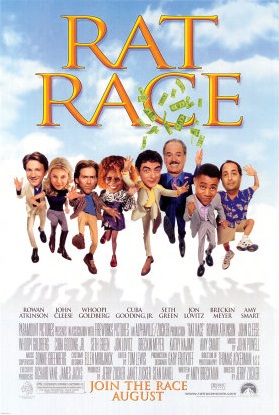
What do you get when you combine greed, money, Las Vegas, manipulation, the ticking time bomb plot, and a star-studded ensemble cast? You get Rat Race! Eccentric casino tycoon Donald Sinclair (John Cleese) selects 6 ordinary people (and by extension, their families) to race against each other for great fortune in Silver City, New Mexico. $2Mil is stashed in a locker in an old train station and there is only one rule for the lucky 6, “no rules.” Unknown to the lucky six, Sinclair is monitoring their every move with some of the biggest high rollers in the world who love to bet on any and everything. From the famous Venetian to Silver City, this group of people will stop at nothing to get their respective hands on the money first. Whether it’s commandeering a rocket car or crashing a WWII memorial service dressed as Hitler, there is little that will come between a contestant and the fortune that awaits!

Ensemble cast films are nothing new. They’ve been around as long as the medium itself. So, the fact that Rat Race is an ensemble movie is nothing unique or special; however, the fact that it is so incredibly successful in combining the subplots and individual adventures of the six racers with the main plot is something to be admired about this film. Each of the six (and their families) have a story within the main story of the film. The writers did an excellent job at spending just the right amount of time with the individual stories without sacrificing time spent with the main plot of the film. As I have mentioned in reviews before, whether film or television, no story exists without conflict; likewise, no comedy exists without “drama.” Many film scholars and writers describe the comedy genre as drama in disguise. Let me clarify a little bit. When the casual movie-goer thinks of drama, they typically think of a film that is rather heavy, primarily dialog driven, and mostly serious. Those same casual movie-goers would likely describe comedy as funny movie with lovable characters, witty dialog, lots of laughable moments, with little degree of seriousness about it. Well-developed and written comedies are those films who integrate humor into the conflict-driven drama between two or more people. In other words, a drama is primarily focussed on the drama of a situation whereas comedy is primarily focussed don the humor of a situation. The best comedies are those that have prolific conflict between characters, but a humorous twist is added to the mix. Why did I say all this? Because in order to understand the brilliance of Rat Race it is important to recognize that it holds up so well because it’s full of drama that has irony, satire, and facetiousness thrown into the mix.

Besides the writing, this film also successfully continues to cause uncontrollable laughter because of the fantastic cast. Just look at this list of leading talent: Rowan Atkinson, John Cleese, John Lovitz, Whoopi Goldberg, Cuba Gooding Jr, Breckin Meyer, Seth Green, and Kathy Najimy. In addition to that amazing list, you also have a great group of chief supporting players and an A-list cameo: Amy Smart, Wayne Knight, Dave Thomas, Dean Cain, Vince Vieluf, Paul Rodriguez, and Lanei Chapman, and special appearance by Kathy Bates as the squirrel lady. There were also many others extras and atmospheric players that helped pull together this brilliant comedy including the performance by 90/2000s hit band SmashMouth. All the elements are here for a successful comedy! Between the writing, directing, and this phenomenal cast list, how could this movie not do well??? On that note, the movie did not fair so well with critics then and even now; scores poorly on MetaCritic, Rotten Tomatoes (no surprise there), and IMDb. However, I argue that any comedy that can still hold up and significantly create a room full of laughter over and over, is a successful comedy. Comedies are seldom going to win awards, significantly contribute to the world of the arts, or serve as inspiration for someone; but Rat Race offers an escape from the doldrums of reality and whisks you away to an over-the-top world of money, hookers, gambling, crazy exes, a buss full of Lucys, and Nazis. It offers an incredibly entertaining journey that still has a heartwarming ending.

I think it’s the utter unashamed ridiculousness of the whole plot that keeps me entertained. Furthermore, it does such a good job of telling a funny story that is both clever and well-paced. One of the best parts of watching this movie is getting to feel like at least one of the leading or supporting characters. Each have a unique set of traits that can identify with someone of a similar personality. You’ll probably also see some of your friends as one or more of the characters. These characters are so much fun to watch and just when you think it can’t get anymore ironic, unfortunate, or satirical, it surprises you. Trying to remember the first time I watched it, and even to some extent this time, I remember thinking that it really isn’t that predictable. Not predictable in that it is so ridiculous! But that’s what I love about this comedy film. It sticks to a tried and true ticking-time-bomb plot with characters that are unconventional and unpredictable in every way. Well, mostly anyway. Haha. I think my favorite part of the movie is the Pear family crashing onto the stage at the WWI Vets convention in Hitler’s car with Randy (Lovitz) trying to speak but the cigarette lighter burnt his tongue and he has a Hitler mustache caused by Eva Braun’s dark lipstick. I know, right?!?

If you are ever looking to just kick back and enjoy a comedy that is guaranteed to make you laugh hysterically, then check out Paramount Pictures’ Rat Race (2001). Whether you just want to see some of your favorite Oscar, Golden Globe, or Emmy winners in an over-the-top comedic race to the finish or just a fun movie that will keep you entertained, this one is a winner!

“Beaches” Throwback Thursday Movie Review

BeachesThe ebb and flow of a lifelong oil and water unchecked friendship. Touchstone Pictures’ Beaches is the timeless modern classic that is the bittersweet story of the friendship between the most unlikely of friends. Much like Universal Pictures’ Fried Green TomatoesBeaches tells two stories: the present day one concurrent with dozens of flashbacks that show the evolution of the friendship between Broadway actress turned pop-star C.C. Bloom (Bette Midler) and wealthy old money Californian Hillary Whitney (Barbara Hershey). Unlike the former, the latter does not play the flashback card as artistically and cinematically as well. Despite the fact that I, along with hundreds of thousands of fans, adore this film immensely, as a film critic, I cannot ignore the blatant misuse and misplacement of the flashback. However, this movie is special in that it can make even those of us who have seen it dozens of times cry every time. I think this is because that the friendship, that is displayed through the narrative, is one that many of us wish we had. Interestingly, this quintessential late 1980s movie is closely aligned with the plots of 1940s friendship sagas complete with feuds, tearful reunions, and fatal illnesses.

Beaches takes us on a journey from the Boardwalk of Atlantic City to the rocky shoreline and beaches of the San Francisco area. Follow unlikely friends Hillary Whitney (Hershey) and C.C. Bloom (Midler) through the mountains and valleys in their lifelong cross-country relationship. Hillary is a girl of impeccable breeding from a wealthy San Francisco family and C.C., an aspiring Broadway child star from the Bronx. After a chance meeting under the Boardwalk, Hillary and C.C. quickly form a lasting friendship built over the course of hundreds of letters back and forth over the years. With both women being strong-willed and stubborn, it is of no surprise that their friendship is one of jealously, competition, and resentment–however–they are always there for each other. As adults, they spend time traveling from coast to coast and despite the valleys, they always return to the mountain peak.

Due to the very lifelong-friendship movie cliches in the narrative, the audience is usually way ahead of the characters on the screen. Despite this utterly predictable plot, the audience is sucked in at the same time because of the personalities of the characters and the magic that both Midler and Hershey bring to their respective roles. The movie is pretty well straight forward and seldom deviates from what is typically expected of melodramas. It is up to Midler and Hershey to hold the attention of the audience, much like actors on a stage, because the writing and directing is very par for the course. I would venture to say that if the two lead actresses were replaced by any two other performers, that the movie would most likely not have the high place amongst modern American dramas that it does in the library of American cinema.

The Divine Miss. M’s musical talent is definitely showcased quite well in the movie, and is one reason the movie has stood the test of time that it has. For the last nearly three decades, scores of best friends have cried together while painting each other’s toe nails and drank lots of wine while watching this go-to film. Although bordering on unrealistic expectations of a lifelong friendship, the movie successfully shows us how even the best of friends can argue, fight, and still return to each other in times of need. There is something to be said about a friendship that can stand the trials and tribulations that this one does. Although Beaches lacks the spontaneity of real life, and is nearly completely constructed out of other movies, it has and will continue to be one of those films that epitomizes the idea of devoted friends and dedication to a relationship. And, who doesn’t love “The Wind Beneath My Wings”???

My Cousin Vinny

Cousin Vinny“My biological clock is ticking like this!” “Is it possible, the two yutes… The two whahhh…did you say yutes? Yeah, two yutes–excuse me, your honor, two youTHz.” Some of the funniest movie quotes of all time come from this timeless classic. Instead of watching what was playing in the theatre this week, I decided to review another Throwback Thursday film. Every time I watch this movie, I laugh throughout the entire story. It’s one of those films that–if you’re having a bad day–you can watch it and be elated by laughter. Joe Pesci and Marisa Tomei, along with The Munsters’ Fred Gwynne provide the movie with an incomparable cast of talent that play off of each other so incredibly well. From the domestic antics and witty dialog between Tomei’s Lisa and Pesci’s Vinny to the hilarious courtroom drama between Gwynne’s Judge Haller and Vinny, the comedic writing in this movie is brilliant and memorable.

My Cousin Vinny is about two young men (Ralph Macchio and Mitchell Whitfield) who are traveling from New York City to Los Angeles to attend UCLA. Along the way, they are pulled over by a cop in a backwater Alabama town; and, after various conversations with police, they realize they are being booked on murder charges. Billy (Macchio) calls his mother who mentions that his cousin Vinny Gambini (Pesci) is an attorney. Unbeknownst to Billy and his friend Stan (Whitfield), Vinny is a personal injury attorney who has never won a case. Accompanying Vinny on this trip down south is the flashy fashionable Mona Lisa Vito (Tomei), also his finance. From the moment Vinny steps into the courtroom, he realizes that the Judge has it in for him and the town is stacked against the two NYC-Italian youths charged with the homicide of a store clerk. It’s up to Vinny and Lisa to work through the clues and conduct their own investigation to clear the names of Billy and Stan. Watch as hilarity ensues during this unconventional courtroom drama.

This is one of those movies that is so incredibly easy to recommend to friends who enjoy smart comedies that don’t shy away from creating witty and humorous antics while stereotyping characters. From Lisa’s opening remark, “I bet the Chinese food in this town is terrible” to the “dumb” southerner’s obsession with grits, it is plain to see that this film will pull out all the stops to generate laughter. The degree to which one can enthusiastically recommend this movie becomes even clearer when Vinny reveals to his cousin that he only passed the bar six weeks prior (umm, after six attempts before). Not only is this Vinny’s first trip down south, it is also his first time in a courtroom in front of a judge and jury. The characters Lisa and Vinny are the anthesis of one another, but I feel that is what helps to create their compatibility. This is evident in Vinny’s constant pre-occupation with trying to gather his wits about him and Lisa’s loudly articulated common sense and a penchant for reading law books. They complement each other very well.

Structurally, the movie does take a little while to really get going. But that is typically the case with past and present films in the same genre. But once Lisa steps out of the car in her overstated flashy clothes and Vinny’s leather books strike the red Alabama mud, the pace quickly picks up. I think what makes this movie so timeless is the fact that it is so incredibly well produced. During its time, it was probably the most inventive and smart American film farce, and thus took audiences by surprise. It certainly helped to further develop the careers of two outstanding performers (Tomei and Pesci) and also highlighted the beloved Munsters actor and children’s author Fred Gwynne.

Hello, Dolly!

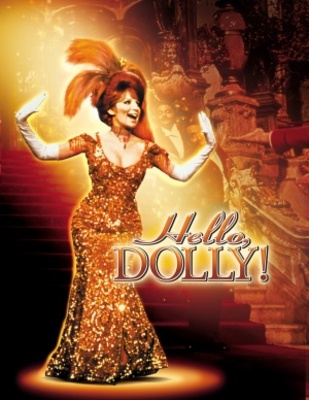
Hello Dolly“Hello, Dolly!” starring Barbra Streisand, in the title role, is the film adaptation of the Tony Award-winning Broadway show by the same name. Produced for the screen by Earnest Lehman, the music and lyrics of Broadway legend Jerry Herman are showcased in a larger-than-life musical for the big screen that would dwarf all other film musicals up to the time of its release. Garnering four Oscar wins and four Oscar nominations, including Best Picture, “Hello Dolly!” is one of the most successful film musicals in cinema history (however, not successful in terms of tickets sold).

One of Barbra Streisand’s most beloved performances, after “Funny Girl,” is that of the loud, boisterous, glamorous, ostentations, matchmaker Dolly Levi. It’s turn-of-the-last-century Yonkers, New York, where an ambitious young widow for a penchant for arranging, matchmaking, and organizing nearly anything has an idea for a perfect match—for herself! Horace Vandergelder is a millionaire and merchant who deals in chickens and other groceries who is the father of a young lady, coincidentally in love with someone he does not approve of, and manager of two innocent, but fun-loving, clerks. Dolly arrives in town in time to hear that Vandergelder has found a potential match. It’s all Dolly can do to not blow her cover for her actual feelings for him, and keep him from tying the knot with a friend of hers who is the owner of a hat shop. Convincing Vandergelders two clerks and his daughter, with beau, to travel to New York City to find and consummate their matches is all part of Dolly’s underhanded plan to land the millionaire Vandergelder. Comedy ensues as all the characters interact with each other and fumble around trying to find love. But through it all is the indomitable and memorable Dolly Levi.

More infamous for bringing Fox financially to its knees than for being the last major musical directed by Gene Kelly, “Hello, Dolly!” is a bull in a china shop. The film cost nearly as much to produce as “Cleopatra” and made far less at the box office, thus earning the film its reputation as one of Hollywood’s foremost financial flops; but the film continues to endure today and capture the hearts of millions who love the memorable songs and beautiful period costumes.

Like with any masterpiece of cinema, “Hello, Dolly!” is not without casting controversy. But, more than any other film to date (and even up to today, minus Disney’s “Into the Woods” being released later this year), the ones is the prime example of miscasting the lead role. Now, I absolutely love Barbra Streisand; however, she may have had the voice, but the rest of her was not the best for the most coveted female role at that time in Hollywood. The role of Dolly Levi was originally made immortal on Broadway by Carol Channing; but 20th Century Fox cast Streisand shortly after the premiere of “Funny Girl” the prior year to capitalize on her fast-moving and successful career; a smart business decision to cash in on Streisand’s star power. Dolly is supposed to be middle aged, and last checked, 27 is not middle aged. Dolly Levi is supposed to be in her 50s or even 60s. The very essence of the character of Dolly was lost in Barbra’s ability to open her mouth to produce the magic that is her voice.

Critical to a film adaptation of a Broadway musical is that the dialog, musical numbers, and performances need to be played to those sitting in the dark in the confines of the temple, that is the cinema. “Hello, Dolly!” consistently throughout the entire extravaganza plays to the back row of the house. The choreography, the performances, the set decoration, the dialogue, everything about “Hello, Dolly!” is nearly too big and loud for the screen; but again, would be fine on the stage. On an anamorphic widescreen, close-ups tend to be more frightening than mirthful. And, it is hard to believe that the actor playing Cornelius Hackl is the same man who will forever be immortalized as Webber’s original Phantom.

“Hello, Dolly!” is actually a lot closer to “Xanadu” than it is to Gene Kelly’s other masterpiece “Singin’ in the Rain.” The movie is equally over-directed and undernourished. Dolly first emerges from a “studiously” recreated set of New York City, circa 1890, and already she’s fighting for attention with a gigantic set and with her own ostentatious costume. It says everything about Gene Kelly’s priorities and costumer Irene Sharaff’s exhibitionist tendencies that we’re introduced to Dolly’s shoes and hat before we see her face. Because the musical numbers are all scaled somewhere on the spectrum of overstuffed grandiosity, what fun there is in Dolly obtains mostly in Streisand’s loopy line readings—a real comic aplomb that her recent near-desertion of acting has made harder to remember—or else in the kinesthetic leaps and bounds in famed choreographer Michael Kidd’s dance routines. On the other hand, the explosive effusion that characterizes even these stray highlights—zany comic banter, waiters somersaulting over champagne buckets—just reminds us that “Hello, Dolly!” is driven at all times, except in its feeble story structure, by the credo of More Is More.

“Hello, Dolly!” is a prime example of an integrated film musical. It uses the musical/dance numbers to advance the plot and offer some exposition into the plat and the character development of the characters. At times, the music is coming from off-screen somewhere—the soundtrack of a character’s mind—and other times, the music is coming from a band on the screen with a given character. Analytically speaking, the terms for the music coming from somewhere off screen is non-diogetic music, and the term for music coming from some source within the movie is diogetic music. In musicals, the instrumental accompaniment often comes from a source somewhere else, temporarily causing the audience to suspend their disbelief that a character’s songs come with an accompaniment. Sometimes, the source for the accompaniment comes from a source within the movie.

There are also some socio-political undertones in the movie; and like with many musicals, the messages are often subtle (although, not always). Crucial to the development of the modern film musical is blackfaced minstrelsy. And, even in 1969, there are remnants of this practice in the movie. Louis Armstrong is forever captured in Technicolor for a few brief moments during the musical’s title song, which comes toward the end of the musical. Like the minstrels of old, he plays the role of a smiley, fun, vibrant, and comedic orchestra leader at the Harmonia Gardens. Traditional relationships also play a huge role in the film. Dolly’s very existence is that of a matchmaker, glorified as she may be, and she spends her time pairing men with women. The movie also alludes to the fact that men require women and vice versa. Fortunately, the movie does showcase women owning their own businesses and being in some control over their lives—moreso than musicals and movies of the past.

Regarded as one of the greatest film musicals of all time, “Hello, Dolly!” will continue to serve as a tribute to the grand film musical extravaganzas at the end of Hollywood’s golden era. Regardless of which Dolly one prefers in the title role, Dolly Levi is an immortal character in the world of cinema and Broadway. The movie is also a testament to the fact that Broadway musicals do not always transfer to the screen extremely well. But, at the end of the day, the movie served its purpose to entertain and create a place in the heart of all who watch it.

“Fried Green Tomatoes” full movie review

Towanda! Universal Pictures’ quintessential American cinema classic Fried Green Tomatoes based on the bestselling novel by Fannie Flagg (whom also wrote the screenplay) is a heartwarming unapologetically sentimental film that reminds us that the best thing in life is “friends, best friends.” The film is also an early breakthrough for queer cinema because it contains a subtextual world of queer thematic elements and symbolism. In Flagg’s novel, there was an explicit romance between two of our main characters; but the film toned it down in order to attract a wider audience at the time. Moreover, this film also takes on the important task of providing commentary on racism and sexism. A message that was as important then as it is now. Fried Green Tomatoes is the type of drama that will leave you feeling inspired to be the kind of friends that you see in the film. The film contains two important storylines (present and past) that are woven seamlessly into one another by theme and plot derived from character. Each story is captivating! Because of the two stories being told concurrently, it takes a little while for this film to grab hold of you; but when it does, you will be hooked on the homespun humanity, intimacy, romance, and yes even a murder mystery. Of course, it’s a murder that Angela Lansbury could solve in her sleep. Twenty-seven years later, this film is still charming the bees, and continues to be a favorite among those who love a heartwarming story with deep meaning and impact.

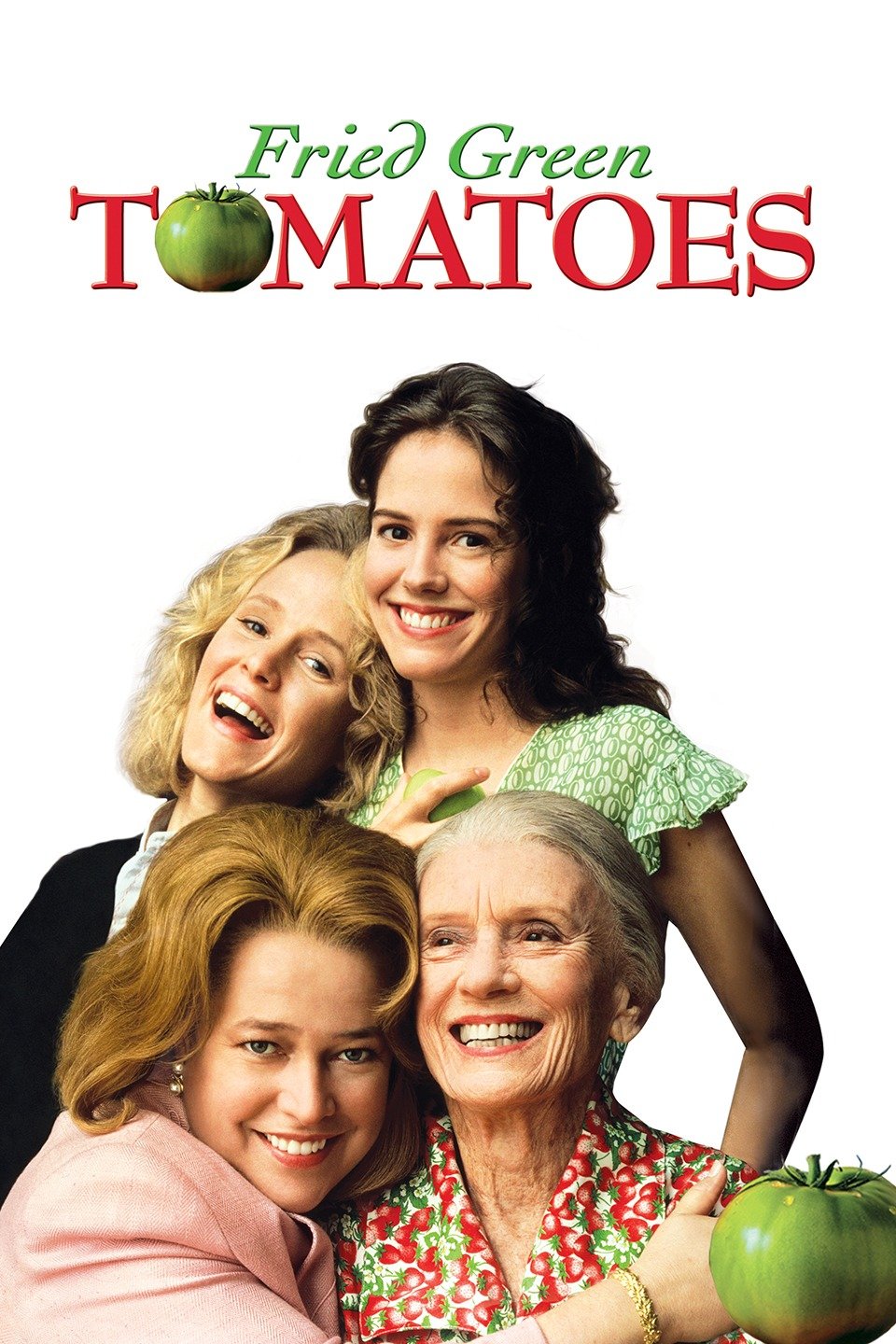
A woman learns the value of friendship as she hears the story of two women and how their friendship shaped their lives in this warm comedy-drama. Evelyn Couch (Kathy Bates) is an emotionally repressed housewife with a habit of drowning her sorrows in candy bars. Her husband Ed barely acknowledges her existence. One week, while waiting out Ed’s visit of his aunt at the nursing home, Evelyn meets Ninny Threadgoode (Jessica Tandy), a frail but feisty old woman who lives at the same nursing home and loves to tell stories. Over the span of several months, she spins a whopper about one of her relatives, Idgie (Mary Stuart Masterson) and her friend Ruth (Mary-Louise Parker). Idgie and Ruth are two unlikely friends that form a strong friendship in 1930s Alabama; together they face an abusive marriage, open a business, and find themselves involved in an unsolved murder. Evelyn finds herself looking forward to her weekly visits with Ninny, and is inspired by her story to take a new pride in herself and assert her independence from Ed.

Not sure about you, but I am not entirely a fan of movies that feature a couple of people sitting around in the present and talk about a story from the past. And, all the while, we get flashbacks to that earlier story. What is the point? Why not just tell the story from the past and let that be your movie? I don’t get it. There are some exceptions…take Citizen Kane for instance–it worked! But contrary to my predisposed dislike for movies that principally rely upon flashbacks to tell the story, this movie surpasses all expectations! The story in the present features Mrs. Ninny Threadgoode and Evelyn Couch. Evelyn encounters Ninny by accident while visiting her husband’s mean-tempered aunt. The confident Ninny and the plump, unhappily married Evelyn develop a fast friendship, one that helps Evelyn escape the doldrums of her early 1990s domestic married life by learning to care deeply about a relative stranger. Ninny tells Evelyn a story from her hometown that follows Idgie and Ruth through a wide range of bittersweet events that test their loyalty to each other. In the process, it also offers a portrait of a lulling, rustic, Klan-ridden Alabama in which the characters’ willful innocence often gives way to harsh racial realities. The film tries to develop some suspense around the question of how these two plots are connected, but the answer will strike no one as a surprise. One of the reasons Director Jon Avnet’s Fried Green Tomatoes survives the flashback structure is that it devises an interesting character to be the listener to the long-ago tale. In a manner of speaking, the audience is asked to be a participant in the film.

Although the screenplay is very close to the original novel, there is one element conspicuously missing from the movie–well, directly anyway. It’s presented very clearly in the novel that Idgie is a lesbian and she and Ruth are a couple despite the mores in the South at the time (and still to this day somewhat). The movie brings these elements out indirectly through powerful subtext that is not exactly trying to hide, interestingly enough. Because the movie was released prior to films showing healthy homosexual relationships as just as normal as heterosexual ones, the film got creative in how to acknowledge it while not polarizing audiences at the time. By in large, the small town of Whistle Stop was certainly not small-minded. Showing the progressive nature of this “knock-about place” in how it largely feels about minority communities, the town accepts the two of them and no questions are ever asked about their relationship. Idgie and Ruth in particularly display extremely progressive ideals, for the day, because two of their closest friends are members of the town’s black community. Big George and Sipsy (played by Cicely Tyson) are important to Idgie and Ruth, and both would do anything for them.

The stories from the past and present are both full of social-commentary, containing an  important message for women or anyone who feels that they cannot be progressive, independent, and successful because of the antiquated ways of a relationship or society. With Ninny and her stories as inspiration, Evelyn learns that she can be more than her girdle-wearing, dinner-making, frumpy dress self. Evelyn is so fired up by Ninny’s stories of Idgie’s escapades, that she begins to take control of her life. She gives up her candy bars for aerobics, stops trying to please her misogynistic redneck of a husband and begins a career as a Mary Kay sales professional. Through her many visits to spend time with Ninny, she also becomes as passionately devoted to Ninny as Ruth was to Idgie, with this one being truly platonic friendship.

If you enjoy great dialog and excellent character development, you will fall in love with this movie even if you have yet to do so. Fried Green Tomatoes was based on the novel Fried Green Tomatoes at the Whistle Stop Cafe by actress-turned-author Fannie Flagg. The four leading ladies deliver outstanding performances! It is of no surprise that this movie has stood the test of time. Clearly, this is one of the best movies about strength, character, and friendship ever produced.