“Whiskey Tango Foxtrot (or WTF)” movie review

WTFQuite the unexpected surprise from comedienne Tina Fey! Paramount Pictures’ Whiskey Tango Foxtrot is one part self-reflexive film on television news production and one part self-discovery. Unlike the feel of the previews, WTF is not really a comedy–not in the traditional sense anyway. There certainly are moments throughout the film that are funny and will cause you to chuckle, but it is definitely more of a drama. The brilliance of Fey’s acting in this movie is truly showcased by her ability to display that she can do serious just as well as funny. Most of the funny parts are given away in the previews, so don’t think you’re going to get more laughs during the movie. Based on actual events, WTF takes you behind the camera and behind enemy lines to depict what it is like for television news foreign correspondents in a war zone. Although the movie was not what I expected at all, I am very pleased with the story, all be it, slow burning. Beyond the self-reflexive subplot in the movie is the foreground story of self-discovery. Fey represents so many of us who just feel like we are spinning our wheels, treading water,  or even moving backwards. The inspirational elements of the movie come from her willingness to take chances, make mistakes, and get dirty (as the Magic School Bus‘s Miss Frizzle would say).

What would you do? You’re dissatisfied with your job as a television news writer/producer, have a mildly depressive boyfriend, small apartment, and just need to get away. If you’re Kim Barker (Tina Fey), then you head off to Kabul, Afghanistan to become a foreign correspondent during the early days of the War on Terror. After an expedited visa and passport, Barker embarks on her journey as a representative of the U.S. press in one of the most dangerous places on earth. Armed with her laptop, camera, notepad, and two staff members, she sets out to discover the real stories in Kabul and the surrounding areas. Thinking that she is the only girl in a military barracks, Barker is relieved to meet Tanya Vanderpoel (Margot Robbie) who takes Barker under her wings to show her the ropes of reporting the news amidst a war and hundreds of “thirsty” journalists and military personnel. While covering the stories of the war, Barker concurrently takes a journey of self-discovery that is filled with mountains and valleys.

Let’s be real here. Even if you analyze movies on a regular basis like me, you too were probably thinking that this would be a dramedy (drama/comedy). And yes, comedy is really drama in disguise; but I digress. The previews are certainly cut together in such a way that it looks like a very Fey-esque wartime comedy. I am not going so far as to saying that Paramount pulled a bait ‘n switch–because the movie is of a good quality and enjoyable–but the is no doubt that I went in expecting classic Fey and was presented with her more serious side. Still, through her witty quips and non-verbal dialog, she infuses conventional comedy and self-deprecating humor throughout the narrative. Like many dialog-driven dramas, even ones during a war, this movie has a very slow pace especially in the first act. Some additional comedy probably would have helped in the beginning to hook the audience. Speaking of the hook, that is probably what’s missing from the first few minutes of the movie. I think the studio sacrificed a traditional hook because the hook was Tina Fey herself. Fortunately, the film wastes no times in getting Kim Barker to Afghanistan, and that is definitely a good move. Although we are introduced to several chief characters in the movie, the focus is definitely on the character development of Barker with some minor development and introspect on the other principle players.

There are really two stories here: the foreground story of self-discovery and the background self-reflexive plot. Both are seamlessly married together in order to accurately tell both without sacrificing the other. Although we all know that there are foreign correspondents in war zones, we don’t always get to see what it’s really like to uncover stories, pitch to executives back in the states, and maintain sanity and safety; but through this film, we witness just how hard it really is to be a foreign television news correspondent. From networking, to interviewing, to shooting B-roll and stand-ups, Barker takes us on the journey from concept to delivery of producing news int he middle of a battle zone. Beyond the battle field, Barker is coping with her own personal and professional battles. If it isn’t the cheating boyfriend, it is the network who put her on the hourly plan and gives her no screen time. But, through it all, Barker never gives up and refuses to sit idly by and allow herself to be walked over. Fortunately, Barker does get her big break during the climax of the movie, but you’ll have to watch the movie to see what that is.

If you plan to see just one movie this weekend, I definitely encourage you to see this one. It’s gritty, funny, and inspirational. This is also a great opportunity to watch Fey in a more serious role and decide for yourself if she convinces you that she can play serious just as well as the comedy we all know and love her for. You may have seen other wartime movie, but this one plays out differently in that the focus is truly on the character development of the protagonist with the war merely being the backdrop and conduit through which we see her story of summits and pitfalls.

“London Has Fallen” movie review

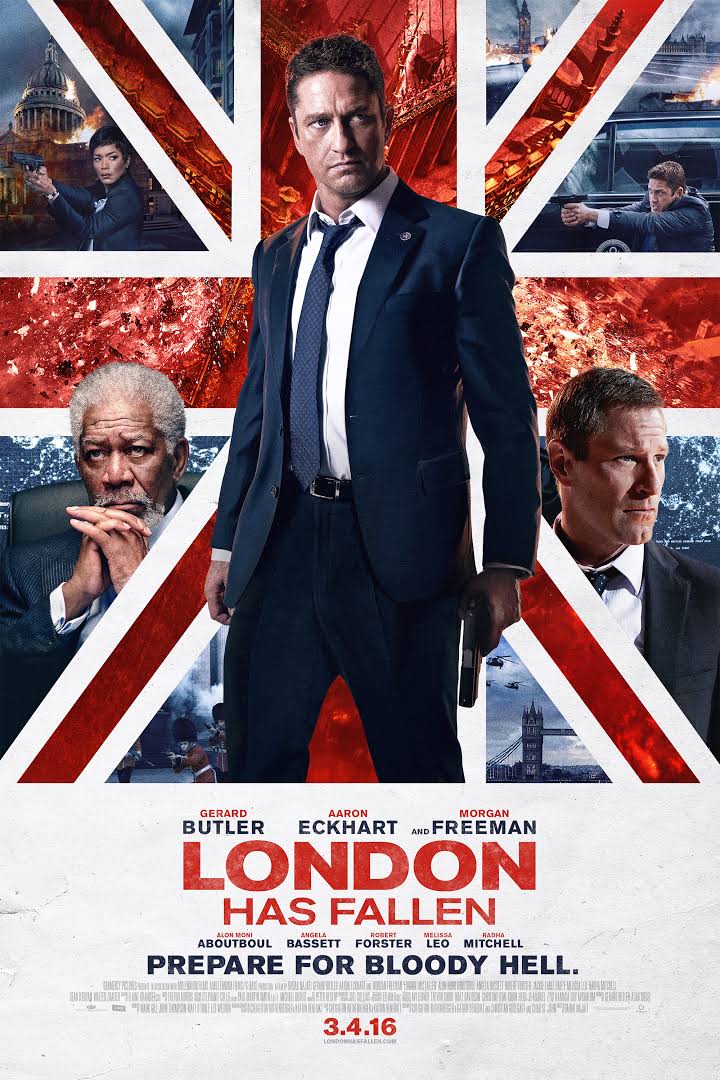
LondonHasFallenJust another cliche political conspiracy action thriller, but definitely a fun ride! Movies like this one often receive flack for not having a cinematic narrative to accompany the larger than life display on screen. However, I like to look at movies such as London Has Fallen or last year’s Olympus Has Fallen as a way to experience great shallow spectacle and some laughs for a couple of hours. One of the chief reasons that this film is fun and exciting to watch is the cast. Gerard Butler, Aaron Eckhart, accompanied by the phenomenal Angela Bassett, and Morgan Freeman will have your attention throughout the story. It is very important for an otherwise cliche action political thriller to contain excellent actors who can add that touch of quality that films in this sub-genre of action need. A side effect of this film could be heightened awareness to the unrest in the middle east and terrorism when you least expect it. There really isn’t much to dissect or analyze in this movie, so it is one of those that you take for what it is. An action-packed couple of hours that is thrilling with some laughs here and there.

The Prime Minister of the United Kingdom is dead, and his funeral becomes the most highly secured event on earth. Politicians and leaders from all over the world gather to mourn the loss of a beloved leader. Along with the other world leaders, the U.S. President is also in attendance. When tragedy strikes at St. Paul’s Cathedral, many are left dead and injured. Just when the UK and the rest of the world thinks it can rely on its own military and palace guards, the terrorists have infiltrated the very inner workings of England’s security, military, and public safety. No one can be trusted. Armed with his “bourbon and bad choices,” secret service agent Mike Banning (Gerard Butler) protects President Asher (Eckhart) and Secret Service Director Lynn Jacobs (Bassett) and tried to get them to safety when all hell breaks loose. Vice President Trumbull (Freeman) must helplessly watch the terror unfold. Just when things couldn’t get any worse, Asher winds up in the hands of the terrorists and Banning must rescue him before he is publicly executed online.

What a weekend for movies. You have your choices of this one, ZootopiaWhiskey Tango Foxtrot (which I am seeing tonight), and more. Really looking forward to Tina Fey’s movie tonight.

“Risen” movie review

RisenThe Gospel–detective movie style! For more than 100 years, stories of Jesus have been the topic of movies. Many early works of cinema featured not only Jesus, but Moses, Sampson, David, etc, but this film is quite different in that it carries a much lighter tone than most faith-based productions. Sticking to the basics of what is known from the Bible and other Jewish and Roman historical accounts of the event, Risen lacks the pious and pretentious nature many of the films in this same sub-genre contain. Not quite cinematic per se or traditionally action-packed, the film has relatively slow pacing but keeps it interesting by supplying well-developed characters and simply the thrill of the original man-hunt. Although the message of the Gospel is clearly stated and shown in the movie, it does not come off as proselytizing. In many ways, the central character is an everyman because it is fairly easy to place yourself in his shoes–or sandals in this case–and imagine what it must have been like to have been in charge of guarding Christ’s tomb and then having to answer for the disappearance. One thing puzzles me; and that is Columbia Pictures’ timing of this release. Honestly, it makes more sense to have released it the weekend prior to Easter. Anyway, I digress.

Risen is about the most famous and controversial man-hunt in the history of the world–and no, I’m talking Jimmy Hoffa–but for the Jesus of Nazareth. You may have heard the Gospel before, but not like this. Follow Roman tribune Clavius (Joseph Fiennes) as he is personally commissioned by Pontius Pilate (Peter Firth) to supervise the burial and subsequent Roman guard of the famed tomb. Assisted by Lucius (Tom Felton), Clavius closely manages the burial of Jesus’ body and instructs the guards to keep watch to make sure the body is not stolen so Jesus’ disciples can claim resurrection. As we know from history, the tomb is discovered to have been blown open and thus begins Rome’s search for the body of Jesus in order to snuff out any uprising or violent radical upheaval. Clovis’ search for the body of the proclaimed messiah will force him to question his own beliefs as he encounters appearances and fervent faith that we cannot reconcile against the world he knows.

A history and mystery in one! From either objective or subjective points of view, this is my pick for the best “Jesus” film ever. And yes, I am including the box office smash Passion of the Christ in that assessment. But what makes this particular movie more receptive and less controversial and other faith-based films in the past? Answer: lack of pretense. Whether talking God’s Not Dead or Passion of the Christ, both films do not attempt to appeal to a broad audience. They play on the court with the rest of the faith-based movies both good and bad. Risen plays to the audience differently because it concentrates on developing the realistic historic characters by pairing what is known by way of Biblical or Jewish/Roman historic texts with logical conclusions or using context clues to fill in the gaps. The writers did an excellent job in developing the character of Clavius as someone with whom many in the audience could identify because whether believers int he resurrection or not, we have all questioned our various and respective beliefs at one point or another and often look for answers very much in the same way a detective solves a mystery.

Unlike other films where the focus is either directly or indirectly on Jesus, the focus of this film is primarily on the delicate political landscape between the Jews and Romans and of course our protagonist Clavius. However, this film uses the indirect approach to discover why Jesus’ was so special to his followers (and it still to this day). This indirect approach is far more effective for speeding the Gospel message than typical “Christian” films. Although this film is clearly about the mystery surrounding the resurrection of Jesus in the background, the foreground is a personal journey thus making it more of a historic film than a “Christian” one, so to speak. Therefore, most anyone who enjoys Roman or Jewish history will find something of interest in this film. The relationship between the Romans and Jewish leadership is handled very well. It shows the game the Romans had to play with the Jews in order to keep peace in Jerusalem–especially because Caesar is arriving soon and Pilate needs to show him that he has the Jews under control.

The person of Jesus is also handled better than any other film I have seen. He comes off as an average Joe–that is, an average Joe who can heal lepers. But, he connects well with the audience and is very much down to earth in his appearance and mannerisms. Sometimes it’s hard to understand why his disciples then and followers to this day would choose to follow such a man, but this film makes it clear why. He embodies love. On a lighter note, I’ve always found it funny that in most historic/Biblical films, such as this one, most of the characters speak with a British or transatlantic accent. Pretty sure that was not the case back then. But, at the same time, it does not hinder the story in any way. Although the film is a little slow and the pacing isn’t always executed well, over all, it keeps in line with the traditional three-act plot structure and sufficiently supplies the audience with the proper turning points. Risen also handles character development very well. I really appreciate the development of not only Clavius but also Pilate and Lucius as well. To an extent, we also see some development in some of Jesus’ disciples as well. At the end of the movie, the characters in the story felt like real people, and that is a remarkable achievement in this movie.

Ordinarily, we don’t see movies like this until Easter time. Even though we are a month out from it, I feel that if you enjoy Biblical or simply historic movies that are down-to-earth, written, acted, and developed well that you will enjoy this movie. Traditionally, I am not a fan of most faith-base movies because they are cheesy, pious, over the top, or just executed poorly; however, I very much enjoyed this film and hope you do too.

“Deadpool” movie review

Deadpool-poster-2Absolutely brilliant super not-hero film! For those who often get the feeling that I simply do not like high-concept or superhero movies, let this be evidence that there certainly ARE superhero films that I feel are exceptional. And this is definitely one of those movies. As many memes across social media have indicated–and I will reiterate–this movie is NOT for kids (and no, your kids are not the exception). This is a super not-hero [and the not is important, but you must see the movie in order to understand] movie that is written for a mature audience. From the groundbreaking self-aware opening credits to the perfectly paced and strategic adult-humor, this movie is sure to have you laughing from beginning to end. And it’s not just the writing that is super but the visual effects, stunt sequences, and fight scenes are far above par for this action movie genre. Ryan Reynolds captures the character of Deadpool so incredibly effectively that you will swear that he was made for this role. Not your Disney-Marvel movie, Fox and Marvel bring you a spectacular combination of action and comedy to show off this unique anti-hero, so to speak, for fans of the comic and those who just enjoy a super movie.

Former special forces Wade Wilson (Reynolds) leads a very interesting post-dishonorable discharge life as a mercenary. The last man you’d ever expect to fall in love with anyone, Wilson falls for a burlesque dancer (who most likely moonlights as a hooker–let’s be honest). Following months of unparalleled passion and ecstasy, and after the unconventional proposal, Wilson finds out that he has an aggressive form of cancer that is unfortunately late in discovery. Devastated, Wilson has no idea what to do, but does not want his fiancé to have to go down the cancer road with him even though she clearly states that she is in it for the long haul. Acting upon a chance meting with a mysterious and well-dressed man in a bar, Wilson takes the man’s advice and undergoes a treatment from another equally mysterious but more sinister scientist. The results of the treatment will become clear as Wade Wilson becomes Deadpool and develops into the most unusual super anti-hero ever to come to the screen.

Simply from the opening credits, it is clear that this movie is incredibly self-aware and playing to the audience one hundred and ten percent. BEST opening credits ever, in terms of creativity and being an extension of the narrative itself. The idea of a self-aware movie is not a common one to begin with and certainly not a trope of traditional superhero movies. I think that is what I appreciated most about the movie. The brilliance behind the self-awareness is that the film is equally self-aware as it does take itself seriously as a superhero movie. Never before have I witnessed the fourth wall being broken so incredibly much. For those of you who do not know what breaking the fourth wall is, in its simplest form, it is when the character addresses the audience. This is apparently an element that was brought over from the comic, according to my comic and anime enthusiast coworker that went with me to screen the movie last night. What makes Deadpool’s continuous commentary so effective and entertaining is the fact that he says what many of us would be thinking given if we encountered the same scenario. The candor is such a breath of reality within this world of fantasy or augmented reality.

So often a movie will either choose to rest upon its strong writing, impeccable acting/direction, or visual effects; the sheer remarkable innovation in this movie is supported by not one but all the aforementioned elements. Ordinarily, I am able to find flaws in a movie–especially within the superhero genre–but not this time. I suppose, the fourth wall was broken a little too much, but that would be the only flaw I could identify. Sometimes a movie can be a great superhero movie but not a great film; however, Deadpool exceeds expectations both as a superhero movie and as a film in and of itself. At first thought, you may feel that a movie with endless diegetic and non-diegetic commentary may overshadow or steel attention or coherence from the narrative itself, but the writers did such a fantastic job of integrating the narrative and commentary so seamlessly that the movie is doubly entertaining as it would be without the offensive, explicit, hormonal commentary from the earthiest and most human of superheroes. And yes, I realize I am using superhero even though Deadpool reminds me over and over again that he is not a hero, but you get the idea.

Ryan Reynolds is one of those actors who is equally talented as he is attractive, and he gets to show off for this movie in ways that many actors wish they could in movies. But, it does not come off as obnoxious at all. That’s the beauty in the direction of this movie. You’d think that his over sexualizing of himself and the continuous adult commentary that he (or the movie) would play off as exceedingly obnoxious, but you’d be mistaken. There is a perfect balance struck by the writers and director that enable Deadpool to be a total douchebag, but oddly enough, in the most endearing way. For fans of the X-Men comics, 90s cartoon, or the X-Men movies, you will get to witness a crossover of movies in Deadpool. In an ever growing effort to recruit Deadpool to join the elite mutant force lead by Charles Xavier, Colossus and Negasonic Teenage Warhead confront Deadpool. This subplot is an important elements to Deadpool because it helps to build Fox’s X-Men universe by bringing two franchises.

Without getting into a lot of IP (intellectual property) rights discussion, despite the procurement of Marvel in 2012, as long as Fox keeps making X-Men movies, Sony makes Spiderman movies (even though he is appearing in the Avengers series), and Universal Studios Florida keeps modifying and improving attractions, then Disney does not have the rights to use the respective characters in movies or rides. Now, IP rights are a little more complicated than that, but I wanted to provide you with a general idea. Back to the crossover. Including the X-Men in Deadpool is strategically important for three simple reasons: (1) as I mentioned earlier, it helps to rebuild and reinforce the respective timelines of both franchises (2) it builds the foundation for a larger character universe, much in the same way Disney is doing with the Avengers and related movies and (3) part of what makes Deadpool so incredibly fascinating is his ability to play the anti-hero off of legitimate superheroes or, as Fox is able to officially call them, mutants.

If you are a fan of Disney-Marvel’s Guardians of the Galaxy, and you are NOT a kid, then you will definitely enjoy Fox-Marvel’s Deadpool. Prepare yourself to experience a superhero-action movie like no other. From being mesmerized at the stunning visual effects and editing to the incredibly funny writing and acting, you are sure to be entertained and will definitely crave more. Good thing that Deadpool has already received the green light for a sequel.

The Hollywood Studio System: Employment Then and Now

One of the last remnants of Hollywood’s Golden Age, Grauman’s Chinese Theatre stands as a tribute to the movies that started it all.

One of the last remnants of Hollywood’s Golden Age, Grauman’s Chinese Theatre stands as a tribute to the movies that started it all.

In light of the recent film Hail, Caesar!, I thought it would be interesting to take a closer look at the old studio system and whether resurrecting some of the practices might actually prove to be a positive affect upon employment in media and entertainment.

The entertainment industry is evolving more quickly than it ever has, and film production companies and distributors are of no exception. Just like the advent of television had a major influence on the sharp decline of movie patrons in the 1950s and 60s, the advent of on-demand and streaming “television” and movie content today is having a major impact on entertainment sources today. But this article does not aim to analyze distribution, production, nor revenue; its aim is to analyze the state of employment opportunities in the film and narrative television industries. What better way to begin to explore this controversial topic than with the studios that started it all.

HISTORY

The famous entry gate to Paramount Pictures as seen in the 1950 film, all about the studio system, “Sunset Blvd.”

The famous entry gate to Paramount Pictures as seen in the 1950 film, all about the studio system, “Sunset Blvd.”

The rise and fall of the former “studio system” lasted for a period from the 1920s to the late 1960s, with the 1940s to the 1960s being the period of the downfall. During this time, there were five major film studios known as the Big Five, essentially controlling the film industry from production to distribution. The Big Five consisted of Paramount, MGM, RKO, Loew’s, Fox Pictures, and Warner Brothers. Though not as prominent, three smaller studios known as the Little Three, consisting of United Artists, Universal, and Columbia Pictures, were the chief competition. Regarded as the end of Hollywood’s Golden Era, the landmark Supreme Court decision in United States v. Paramount in 1948 marked the delcine of the Studio System. In short, over about a 15-20 year timespan, studios began opening their lots to independent filmmakers–independent of the Big Five (not independent by today’s definition), terminating permanent staff members, and refraining from entering into longerm contracts with performers and movie houses. Although the Walt Disney Company was not part of the Big Five nor the Little Three, it is the only studio today still operating as a studio from the old Studio System.

PRESENT DAY

The Bronson Gate at Paramount Pictures as seen today

The Bronson Gate at Paramount Pictures as seen today

With the major studios today only producing about 20 films a year, the majority of films releasing in first-run movie theatres are produced by independent producers. As stated earlier, this is not independent as we think today; independent by this definition means movies produced outside of the major studios, but often distributed by them (or a subsidiary). Think: Star Wars or Jurassic Park. Since the fall of the Studio System, big banks are more reluctant to invest in or finance films, so producers are responsible for securing their own funding. Less funding means fewer job opportunities for film and television graduates. Most film and television professionals in the entertainment business today are independent contractors–being attached to films and television shows for however long the production time or run-length is. Although a long-running television show provides more employment stability than films do, both are high risk professions. Of course, along with the high risk comes potentially great rewards.

According to Hollywood folk lore, making a wish at the famed Bronson Gate is said to bring good luck. This is me (30lbs ago!) on the Paramount Studio tour in March 2015.

According to Hollywood folk lore, making a wish at the famed Bronson Gate is said to bring good luck. This is me (30lbs ago!) on the Paramount Studio tour in March 2015.

Why would the return of some semblance of the old Studio System be a good turn of events in today’s economy? Simply stated: more jobs and opportunities for budding professionals and college graduates. Why is that? Any first-year film student can tell you that studios keep a low threshold of permanent staff members in administration and production. The majority of talent and crew on each film is independently contracted. And with gaining entry into a union becoming increasingly difficult, it leaves many potentially talented professionals out of work or in low-pay positions on low and moderate budget films. If the Studio System were to return, they would have the collateral that big banks are looking for to invest in films. After all, film, television, and to some extent theatre, are the United States’ largest exports even though they are only recently counted as part of the U.S.’ GDP (gross domestic product) in terms of evaluating the health of the economy. If there were more permanent positions in production with studios and production companies, the unemployment rate would drop significantly in entertainment because budding professionals and college graduates could land positions in which they could grow and excel.

An aerial shot of the Desilu Stages in Hollywood in the 1960s

An aerial shot of the Desilu Stages in Hollywood in the 1960s

But what about exploitation and monopoly? Are those not reasons why the Supreme Court stepped in? Yes. However, there are many reasons why personnel in entertainment today, as permanent staff members, would not undergo the same treatment. The reason: unions. SAG-AFTRA, IATSE, TEAMSTERS, and EQUITY do an excellent job at protecting creative peoples’ rights and opening doors of opportunity. But, it is becoming increasingly difficult to gain access into these organizations. And with the unions being the gatekeepers to opportunity in the industry, where is a budding professional or college graduate supposed to go? If studios produced more in-house movies and television shows, then that would require them to hire permanent staff members. Those seeking a career in the industry would find their place. Some may argue that production companies offer internships to recent graduates; but with lawsuits increasing in the last few years, internships are increasingly being seen in a negative light. One hypothesis is that unpaid internships are taking the place of entry level jobs. With the number of entry-level jobs decreasing since the recession began, the unemployment rate in entertainment is rising.

One way to combat the increased unemployment in entertainment business is to bring back the large studios that have the financial assets to offer and hire permanent positions. This would enable the studios to hire a number of cinematographers, writers, directors, etc. And, those individuals would work on the films produced by the respective studios. If studios were to increase the number of films produced each year, as they once did, then there would be more opportunities for professionals. Regarding the monopoly studios had on movie houses, the present laws on the books would not allow for a studio to have complete control over a particular theatre chain.

There is plenty of room for studios and production companies large and small. Unlike the days of the Studio System, in which outside companies could not shoot films or television shows on another company’s lot, the smaller studios should be allowed to still rent the stage and lot space as they do today. Of course, if Studios were producing more movies on their lots, that may cause the smaller companies to have to look elsewhere for locations. But, that could be a good thing; because if they purchased land for a backlot or sound stages, that would create more jobs for craftsman. In order to combat the rising unemployment rate in the entertainment business, professionals need to get together to develop ideas as to how to hire more personnel. Bringing back the Studio System is just one idea as to how to create more full-time jobs in film and television production.

One of the entrances to MGM Studios (now owned by Sony Pictures) in Hollywood

One of the entrances to MGM Studios (now owned by Sony Pictures) in Hollywood

With studios forced to produce more movies in order to make payroll, that could potentially mean more writers can sell their scripts and perhaps more original ideas will make their way to the silver screen. This action could create human resource databases at the various studios and production companies that would advertise vacant positions. Just like applying for a job at Disney World, you could see what positions are available. Bringing back a new Studio System would allow for studios to advertise full and part-time regular positions. For instance, you could see which studios are hiring cinematographers, directors, composers, etc. Professionals in the creative and technical arts would also benefit from employer provided health insurance and retirement. Although as independent contractors, film and television professionals make more money than working as a regular employee, regular employees benefit from regular paychecks and benefits, and to an extent job security.

Technology is making the production of movies and television shows more efficient than ever, so a major studio could hire permanent staff members to work as producers, directors, screenwriters, cinematographers, etc. Employment opportunity and stability are key elements to the health of an industry–even creative ones. Even though the old Studio System ran unchecked for many years, causing the eventual breakup, carefully constructed and regulated today, the return of a new Studio System could mean more jobs and opportunity for college graduates pursuing entertainment business careers. And just maybe, more movies!


BIBLIOGRAPHY

  • US adds entertainment and innovation to GDP, Time Magazine, http://entertainment.time.com/2013/08/01/hey-america-entertainment-just-made-you-hundreds-of-dollars-richer/
  • History of the Studio System, Encyclopedia Britannica, http://www.britannica.com/EBchecked/topic/394161/history-of-the-motion-picture/52153/The-Hollywood-studio-system
  • Paramount Pictures v United States, 334 U.S. 131 (1948)
  • Glatt v. Fox Searchlight Pictures, New York Southern District court, http://www.nysd.uscourts.gov/cases/show.php?db=special&id=300
  • US Bureau of Labor Statistics, http://www.bls.gov/ooh/entertainment-and-sports/home.htm
  • Glatt v. Fox Searchlight Pictures Inc. 2013 WL 2495140 (S.D.N.Y.) – See more at: http://blog.legalsolutions.thomsonreuters.com/legal-research/westlaw-topical-highlights-labor-and-employment-july-10-2013/#sthash.J9tcpnM1.dpuf
  • Hollywood Studio System Collection, http://mediahistoryproject.org/hollywood/
  • Bigelow v. RKO Radio Pictures, Inc., 327 U.S. 251 (1946)