
Insurgent

InsurgentFaction before blood, or in this case, genre before story. In a series/franchise that struggles to separate itself from other YA (Young Adult) novel-turned-movies, Insurgent fails to live up to the expectation and hype that it generated. To her credit, Shailene Woodley (Tris) gives it her very best; but, her constant struggle to support the dystopian narrative is quite evident. The quality of the movie should come of no surprise due to the teaser trailer’s sub-par, CGI-driven, look. For the lovers of digital effects, this movie is in no short supply. However, it is this type of over-the-top and, at times, gaudy special effects that creates a flashy movie nearly devoid of a substantial plot. In trilogies and franchises, it is vitally important that the middle film(s) advances the plot and highlights crises, chaos, confusion, and emotion instead of just being filler to bridge the gap between the beginning and the end. Clearly, this installment in the Divergent series serves as further evidence that sequels often suffer and rarely live up to the audience expectations setup by the previous movie.

This installment of the Divergent series entitled Insurgent takes us back to the walled city of former Chicago. After the massacre of Abnegation, Erudite leader Jeanine Matthew (Kate Winslet) asserts that the Dauntless faction is responsible for the deaths of nearly all Abnegation. Furthermore, she connects the Divergents to Dauntless and issues orders that they are to be seized or killed because of the threat they impose on life in the “peaceful” city. Tris (Woodley) and Four (Theo James) desperately search for allies in the looming war that appears to be manifesting with every passing day. Both Jeanine and Tris endeavor to uncover the answer as to what was so important that Tris’ parents sacrificed themselves. Many secrets will be revealed to friend and foe as the quest for answers to the past ultimately point to the future of the factioned and factionless. In this quest for freedom and power, new power-hungry peoples will rise and seemingly unsurmountable challenges will face our heroes as the people of ruined Chicago attempt to bring about peace to the city and eliminate any and all threats to the way of life that has been such a part of its citizens for many decades.

I don’t typically look to the YA genre for impeccable acting and narratives rich with subtext and substance; but I do look for high concept, well-crafted movies that keep my attention for a couple of hours. Just because a movie fits into the YA-Dystopian genre, doesn’t mean that it has to follow every trope and hesitate to introduce new concepts. Unfortunately, Insurgent just seems to be like most other movies in this genre and runs the risk of boring the audience. Keeping the audience’s attention is crucial, especially when many members of the audience already know what’s going to happen due to having read the books. Even though I believe that a movie based on a work of literature (or a play) needs to keep true to the source material, it is also equally important for the writer and/or director to add something new–something unexpected–to keep anticipation high and build suspense as the story unfolds.

Just like a singular cinematic narrative must, under most circumstances, follow the classic three-act structure, the same is also true for a trilogy. Paralleling the respective three-act structure in each individual film in a trilogy, the trilogy itself is encumbered to follow in suit. If you are unfamiliar, the three act structure consists of: The Setup, The Confrontation, followed by The Resolution (or realization). Within each of the acts are various plot points; and between the first & second and second & third acts, there are two crucially important, and major, plot twists to transition and advance the plot. In an ideal and well-produced trilogy, the first movie should be the “setup,” the second installment should serve as the majority of the “confrontation,” and the third movie should highlight the “resolution.” What we have with Insurgent is a movie that pretty much doesn’t advance the plot nearly as much as it should have. This leads to the poor pacing and mostly hollow narrative. There is some meat there, but not nearly enough to fill two hours. In other words, it feels as if the movie mostly just treads water instead of heading for the finish line.

Insurgent definitely contains some entertainment value; but, I cannot say that it was an entertaining as the previous installment. I have not read the books, but if this movie keeps true to the novel, then the writers and director should have taken the creative liberty and adding in material that would have increased the visual storytelling quality of the film, without breaking from the very essence of the story. Hopefully, this filler movie has paved the way for a dramatic and exciting finish with the next movie Allegiant. Comparing it to other sequels, it fairs about the same; but, if you have some extra time this weekend, it could serve to keep you mildly entertained for a couple of hours.
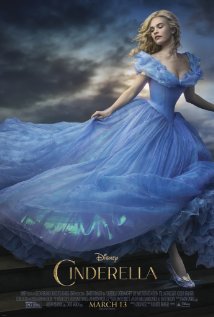
Cinderella (2015)

Cinderella (2015)Bibbidi Bobbidi Bomb! That’s precisely what the most current adaptation/remake of the timeless classic is. Watch as everything you loved about the original Disney Classic is sucked out of this version. But, after this same tired story has been remade again, and again, and again, and again, what can you expect??? From the casting–with Cate Blanchette being the exception–to the writing to the over all poor execution of the famous fairy tale, you will understand why Disney had to add the Frozen short film prior to the opening credits just to get people to see this travesty unfold. On that note, it too was poorly produced and shoved down the movie patrons’ throats. After the tragic adaptation of the beloved Into the Woods, laughable revisionist Sleeping Beauty/Maleficent, and this year’s flavor of Cinderella, I am fearful of the upcoming live-action remake of Beauty and the Beast.

Ordinarily, this is where I summarize the plot; however, this story has been remade so many times that I won’t bother. But, I will tell you that in an effort to add some new zest to the story, Disney does modify some of the events and adds in additional backstory. And, I will say that I liked the modifications and additions. So, I suppose the whole thing wasn’t a total flop.

One of the cardinal rules of filmmaking: don’t remake a classic and virtually change nothing! Your audience will most likely be bored to tears. It was Cecil B. DeMille who said, “the greatest art is the art of storytelling.” Unfortunately, the storytelling in this movie was not artful or original at all. And I use the term original lightly. I’m aware that many films are based on other works of literature or plays. However, it is vitally important that, when adapting a work of fiction, adding something new is required. Nobody wants to see the same thing over and over. Good examples of creative twists on the Cinderella story were Ever After, with Drew Berrymoore, and the funny, entertaining Cinderella with the beautifully talented Bernadette Peters. Both these versions took the familiar story and created something new. Speaking of Ms. Peters, I have yet to understand Disney’s blatant aversion to casting her in roles that are made for her, such as the witch in the recent Into the Woods and the role of Godmother in today’s Cinderella. Another excellent choice for Godmother would have been the incomparable Michelle Pfeiffer.

On the note of casting, I am overall very disappointed with the performances. I will directly point out that I am very happy that Disney chose Lily James for the iconic role of Cinderella, because she boasts a very natural beauty that is not typical of those ordinarilly chosen to play–or drawn to play–Disney princesses. She is someone girls could look up to and not feel like they could never measure up to the unrealistic Disney princess image that often graces the screen. Another positive casting choice was Blanchette as Lady Tremaine (stepmother). She played the role with excellence and truly brought the character to life. At first, I wasn’t too sure about her when the cast was initially announced; but, I stood corrected when everything from her look, to her tone of voice, to her attire screamed ‘I am the evil stepmother.’ She took the Disney villain to a whole new level with the addition of taunting and belittling. As far as the rest of the cast, yes–including Helena Bonham Carter (as Godmother)–I am very disappointed and was constantly thinking of who else should’ve been cast in the various roles. 

Pacing is very important to the structure of a screenplay, and the pacing was way too quick for this story. There were many times that it felt like key turning points or plot twists were just glazed over for the sake of runtime. Another area that structurally suffered was the very ridged narrative. It’s like we jumped from scene to scene without well-crafted transitions. An example of this is when Lady Tremaine has Ella’s glass slipper. We are never even given any clue as to how she thinks to look for the iconic shoe. One of the elements that made Ever After such a hit when it came out was the writing and casting. It took a story most people are familiar with and came at it from a whole new angle. This angle allows the storytellers/filmmakers to include what was loved in the more fictitious fairy tale and build upon it to being the story as close to reality as possible. Between the narrative structure and the casting, this live-action Cinderella still remains a favorite by many. Likewise, the (also Disney, by the way) movie musical adaptation of Cinderella in 1997 made its mark on the classic tale/broadway show by giving it an impeccable cast and adding new musical numbers (“Falling in Love with Love” being a fantastic addition). As you can see, both these movies (as well as Into the Woods and the other Cinderella adaptations over the years) often put their own spin on the story to essentially create a new experience for the movie audience. I find that this version of Cinderella failed to create something new and simply rehashed poorly what has already been done.

Note to Disney: Disney, you need to try something new! Please stop your current trend of creating live-action versions of your beloved animated movies that made you the king of the industry that you are, because you are losing sight of the art of storytelling. I really hope this live-action adaptation of the animated movie is not a foreshadow of what we are to expect with Beauty and the Beast. At this point, I wouldn’t be surprised if they do not cast Angela Lansbury as Ms. Pots–and no one can play that role like she can. Movie go-ers beware: this is not your childhood Cinderella.

The Lazarus Effect

LazarusEffect

Get ready for a new twist on a tried and true theme in the horror genre. The Lazarus Effect will take you on a journey into the research laboratory of a group of scientists that are playing God in an effort to extend the life of coma patients. With a runtime of less than an hour and a half, this film will keep you on the edge of your seat. Despite using all the tropes of the horror genre, this movie will still have your blood racing within the first few minutes of the film’s opening title sequence.

The Lazarus Effect is about a group of medical scientists lead by the brilliant minds of Frank (Mark Duplass) and Zoe (Olivia Wilde) who are amidst testing a serum that they hope will bring the dead back to life. After discovering that the serum was effective in reviving a dead dog, the university sponsoring the research ends the operation. Following a bizarre turn of events, the group of scientists are robbed of their massive accomplishment. Returning to the lab to re-create the experiment, Zoe is killed during the procedure. Against the recommendation of his colleagues, Frank uses the serum to revive her. Hoping that she has returned to the world of the living unscathed, the group is shocked to find that something is evil within her and have to escape the lab before their very lives are in danger.

While many critics and fans have given The Lazarus Effect poor reviews, I think that it’s important to remember that the horror film is a special genre that is not encumbered by the same requirements that other genres are. One unique attribute of the horror film is that it often employs social commentary. In this case, it is the idea that situations will go horribly wrong when man tries to play God. For this message to get across, it isn’t necessary to include well-executed character development, carefully crafted subtext, or emotional internal goals. The horror film needs to communicate its story visually and viscerally. I find The Lazarus Effect does a good job at holding true to the genre and still manages to throw a curve ball here and there to keep the audience on its toes.

Olivia Wilde completely sells her character in the movie. Just looking at her will creep you out, and she successfully transcends the silver screen to spark fear in the minds and bodies of the audience. The movie is very well cast and each of the respective characters plays their roles very well. Often times, a small cast can become monotonous to watch; but, this petite ensemble will successfully carry the narrative from start to finish. Regrading the screenplay, the writing was also well-done, for the genre; and actually made the science behind the plot make sense within the narrative. It’s important for science-fiction horror to create science that makes sense within the world of fantasy. So often, sci-fi and sci-fi horror forget that the logic behind the narrative has to remain coherent and testable throughout the story.

If you enjoy horror films, definitely check out The Lazarus Effect. It will take you on a terrifying journey that is non-stop from beginning to end.

87th Oscars Review

87th OScarsBefore you think that this is another “Monday morning quarterback” review of the Oscars–meaning a critique of who won, lost, etc, I would just like to share my thoughts on the show itself. Overall, I feel that the show quality was very high and I liked the simplified but classy production design. Other than two REALLY long acceptance speeches, most speeches were heartfelt and appropriate (and only one overly political for no reason, for it had nothing to do with the movie she won for). The opening number was a lot of fun and utilized the talents of Neil Patrick Harris, Anna Kendrick, and Jack Black very well. The concept of building an opening number around the foundation of filmmaking (moving pictures) made for a splendid performance. And, other than the telecast running just shy of FOUR HOURS, the pace of the show was fluid and it appears to have kept the attention of the audience there and at home from beginning to end.

The highlight of the evening was the performance of Lady Gaga in the tribute to The Sound of Music. This impact was made greater with the entrance of Dame Julie Andrews following the outstanding medley of song from such a beloved movie. I think what was most brilliant about Gaga’s performance was the sheer juxtaposition to her normal fair (other than the easy listening/lounge music show for which she partnered with Tony Bennett). Prior to the tribute to The Sound of Music, Jennifer Hudson killed it with her performance during the In Memoriam. As far as the performances for the songs nominated for Best Original Song, they were all executed very well and made for a delightful production.

Probably most of you agree with me up to this point–but this is where I am going to lose some of you. I do not think Harris was a satisfactory host for this year’s award show. Other than the opening number and a few zings here and there, I felt his overall performance as host was less than appealing. Compared to the outstanding job of Ellen last year, he failed to meet the expectations of this critic. Ordinarily, Harris is a wonderful host, but he just wasn’t on his game last night. Now, I realize that many critics panned Ellen’s hosting last year, but she truly brought life into a show that continues to struggle to retain viewers. Many people chose to watch The Walking Dead instead of the 87-year-old show.

Over all, the 87th annual Oscars put on a good show and the pantheon of presenters brought both laughter and tears to the audience. Other than the host not being up to par, I feel the producers of The Oscars need to do a better job at time management because a telecast of an award show–even the most important in film–need not exceed three hours. Honestly, it should strive to be around 2-2.5 hours (e.g. 8:30pm-11:00pm). But, here’s to another year of moving pictures for those who both work in and appreciate the art of cinema.

My Cousin Vinny

Cousin Vinny“My biological clock is ticking like this!” “Is it possible, the two yutes… The two whahhh…did you say yutes? Yeah, two yutes–excuse me, your honor, two youTHz.” Some of the funniest movie quotes of all time come from this timeless classic. Instead of watching what was playing in the theatre this week, I decided to review another Throwback Thursday film. Every time I watch this movie, I laugh throughout the entire story. It’s one of those films that–if you’re having a bad day–you can watch it and be elated by laughter. Joe Pesci and Marisa Tomei, along with The Munsters’ Fred Gwynne provide the movie with an incomparable cast of talent that play off of each other so incredibly well. From the domestic antics and witty dialog between Tomei’s Lisa and Pesci’s Vinny to the hilarious courtroom drama between Gwynne’s Judge Haller and Vinny, the comedic writing in this movie is brilliant and memorable.

My Cousin Vinny is about two young men (Ralph Macchio and Mitchell Whitfield) who are traveling from New York City to Los Angeles to attend UCLA. Along the way, they are pulled over by a cop in a backwater Alabama town; and, after various conversations with police, they realize they are being booked on murder charges. Billy (Macchio) calls his mother who mentions that his cousin Vinny Gambini (Pesci) is an attorney. Unbeknownst to Billy and his friend Stan (Whitfield), Vinny is a personal injury attorney who has never won a case. Accompanying Vinny on this trip down south is the flashy fashionable Mona Lisa Vito (Tomei), also his finance. From the moment Vinny steps into the courtroom, he realizes that the Judge has it in for him and the town is stacked against the two NYC-Italian youths charged with the homicide of a store clerk. It’s up to Vinny and Lisa to work through the clues and conduct their own investigation to clear the names of Billy and Stan. Watch as hilarity ensues during this unconventional courtroom drama.

This is one of those movies that is so incredibly easy to recommend to friends who enjoy smart comedies that don’t shy away from creating witty and humorous antics while stereotyping characters. From Lisa’s opening remark, “I bet the Chinese food in this town is terrible” to the “dumb” southerner’s obsession with grits, it is plain to see that this film will pull out all the stops to generate laughter. The degree to which one can enthusiastically recommend this movie becomes even clearer when Vinny reveals to his cousin that he only passed the bar six weeks prior (umm, after six attempts before). Not only is this Vinny’s first trip down south, it is also his first time in a courtroom in front of a judge and jury. The characters Lisa and Vinny are the anthesis of one another, but I feel that is what helps to create their compatibility. This is evident in Vinny’s constant pre-occupation with trying to gather his wits about him and Lisa’s loudly articulated common sense and a penchant for reading law books. They complement each other very well.

Structurally, the movie does take a little while to really get going. But that is typically the case with past and present films in the same genre. But once Lisa steps out of the car in her overstated flashy clothes and Vinny’s leather books strike the red Alabama mud, the pace quickly picks up. I think what makes this movie so timeless is the fact that it is so incredibly well produced. During its time, it was probably the most inventive and smart American film farce, and thus took audiences by surprise. It certainly helped to further develop the careers of two outstanding performers (Tomei and Pesci) and also highlighted the beloved Munsters actor and children’s author Fred Gwynne.