
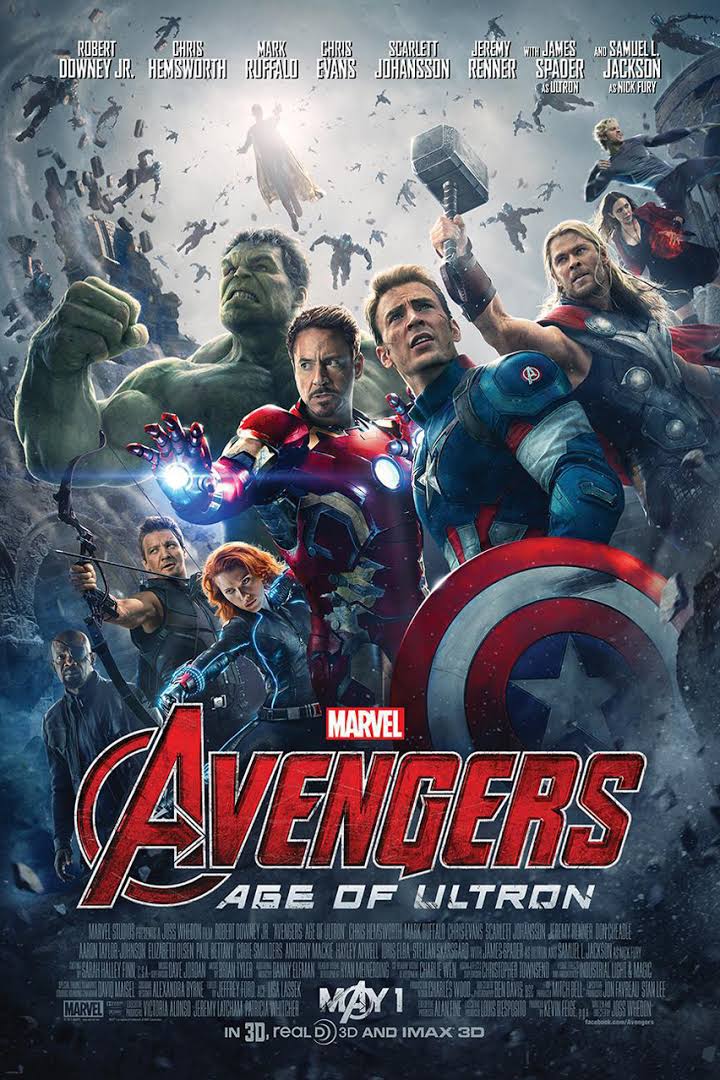
The Avengers: Age of Ultron

Avengers2The Avengers: Age of DULLtron. Get ready for the first big movie to usher in the summer blockbuster season. Only, you will probably find you enjoyed the first Avengers better. Writer-Director Joss Whedon returns with the highly anticipated sequel to the 2012 smash hit. The Avengers: Age of Ultron is a mesmerizing, overly stuffed science-fiction/fantasy that will, in the end, leave you hungry and unsatisfied. Unlike the previous installment, this flashy yet underperforming sequel lacks satisfying plot development. It’s almost as if the movie is at its climax the entire time, with no apparent windup, little exposition, and nearly non-existent rising action. There are movies that are two-parters that have no business being split, and there are others that are one-movie that desperately needed its story to be told over two films–this is the latter. There was such potential in the story, but the plot was executed poorly. If the writers paid more attention to and spent more time on plot development and less time on funny one-liners and running jokes, which are quite appropriate and help keep the dialog balanced, then we may have had a better movie.

The Avengers: Age of Ultron takes us on an a high energy journey around the world from Eastern Europe to Africa to New York City. At the center of the movie is a once-dormant peacekeeping program initiative that was designed by the brilliant engineer Tony Stark (Robert Downey Jr) that was inadvertently activated and developed an artificial intelligence of its own with a dark vision of what peace should look like. Taking to the internet, the AI peacekeeping program (aka Ultron) is everywhere and nowhere all at the same time. Teaming up with Captain America (Chris Evans), Hulk (Mark Ruffalo), Thor (Chris Hemsworth), Black Widow (Scarlet Johansson), and Hawkeye (Jeremy Renner), Iron Man and the Avengers must overcome personal differences and ban together to confront the peacekeeping initiative that is hell-bent on destruction. Ultron, along with other enhanced humans designed by Striker will prove to be the most daunting enemy faced by our heroes, and will have to work together like they have never done before to save the world from catastrophe.

Sounds like a great movie right?!? Well, not so fast. As I mentioned in my opening paragraph, the movie truly had great potential and, despite its short comings, has a phenomenal cast. But, the story structure and well-crafted writing just wasn’t there. The plot is quite dull. It really is almost as though this was a glorified filler movie to make way for the next installment Avengers: Infinity War Part 1. From a technical perspective, the film is fantastic! The special-effects, practical effects, and CGI were woven together seamlessly. Both the cinematography and direction demonstrated a true gift for telling a story visually. And, to that, I applaud the filmmakers for a commitment to visual storytelling. With the exception of the casting of Maria Hill, a role better suited for Anne Hathaway than Cobie Smulders, the cast was once again brilliantly selected and truly brought the iconic comic book characters to life for the silver screen. The additional roles of Quick Silver (Aaron Tyler-Johnson) and Scarlet Witch (Elizabeth Olsen) were also cast impeccably. And I do not feel anyone besides James Spader could have brought such life and incarnate fear to the voice of Ultron.

Before I tackle the shortfalls of the plot, the character of Ultron needs to be examined. Most any competent filmmaker, or more specifically screenwriter, will tell you that a well-developed story needs a protagonist with a well-defined external goal (often accompanied by an internal goal), and in this respect this film checks that box off; however, a screenplay–especially one of this genre–needs a well-defined antagonist with both an external and internal goal as well. And in addition to the goals of the antagonist, we also need to love or love to hate the villain. Knowing WHY the villain/antagonist does what he or she does is paramount to proper character development. Unfortunately, the audience is not told why Ultron hates humanity so much, unless you count the CNN footage Ultron quickly scrubs through in his rushed genesis. It is never a good idea for a writer-director to just expect the audience to accept the actions of the antagonist without explanation or reason. Not knowing why Ultron is determined to create peace by destroying humanity without reasonable exposition does not create a well-developed character. Whether dealing with a protagonist or his/her opposition, it should never be expected for an audience to engage in blind acceptance.

Here’s where the plot went wrong. Now, in order to critique the plot, it is unfortunately necessary to reveal information that may, but not necesserilly, spoil the movie for those who are unfamiliar with the story or the comic book series. But, I will do my best to not reveal too much. At the center of the movie is this dormant peacekeeping AI initiative designed by Stark Industries called Ultron. Funny how it was never acknowledged in the previous film and came across as a plot gimmick just to hurriedly explain the vague origins of Ultron. The simple and elementary observation of the disregard for proper story structure is evident through the fact the movie lacks an adequate introduction and development/rising action. We basically go from a rushed first act and touch on the second act, then skip directly to a bloviated third act. Where’s the windup? Not here. Being a science-fiction movie, that means that certain laws of science should be adhered to in order to increase the believability and sell-ability of the story. Most anyone who has taken a science class in middle or high school knows that the higher the elevation, the lower the oxygen level, the lower the oxygen level, the slower the brain functions and the more mitigated the functionality of the lungs. I just don’t buy the fact that no one suffers from high altitude sickness when the Eastern European city hangs in the atmosphere above the mountains. The lack of oxygen isn’t even mentioned at all. Even if you buy the fact that the Avengers have somehow overcame this physiological obstacle, the citizens of the city are certainly bound by normal human respiration and circulation.

Over-all the movie is exciting and, despite its shortcomings, is a perfect movie to usher in the coveted summer blockbuster season. It is the first of many highly anticipated summer movies including Disney’s Tomorrowland and Universal’s Jurassic World. Hopefully the next installment in The Avengers series will make up for the structural and logical fallacies in this movie, and spend more time on the writing for the next one. Whether you’re a comic book or super hero fan or not, this is definitely a movie that will add excitement to your weekend. And, for those that are graduating this weekend and next, this film makes for a great way to start a weekend of parties and celebrations.

Home (2015) Review

HomeWhile there have been many live-action and animated movies in the alien encounter/invasion genre, 20th Century Fox and DreamWorks’ Home is a family-oriented colorful and fun addition to the pantheon of alien-based films. Although messages such as conquering fear, understanding others, and commitment are commonplace in the friendlier variety of alien movies, this film combines the fanciful plot with rich subtext that acts as social commentary on issues such as ethnocentrism, imperialism, and colonization. These social issues are as real today as they were centuries ago. Just like Dr. Seuss was a master at breaking down complex adult issues into a form that a child could understand and adults could appreciate, DreamWorks provides us with a movie that pairs a comical narrative with real-life societal issues from which we may be able to gain a better understanding of what it’s like to be the nation invaded by another for a supposed greater good.

Home is about an alien race, known as the Boov, who has decided to invade earth and relocate the human ace to Australia. The Boov are running from another alien race, known as the Gorg, and need to find a new home. Upon invading earth, the Boov setup new neighborhoods on the Australian continent and relocate all the “humans persons” to their new “home” as the Boov move in to claim this new planet for their own. Evading the forced human transport, Tip (voiced by Rihanna) hides from the alien race in an effort to buy time so she can develop a plan to find her mom (Jennifer Lopez). Whilst on her mission, Tip encounters an outcast Boov named Oh (Jim Parsons) who is running from his own race because of a massive eVite he sent out to the entire galaxy for his “warming of house” party. Unfortunately, this eVite is also sent to the Gorg. Hot on the trail of Oh is traffic cop Boov Kyle (voiced by the incomparable Steve Martin). During their respective missions, Oh and Tip must learn to tolerate one another and understand one another if they are ever going to find Tip’s mom and Oh stop the Gorg from invading planet Earth.

Home is the type of animated alien movie that will likely evoke nostalgic memories of Disney’s Lilo and Stitch and possibly, to some extent, DreamWorks’ Shrek. However, after How to Train Your Dragon 2 lost to the lesser film Disney’s Big Hero 6 at the Academy Awards BUT won against it at the Golden Globes, the embattled DreamWorks needed its only offering for 2015 to come in like, not to quote Miley Cyrus, a wrecking ball. Instead, it played it safe; and in doing so, it did not capture the imaginations and attentions of audiences like it should have. DreamWorks needed Home to be its Lilo and Stitch. But, instead, it will likely go by way of the Croods. Somehow, a lonely Hawaiian girl and ill-tempered koala bear-like alien creature found its way into the hearts of audiences but Home will not likely do the same. This is probably because Home plays too close to Lilo and Stitch instead of breaking new ground and living on the edge.

On the surface level, it is all too easy to see Home as a movie that is a tastes great but less filling version of Lilo and Stitch, but a closer look will reveal subtext that the Disney classic could only dream of. While both films deal with the idea of understanding one another and learning to cooperate, Home provides us with a deeper meaning behind the one-dimensional, vapid plot. It takes the idea of learning to understand one another and friendship development further by allowing us to view the invasion/encounter from both sides. In an effort not to spoil the twist at the end of the movie, I will no go into great detail. But, it is very clear to see that this movie can be read as social commentary on the U.S. invasion in the various middle-eastern countries. Note: this movie is not suggesting it is wrong to fight those who aim to harm you, but it is suggesting that in an effort to do good that there are sometimes negative consequences that may occur to a people or society. Sometimes, while a nation believes it is BRINGING civilization to a people, seen as lesser, it is entirely possible that they are actually TAKING from the native people instead. For the anthropologists in the audience, you will greatly enjoy the themes in the movie that will likely get missed by the typical movie-goer.

After the previews of Home built up a general interest and excitement for the animated movie, it will unfortunately disappoint most movie patrons who choose to see it this weekend. However, it is still a very cute movie that will keep you and your kids mildly entertained for the appropriate runtime of an hour and a half. I hope that after this movie does not perform as well as projected, that it inspires DreamWorks to rethink their approach to the next movie. I’ve seen great potential in the stories DreamWorks tells, and many of them are better cinematically than the Disney-Pixar ones; but, they need to bring the creative geniuses at their studio together to focus on rebranding despite the fact the Oscars always favor Disney-Pixar just because of the brand.

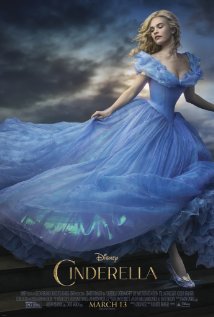
Cinderella (2015)

Cinderella (2015)Bibbidi Bobbidi Bomb! That’s precisely what the most current adaptation/remake of the timeless classic is. Watch as everything you loved about the original Disney Classic is sucked out of this version. But, after this same tired story has been remade again, and again, and again, and again, what can you expect??? From the casting–with Cate Blanchette being the exception–to the writing to the over all poor execution of the famous fairy tale, you will understand why Disney had to add the Frozen short film prior to the opening credits just to get people to see this travesty unfold. On that note, it too was poorly produced and shoved down the movie patrons’ throats. After the tragic adaptation of the beloved Into the Woods, laughable revisionist Sleeping Beauty/Maleficent, and this year’s flavor of Cinderella, I am fearful of the upcoming live-action remake of Beauty and the Beast.

Ordinarily, this is where I summarize the plot; however, this story has been remade so many times that I won’t bother. But, I will tell you that in an effort to add some new zest to the story, Disney does modify some of the events and adds in additional backstory. And, I will say that I liked the modifications and additions. So, I suppose the whole thing wasn’t a total flop.

One of the cardinal rules of filmmaking: don’t remake a classic and virtually change nothing! Your audience will most likely be bored to tears. It was Cecil B. DeMille who said, “the greatest art is the art of storytelling.” Unfortunately, the storytelling in this movie was not artful or original at all. And I use the term original lightly. I’m aware that many films are based on other works of literature or plays. However, it is vitally important that, when adapting a work of fiction, adding something new is required. Nobody wants to see the same thing over and over. Good examples of creative twists on the Cinderella story were Ever After, with Drew Berrymoore, and the funny, entertaining Cinderella with the beautifully talented Bernadette Peters. Both these versions took the familiar story and created something new. Speaking of Ms. Peters, I have yet to understand Disney’s blatant aversion to casting her in roles that are made for her, such as the witch in the recent Into the Woods and the role of Godmother in today’s Cinderella. Another excellent choice for Godmother would have been the incomparable Michelle Pfeiffer.

On the note of casting, I am overall very disappointed with the performances. I will directly point out that I am very happy that Disney chose Lily James for the iconic role of Cinderella, because she boasts a very natural beauty that is not typical of those ordinarilly chosen to play–or drawn to play–Disney princesses. She is someone girls could look up to and not feel like they could never measure up to the unrealistic Disney princess image that often graces the screen. Another positive casting choice was Blanchette as Lady Tremaine (stepmother). She played the role with excellence and truly brought the character to life. At first, I wasn’t too sure about her when the cast was initially announced; but, I stood corrected when everything from her look, to her tone of voice, to her attire screamed ‘I am the evil stepmother.’ She took the Disney villain to a whole new level with the addition of taunting and belittling. As far as the rest of the cast, yes–including Helena Bonham Carter (as Godmother)–I am very disappointed and was constantly thinking of who else should’ve been cast in the various roles. 

Pacing is very important to the structure of a screenplay, and the pacing was way too quick for this story. There were many times that it felt like key turning points or plot twists were just glazed over for the sake of runtime. Another area that structurally suffered was the very ridged narrative. It’s like we jumped from scene to scene without well-crafted transitions. An example of this is when Lady Tremaine has Ella’s glass slipper. We are never even given any clue as to how she thinks to look for the iconic shoe. One of the elements that made Ever After such a hit when it came out was the writing and casting. It took a story most people are familiar with and came at it from a whole new angle. This angle allows the storytellers/filmmakers to include what was loved in the more fictitious fairy tale and build upon it to being the story as close to reality as possible. Between the narrative structure and the casting, this live-action Cinderella still remains a favorite by many. Likewise, the (also Disney, by the way) movie musical adaptation of Cinderella in 1997 made its mark on the classic tale/broadway show by giving it an impeccable cast and adding new musical numbers (“Falling in Love with Love” being a fantastic addition). As you can see, both these movies (as well as Into the Woods and the other Cinderella adaptations over the years) often put their own spin on the story to essentially create a new experience for the movie audience. I find that this version of Cinderella failed to create something new and simply rehashed poorly what has already been done.

Note to Disney: Disney, you need to try something new! Please stop your current trend of creating live-action versions of your beloved animated movies that made you the king of the industry that you are, because you are losing sight of the art of storytelling. I really hope this live-action adaptation of the animated movie is not a foreshadow of what we are to expect with Beauty and the Beast. At this point, I wouldn’t be surprised if they do not cast Angela Lansbury as Ms. Pots–and no one can play that role like she can. Movie go-ers beware: this is not your childhood Cinderella.