
“Magical” Data Collection (part 2 of 3)

MagicBands

(cont’d from part 1)

Magic Bands work primarily off RFID and GPS technologies; the former is a marriage of radio frequencies and microchip technologies whereas the latter is built upon geo-locating satellite transmitters and receivers (Schnell, 2013). Think of RFID technology as the older IR (infrared) technology but not requiring the same line of sight. Both are limited to short distances. Writing on Near Field Communication (NFC), Schnell highlights that NFC is a “contactless exchange [of information] that takes place over short distances…NFC allows users to perform contactless (although sometimes brief contact is also used) access to digital content and connect to other electronic devices simply by bringing their mobile devices into close proximity” (Schnell, 2015 p.101).

Everything from reading and writing information to programming for specific tasks can be accomplished with NFC. Outside of the magical examples, NFC can be seen in the technology that tells a phone or computer to go to sleep when placed on a special stand or dock. More commonly known, there are mobile device charging stations that respond simply by placing the phone on the charging pad (with no cable connectivity required). NFC technology is also found in the growing number of consumers who are using ApplePay® to make purchases by holding the iPhone close to an ApplePay reader and using the security of a fingerprint. The method by which Apple is integrating ApplePay into the functionality of the iPhone and the experience in the Apple Store is the similar to the method by which the Magic Bands operate. Both perform similar tasks, but for different purposes.

The widespread ramifications of the Magic Band system will be felt not only by real theme parks (i.e. Universal Studios, SeaWorld Parks and Entertainment) but also by museums, airports, and zoos, aquariums, and many more places that integrate hospitality, transportation, and merchandise into the daily operations. The intel collected from the use of the bands is unprecedented (Pameri, et al, 2014). The question at hand is two fold, (1) beyond the superficial uses, how else is the tracking information used? (2) beyond the vacation management system (MyMagic+), how else does this smart data affect other business decisions?  The two fold question has one common element: privacy.

The indirect results of weeks and months of smart data collection can be used to affect decisions like how many employees (Cast Members in the Disney vernacular) to staff at each attraction, restaurant, or resort. By analyzing the number of FastPass reservations made through the My Disney Experience app (the flagship app in the MyMagic+ system) and reflecting those numbers against the number of standby guests (guests without FastPasses who have to wait in the traditional queue) all the while just qualifying those numbers against the physical number of guests through the attraction entrance, Disney World can make effective decisions based upon copious amounts of dynamic data. This same smart data can even help determine what items to stock in the various merchandise shops and even how many character performers should be strategically roaming the park (Palmeri, et al, 2014). It is conceivable to conclude that this same information can also be used in the decision making process of a new movie, television show, or Broadway show. “To infinity and beyond” with this information as Toy Story’s Buzz Lightyear would say.

At the end of the day, there really is not anything particularly magical about the Magic Band. It takes what, as Jurassic Park’s Ian Malcolm would say, “others have done and took the next step” (Jurassic Park, 1993). The Magic Band is next evolution in the wearable technology trend of integrating technology seamlessly into the everyday or more mundane tasks for which, otherwise, time has to be separately allocated. Experiences with a brand or product are customized by collecting, tracking, qualifying, and quantifying data created by the [perceived] end user. The word perceived is in brackets because it is truly the company who is the end user of the data because they decide what to do with it and whether to sell it to another buyer. According to Adam Thierer, “wearable technologies are among the fastest-growing segment of internet-based technologies and promise to have widespread societal influences in the coming years” (p1 2015). These positive and negative consequences can include challenges to present societal norms, mores, and more. Economic and legal norms and guidelines may also find themselves challenged by the data provided by wearable technologies. This is not so unlike Disney’s decision-making in the parks about staffing and merchandise.

Like with any new technology, safety (including, but not limited to privacy and security) is a major concern and the skeptics often outweigh those who are welcoming of new communications technologies with open arms. If safety was always paramount and truly dictated innovation, then it is likely that entrepreneurship, economic growth, ingenuity, and invention could be greatly mitigated (Thierer, 2015). There must be a balance struck between acknowledging safety (in the case of this paper, privacy) but permitting new communications technologies to breach it to a small extent to pave the way for a more efficient means of conducting business or creating experiences. The best means of dealing with privacy issues, in terms of wearable technologies, is to creatively deal with them as they rise up (Thierer, 2015). Unfortunately, sometimes privacy issues are ignored or seen as passé in order to commodify data. That is the crux of the issue. Beyond the obvious uses of the Magic Bands, is the privacy of consumers compromised and is the data being sold off? Without conducting an empirical research study and interviews with those who monitor and support the technology, it is entirely possible that the answer will not be known for some time yet since the MyMagic+ system is still relatively new. But, past research can show us how similar technologies are used, and by extension, apply those practices to the MagicBands and the data collected by them.

Interestingly, privacy awareness over what is now referred to as smart data can be traced back to 2006—a time in which many were unaware that the aforementioned technology existed, at least in its present form (Mokbel, 2006). The idea of location-based information is not new—that is how Google Maps mobile app works as well as just the basic GPS in your vehicle. But, that same technology has become smaller, less expensive, and can be integrated into many different items including the Disney Magic Bands. Why integrate this technology into items like the Disney Magic Bands? Simply stated, it is because “user requests to location-based services can be modeled as spatio-temporal queries that can be efficiently executed over large numbers of mobile users through database management modules, e.g., data indexing, query processing, and query optimization” (Mokbel, P1, 2006). The possibilities of channeling the data in copious ways provides an unprecedented quality and quantity of data that can be cited in the development of various decisions. It is not that this same data could not be quantified in any other way, but this method is far more efficient because it would take exponentially more hours and resources to achieve the same results through more conventional means—at least convention as it was known until the advent of smart data devices.
“Magical” Data Collection (part 1 of 3)

MagicBandsFrom watches to shoes, wearable technology is slowly but steadily making its way into the everyday life of consumers. Building upon traditional data collection methods while integrating wearable technology trends, Disney introduced the Magic Band® [from here on out referred to as Magic Band(s) or Bands] in beta testing in 2012 and more widely beginning in 2013. Park guests can use the Bands as their room keys at Disney resorts, book FastPasses®, and as admission into the parks. Connecting your Magic Band to the My Disney Experience mobile application and website allows for the park guest or passholder to do much of what a telephone representative used to do. Even while in the car, a park guest can book FastPasses and once in the park, the Magic Band can be used to access (or validate) the booked FastPasses. The Magic Band is the Disney guest’s key to the kingdom, so to speak. But, beyond the more superficial functionality of the Magic Band, what other data is collected by the media giant? And furthermore, how and does the data affect business decisions in the other investments Disney has in media, technology, and entertainment?

Looking into the data collection methods of the Magic Bands requires looking into a relatively new breed of data and collection methods referred to as smart data. Smart Data can be described as simply as big data with the addition of emotion behind it (Ball, et al, 2015). Smart Data allows companies to understand consumer behavior beyond just a set of numbers or algorithms. Smart Data provides realtime information to the company in order for the company to be preemptive and predictive, knowing where the consumer has been, is currently or will be going by reflecting present decisions on past decisions. This data opens a window into the mind and soul of the customer by tracking behaviors from online buying to peer-to-peer conversations (Ball, et al, 2015).

The brilliance behind the design in the Magic Band is the ability for the Walt Disney Company use smart data as a way to put smiles on the faces of its customers—well, most of the time anyway. But does this brilliant design come at a cost of privacy? Prior to investigating the privacy issues with this smart form of data collection, it is important to look at the design and implementation itself. The goal in the creation of the Magic Band system was to mitigate, with the eventual goal of elimination, the fiddling around with admission tickets/passes, forms of payment, room keys, FastPasses, and dining reservations all the while increasing personal/interpersonal interaction and time with family and friends without the hassle of the aforementioned (Kuang, 2015). All the tasks and elements of a typical Walt Disney World Resort® vacation can be handled and processed by the Magic Bands. Disney Magic Bands look like an unassuming rubber bracelet, and that is part of the magic. “The most remarkable thing about the Magic Bands is the fact that they don’t feel remarkable” (Kuang, 2015). Behind the colorized or photo-covered rubberized band is an RFID (radio frequency identification) chip and GPS tracking system. The bands are constantly connected to a vast system of sensors and transmitters within the boundaries of the park.

Although presently concentrated in parks and resorts, the idea of combining the convenience of a wearable accessory with the efficiency of a mobile application, is a trend that will most likely go beyond the borders of Walt Disney World and spread to other parks, resorts, or even academia. Think of the Magic Band as Disney’s answer to the Apple Watch®. It really is a beautiful concept that has many positive affects. The beauty behind the otherwise nondescript bracelet is the combination of a logical approach to business needs and the creation of a more efficient trip to the “happiest place on earth.” Instead of spending time in lines, behind the computer, at Guest Relations, or at FastPass kiosks, the park guest can spend more time with family and friends while customizing nearly every element of a trip to Disney World.

The Walt Disney Company may seem like its leading the pack with integrating wearable technology that serves as a massive way to collect, organize, and attribute data—and in may respects it is—but for many years now, retailers have recognized this trend for what the customer is looking for—a more experiential and participatory relationship with the vendor or brand. In a published study conducted at the Fashion Institute of Technology (FIT) in New York, researchers uncovered some mega trends that are directly impacting the customer’s experience in brick-and-mortar stores as well as online retailers. Both traditional and non-traditional retailers are recognizing the need for the customer to be digitally linked to the brand or store just as they are digitally linked to social media and other media outlets. Between now and 2020, the digital world is estimated to double in size every year between now and then. And, it is projected that the number of smartphones will surpass 2 billion (US) dollars by 2016 (Bell, et al, 2015). Retailers cannot ignore this, and legacy retailers will have to restructure and adapt to the growing digital media trend or be left behind and face the inevitable.

By retailers and other providers of goods, services, or experiences embracing new media and digital connections via mobile technology, an additional layer in the retail landscape is constructed to further engage the consumer in multiple ways. On the plus side, everyone benefits. Consumers have a quicker and customized access to the goods and services they buy on a regular basis anyway, retailers are able to grow sales at an exponential rate, customers receive items in a fraction of the time it once took, information on both the customer and retailer are just a click away, and you can simply shop on the go—those impulsive buys continue way past the end caps at the supermarket or department store. However, there is a darker side to this symbiotic relationship: loss of privacy. This is not always a malicious action, but by integrating digital media and mobile technology into the retail and hospitality landscape, companies have a copious amount of data that can aid in decision making and provide the company with another revenue source by selling data to the highest bidder, so to speak (Ball, et al, 2015).

In respect to the Disney Magic Bands, which are currently an option in the newly launched MyMagic+® program of vacation/visit management, all the conveniences of the bracelet-like device come with NSA style monitoring by The Mouse (Dockterman, 2014). The constant monitoring and data collection comes in a shiny package. What parent wouldn’t want to set up a child’s visit with a “surprise” visit from his or her favorite Disney character? By signing up for (or you could think of it as signing away of privacy) certain features in MyMagic+, character performers (those employees that are dressed as a face or fur character) in the park can see that a particular child (or even adult for the matter) want to meet them. And by accessing the MagicBand’s GPS tracking system, the character knows where the park guest is and perhaps even where they are heading based upon dining, hotel, or attractions reservations. With the ability for the MagicBand able to track location and serve as a form of payment, post-Snowden, there are worries that a clever hacker can access the band and be able to steal the payment information or be able to be a stalker (Dockterman, 2014).

In the Journal of Electronic Resources in Medical Libraries researcher Eric Schnell explores information sharing and exchanging technologies. One cannot discuss the technology and implications of the Disney Magic Bands without investigating the technology that allows the MyMagic+ system to function. Although his research was conducted to better understand this new technology in how it relates to medical research and libraries of information sharing, this same understanding can, by extension, be applied to the Magic Bands. As RFID, GPS, and Bluetooth technologies continually innovate and develop into smaller, faster methods of communicating over short distances, companies and organizations will integrate, adapt, and change to meet the needs and desires of consumers to have more participatory experiences with favorite brands and these same companies will have a prolific amount of date on each consumer that can be used to target particular goods and services and will have data that can be sold off to other companies

(Continue to Part 2)

“Star Wars VII: The Force Awakens” movie review

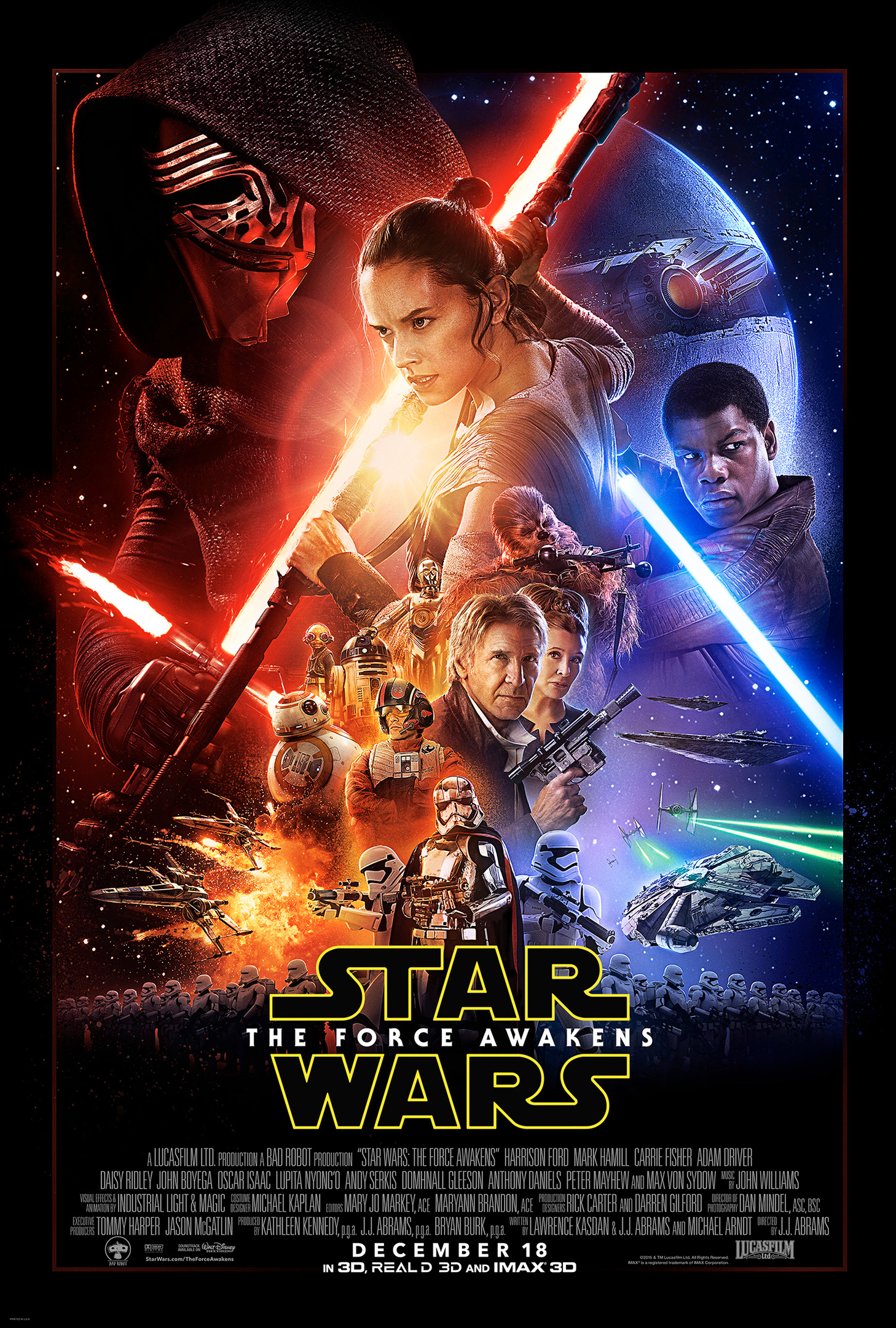
Star Wars VIIThe force awakens…then realizes it’s done this all before and should’ve stayed in bed. Return to that time long ago in a galaxy far, far away. Relive that first moment you saw Star Wars IV and fell in love with the franchise, because you are pretty much getting a plot so similar that you may wonder if the rest of this new trilogy will just continue to rehash and polish what’s all been said and done before. A more appropriate title for this visually stunning film would have been Star Wars: DejaVu or Star Wars: Revisited. No doubt that this film will indeed perform well this weekend; but that has a lot to do with the fact that so many people will view this film through an augmented reality and perceive it to be better than it actually is. The Big D can do no wrong, right??? All that being said, J.J. Abrams once again proves that he is a master at visual storytelling and his films are of a high caliber from a technical achievement perspective. The cinematography and editing are nearly flawless and really help to mesmerize the audience and impress even those who are generally not impressed by visual graphics and sound design. Watching the screen as familiar faces reprise the roles that cemented them in cinema history is nostalgic and heartwarming. Unfortunately, the writers should have spent more time developing a NEW story versus relying upon nostalgia.

With Luke Skywalker (Mark Hamill) in hiding, the Resistance, which has birthed out of the old rebellion, needs to find him in order to defeat the The First Order, a new world empire developed out of the ashes of the old Empire. In an effort to avoid capture, BB8 meets Finn (John Boyega) and Rey (Daisy Ridley). Through a series of events, this small band of rebels encounters the legendary general and smuggler Han Solo (Harrison Form). Working together, they need to get the information in this BB unit to the resistance so that The First Order may be stopped. Leading The First Order is Kylo Ren, a masked, dark, and menacing Sith under the direction of the Supreme Leader. Follow familiar and new faces on a journey through the galaxies to stop this new empire from destroying all that is good.

Put simply, this film relies too heavily on the previous movies, thus prohibiting a new story to “awaken.” It was made known early on that Abrams desired to create a new old-school Star Wars sequel to the original trilogy. And in many ways, he did just that. The problem is that it is way too old school and forgets that this movie was also responsible for relaunching the dormant (as far as theatrically released movies) franchise and introducing something truly new. He was so concerned with pleasing everyone–old fans and new ones alike–that he ended up not pleasing anyone who is willing to step back and actually examine the film as a film. All this film did was reuse past plots and forget to give the eager audience and fanbase something legitimately new after waiting so long. The overall plot, locations, and characters lack anything newly appealing. The movie even begins on a desert planet and ends with the destruction of a “not” Death Star–but it basically is–just larger.

With more than half of the movie consisting of space travel and battle sequences, you will wonder if you are actually playing Star Wars: Battlefront. Why? Because it looks and feels very similar to a highly developed video game that includes film sequences to transition to the different chapters or levels. Just pick one of the characters in the film and you can almost feel yourself moving them with your controller. One of the most memorable elements to the original trilogy is the nearly unparalleled cinematic villain–and the one who many try to be but fail–Darth Vader. Don’t worry, “there is another” as Yoda put it in Empire Strikes Back. However, this new “Vader” will leave you wondering how the writers thought he (Kylo Ren) could even come close to filling Vader’s boots and mask. From the mask to the red lightsaber, Kylo Ren appears to be just as menacing as Lord Vader. And there was some promise there. Unfortunately, the writers took any potential of a comparable sinister villain and essentially emasculated him when he removes his mask to reveal a guy in his 30s with luscious wavy hair. After that, it is impossible to take Kylo Ren seriously as a villain for the remainder of the movie.

Before you jump to the conclusion that the writing in general was poorly developed and executed, just wait a moment. Actually, the writing includes some comedic relief, moderately intense moments, with some pretty decent rushed character development, and sufficient exposition. The problem with the writing lies in the overly used plot elements and past Star Wars tropes. The script essentially lives in the past even though there are parts of it that want to live in the present. Leaving the audience thinking that they’ve seen this all before, the writers fail to include anything new and interesting. Instead of coming across as a much-needed sequel or revival, the film plays out as a reboot. There isn’t anything innately wrong with reboots of old, beloved franchises; but Disney and Abrams indirectly promised the sequel that never was but should have been after Return of the Jedi. Sequels are required to advance the story, introduce significantly new material, and move the plot along. The Force Awakens can easily be interpreted as 3/4 reboot and 1/4 sequel.

Visually, the film is cinematically brilliant! The sound design is also incredibly well executed. Even the score is beautiful. What one can appreciate about the score is that there is familiar music wrapped in a completely new score. Too bad the plot didn’t takes notes from John Williams on how to include the old but advance the new. There is no doubt that this movie will be nominated, if not win the Academy Awards in the technical achievement areas–and it deserves them. Honestly, I think some of the editing and graphics team from this movie should work on improving the graphics in the next Jurassic installment. Abrams promised that he would go back to practical effects and merely enhance them with digital effects, and he did just that. The combination played out very well and impressed me. He may not have delivered the movie that Star Wars fans wanted to see, but he did keep his promise to not rely on cheap digital effects as a large part of the design.

If you want to relive the first time you saw A New Hope, then here is your opportunity. It’s basically the same movie, but looks way more impressive. For those who wanted an actual sequel to resurrect this piece of Americana, then you may be disappointed. I really hope the next installment will give me something new. At the end of the day, the movie is certainly entertaining; and seeing Carrie Fischer, Harrison Ford, Mark Hamill, C3PO, and R2D2 on screen again, in their most iconic roles, is just plain cool and heartwarming. The nostalgia will certainly bring some to tears. And I also want to point out that this IS a fantastic film for a family, whether diehard fans or not, to spend some time together over the holidays at the movies.

“Inside Out” movie review

InsideOutThis is what we get from the creators of the beloved Disney-Pixar masterpiece Up? Prepare for a journey that not even Ms. Frizzle and the Magic School Bus could take you on. Finally get up close and personal with those little voices in your head. Only, despite the prolific amount of “joy” in the movie, you will likely exhibit a moderate ‘meh’ following the close at the denouement when all is better for Riley. Unlike the emotional rollercoaster in Up, this is a pretty well a straight forward ticking-time-bomb structured movie. Fairly predictable and lacks the magic of past Disney-Pixar films. Think Cars 2. The only redeeming quality of the movie is Amy Poehler’s character of Joy. If you loved Parks and Recreation, then you will love the character of Joy because she is pretty much the effervescent Leslie Knope. There are no extreme highs nor extreme lows…the movie fails to arouse a great deal of emotion from the audience. You will definitely not find yourself crying like you did in Up, and the characters of Joy, Sadness, Fear, Anger, and Disgust won’t find a place in your heart like the cast from Toy Story. 

Inside Out is the latest movie from Disney-Pixar and is about Riley, an 11 year-old, girl from Minnesota who moves with her family to San Francisco in order for her dad to pursue a career with a startup company. Deep inside the conscious of Riley, the personified and anthropomorphic voices in her head are busy managing her emotions during this dynamic transition in Riley’s life. Joy (Poehler), Sadness (Phyllis Smith), Fear (Bill Hader), Disgust (Mindy Kaling), and Anger (Lewis Black) all work together to see that Riley is feeling the way she needs to at any given moment while she is awake–or at least try to. Joy is the leader and attempts to see to it that Riley is joyous all the time. During a rough transitional period, emotions run haywire and Joy is unable to manage Riley’s feelings. Not meaning any harm, Sadness touches an otherwise happy core memory and the domino effect that leads to the destruction of feelings, memories, and emotions begins. After getting sucked from Headquarters into Riley’s longterm memory, Joy and Sadness must retrieve all the core memories and get them back to Headquarters before Riley retreats into a dark place and never returns.

This is Pixar’s big summer movie, but it feels more like a movie that should’ve been released during the spring or fall. It lacks that uniquely Pixar quality that we have come to love and expect from such masters of animated storytelling. The narrative struck me as something much closer to a DreamWorks film than a Pixar. Not that DreamWorks hasn’t had some hits–quite the contrary–they produced the Golden Globe winning film How to Train Your Dragon 2 last year and certainly had a major hit with Shrek and the first How to Train Your Dragon. But, typically Pixar movies stand as the epitome of the best in compelling animated storytelling. Visually, the film is quite colorful and personifies the voices in our head quite well. Unfortunately, the movie suffers from an inability to inspire the audience to fall in love with any of the respective characters; but the opposite is also true because there is not a deep dislike for the antagonist (which is essentially ‘time’) or opposition either. As most screenwriters will tell you, movies–even if time is truly the opposition or enemy–need the antagonist to have some type of physical representation. Simply stated, a movie needs a clearly defined external goal, and this film concentrates mostly on the internal goals.

Although not exemplary, we do have sufficient character development in Joy. She truly shows a great character arc that goes from someone who thinks she knows everything and how to keep Riley’s mind under control to knowing that all the various emotions need to work together in order to provide Riley with a healthy state of mind. The movie is definitely cute, and it has some great humor here and there. There are also many Easter Eggs from other Pixar movies as well. One of the funniest parts that most children will miss is the cliche imaginary boyfriend from Canada. In many ways, this movie feels like a filler movie to bridge the gap between movies until the highly anticipated Finding Dory and Toy Story 4. For those of you who really enjoy the Disney and Pixar shorts prior to the feature presentations, you will get a cute short film about two volcanos who fall in ‘lava.’ Although moderately entertaining, it was a cute way to begin Inside Out. The moderate cuteness and entertainment value in the short film is definitely indicative of the storytelling quality in the feature. It was a foreshadow of what was to be expected in Inside Out.

If you’re the parents of kids or you just love Disney-Pixar films, no matter the storytelling or entertainment value, then you will likely enjoy watching this movie. If you are looking for another Disney-Pixar movie to generate strong emotions and maybe even “joyous” tears, then this is may not be it. However, it has received high praise from other critics so far, so maybe there is something in this movie that I may have missed.

If you liked this review or others, please remember to FOLLOW or SUBSCRIBE to my blog. And, feel free to SHARE the link.

Tomorrowland (movie review)

TomorrowlandYou love visiting Tomorrowland at Magic Kingdom, now experience it in a whole new way in Disney’s Tomorrowland! If you have yet to see the movie, definitely watch it in IMAX. This refreshingly (mostly) original movie is a pleasant change of pace from the countless reboots and remakes out there. As a researcher into the convergence of cinema and theme parks (my thesis will be published soon), this movie is of particular interest to me because of how it translates the theme park land into a narrative film. Often we see the opposite: a theme park experience being inspired by or based on a movie. This movie is well paced, developed, and produced. Ordinarily, I receive much flack for how hard I can be on Disney. That’s because when you profess to be the best, you need to consistently deliver a quality product, and acknowledge the criticism both positive and negative. However, this is one Disney review that I am particularly excited to write because I truly enjoyed the movie immensely, and could see a glimpse of the classic Disney style that the brand and studio still bank on (but not necessarily still deliver) today.

Tomorrowland takes you from present day Cape Canaveral, Florida to a land that is bustling with dreams, ingenuity, and talent. Follow young Frank Walker (Thomas Robinson) as his trip to the 1964 New York City World’s Fair becomes much more than he could have ever anticipated. It’s there he meets a young lady named Athena (Raffey Cassidy) who shows him the futuristic city of Tomorrowland. Speeding up to present day, meet Casey Newton (Britt Robertson) who is doing everything in her power to thwart the demolition of the Kennedy Space Center NASA launch platform in order to save her dreams and her dad’s job. Through a series of unfortunate events, Casey comes into possession of a pin that shows her the world of Tomorrowland. Inspired by the glimpse of the city, Casey is determined to find out more about the mysterious pin. Only, Casey could never have dreamed about what this chance finding of the pin would mean; and furthermore, she could never have imagined the adventure she is about to find herself on to save the future of her world and Tomorrowland.

From the time the theme song “There’s a Great Big Beautiful Tomorrow” from Disney Carousel of Progress, located in present day Tomorrowland at Magic Kingdom, begins to play, you know right then and there that this movie will capture your imagination. For fans of and frequent visitors to either the park in Florida or the original in California, you will find many Easter Eggs (film jargon for references to other movies, books, theme park attractions, etc) from the Disney parks. Experience It’s a Small World right there in the movie theatre; and during the sweeping shots and panoramic views of Tomorrowland, see Space Mountain and a upgraded People Mover. Even some of the weapons are based on the ones used on the Buzz Lightyear attraction. If you have been on the People Mover ride, you will recognize that the design of Tomorrowland bears some resemblance to the model seen on the iconic attraction that is said to be the inspiration for EPCOT (Experimental Prototype Community of Tomorrow). Taking the existing attractions in the theme park land Tomorrowland and translating them into the diegesis of the movie Tomorrowland was done incredibly well and I feel Walt would be proud of this grand example of the convergence of two entertaining mediums.

Even though here are obviously similarities in the plot to other movies that carry along them theme “if humanity doesn’t change, it will mean the utter destruction of the world in acute and violent ways,” there is enough original content and development that it will not feel like another doomsday movie with the ticking-time-bomb plot device. The movie focusses on two characters and then their paths merge with one another. If you were to envision the movie as a road, think of it as two separate roads merging into one. I would even venture to say that there is a little of the 1980s classic The Neverending Story in this modern tale of dreams, destruction, change, and the future. Despite how easy it would have been for the writers to have greatly emphasized the socio-political context of much of the movie, the socio-political themes are mostly subtle and the film doesn’t feel like propaganda (much in the same way Avatar certainly did). When a movie essentially has two protagonists, it can become problematic for the writers and director, because fully executing thorough character development, grows increasingly difficult in the storytelling process (like trying to 100% focus on two things at the same time–it seldom happens). But, both the characters of young and adult Frank Walker (George Clooney) and Casey are handled very well respectively and both have unique character arcs.

Although the obvious CGI integration was sometimes a little too much, and I would have preferred practical set designs and special effects, both the “real” and the computer generated facets to the films production design were well-crafted and used effectively in the narrative. Sometimes in movies designed to be best-viewed in IMAX, the studios will play to the screen size, so to speak, even if it’s breaking away from the authenticity and very essence of the movie. No so, with Tomorrowland. The movie uses the IMAX technology as a storytelling tool, not merely a spectacle. Unlike many movies I have seen in the last couple of years, this one has well-defined central characters, with clearly established external goals, well-developed internal goals, and clearly defined opposition to those goals by way of the antagonist Nix (Hugh Laurie) and to a lesser extent, time itself. It has everything a wonderful movie needs to have in order to make the most of an exemplary narrative and excellent entertainment value.

If you are looking for a movie to watch this Memorial Day weekend, even though the remake of the horror classic Poltergeist may be tempting, definitely plan to see Disney’s Tomorrowland. You will be delightfully entertained for the entire runtime of the movie. It is highly unlikely that you will become bored in this film. Grab your friends, after your Memorial Day cookout, and head to the theatre.

As always, if you enjoyed this review, please SHARE on Facebook or Twitter and I encourage you to FOLLOW/SUBSCRIBE to this blog.

Also, a big thank you to all the men and women who serve in the US Armed Forces, as we specifically remember the ones who currently serve or have fallen on this special weekend.