The Judge

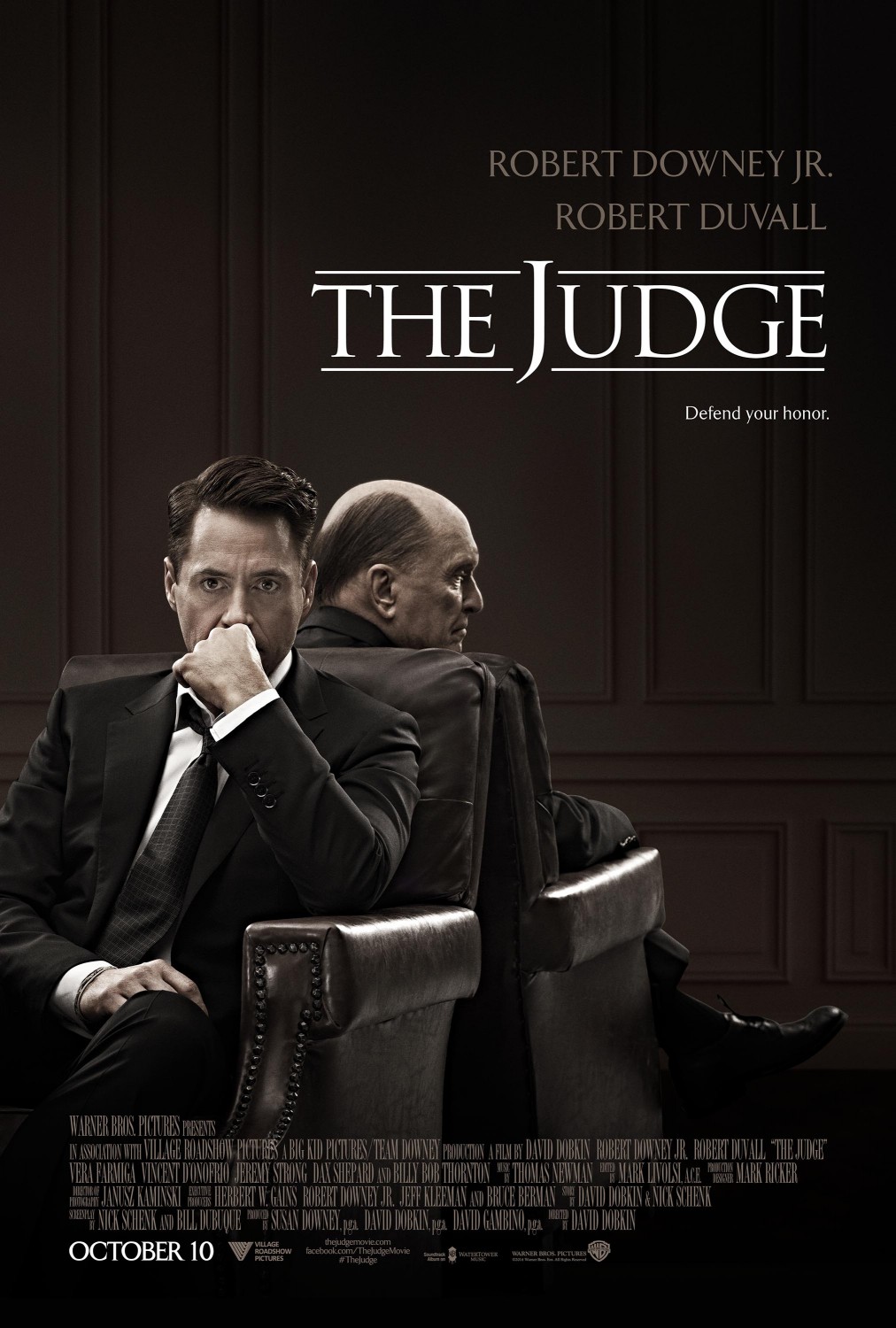
The-Judge-PosterIncredible! This film will definitely blow you away. Honestly, the most gritty and gut-wrenching crime-drama that has come to the silver screen in a long time. Both Robert Downey Jr. and Robert Duvall give the best performances of their respective careers. The emotional roller coaster of a film, will take you on a journey into the lives of a father and son who couldn’t clash more than oil and water. Follow this gripping story of family, justice, and estranged relationships as the very passion, with which the screenplay was written, is felt in every frame and even offscreen. There is no stone left unturned in this unabashedly adult earthy drama that will simultaneously prompt feelings of disgust and laugher throughout the masterpiece. Although we are still a ways off from calling Oscar noms, this one is likely destined for that coveted Best Picture nomination, as well as others.

It is hard to believe that the same director who brought us Wedding Crashers and Fred Clause brings us this uninhibited drama about the murder trial and dysfunctional relationship between the highly respected veteran small-town Judge Joseph Palmer (Duvall) and big-city defense attorney, and savior of the unsavory white-collar criminal, Hank Palmer (Downey). The Judge is about the “big city lawyer Hank Palmer who returns to his childhood home where his father, the town’s judge, is suspected of murder. Hank sets out to discover the truth and, along the way, reconnects with his estranged family” (IMDb). Having first desired to work with an attorney in the quaint Norman Rockwell-esque Indiana hamlet, after the state sends the steely prosecutor Dwight Dickham (Billy Bob Thornton), Judge Palmer must turn to his estranged son. Facing the past he so desperately wants to disconnect from, Hank must work with his obstinent and incorrigible father to develop the defense for his father’s murder charge amidst mourning over the loss of a loving wife and mother of three sons.

This is the first heavy drama–actually drama period–from David Dobkin. It is very likely that when Warner Bros. and Village Roadshow studio executives reviewed his screenplay that they stated to themselves “but this isn’t funny.” And, they would be correct. Until now, Dobkin has supplied audiences with outlandish comedies. However, back in 1998, his breakout film Clay Pigeons was his first attempt at a crime-drama. And even though it was filled with sinister crimes and macabre themes, at the end of the day, it was still a comedy. The Judge is a complete 180 from the past Dobkin films. If it was unclear whether he could prove himself to be a serious filmmaker–reaching emotional depths seldom reached by directors–this old-fashioned return to the power of “story” will convince you that he is destined to create cinematic masterpieces in the future.

Seemingly a chorus line that even Marvin Hamlisch would be proud of, occurring at regular intervals, skeleton after skeleton emerges from the dark closets of this prominent family. And each one forces the respective family members to face them despite the past traumas. Each Palmer family member is a different character archetype. There is eldest brother Greg Palmer who was destined for the major leagues but after a severe car accident in his youth, his promising baseball career was snatched from his grasps. Next to him in age, is Hank. And, the youngest sibling is Dale who suffers from a cognitive disorder prohibiting him from being completely autonomous; however, he is great with an 8mm video camera that ironically captured both the dark and memorable moments from the family and serves as a sort of exposition, filling in the gaps from the past. As the epitome of a family patriarch, Judge Palmer is the anchor for his family, with the exception of Hank who wants next to nothing to do with them.

Beyond the edge-of-your-seat criminal trial proceedings, ultimately, it is the father-son relationship that is truly put on trial before the audience. Screenwriters Nick Schnek and Bill Buboque have so carefully and meticulously crafted the story that the audience will always be wondering whether Hank and Judge will go full force at one another; and, will be forced to wait until the end to behold the no-holds-barred emotional fight between the two strong-willed individuals. Accompanying the brilliant direction and writing, cinematographer Janusz Kamiski will use the camera lens to tell the story of anguish and reconciliation beautifully. Thankfully, the movie includes some humor sprinkled throughout the film, and this can likely be attributed to Dobkin’s penchant for humor. Had this been left out, it is entirely possible that the movie would be too emotionally heavy and draining.

Highly recommended for anyone who loves witnessing true-to-life characters in real-life situations. Due to repeated usages of adult language, it is not a movie for children. But, it is an inspirational movie for anyone who is either currently dealing with or has dealt with dysfunctional/reconciled father-son relationships. If you loved the story, chemistry, and uninhibited dialog and action in Kramer vs Kramer and the timeless classic tear-jerker Terms of Endearment, you will truly enjoy experiencing the powerful story in The Judge.

Gone Girl

Gone GirlPrepare for the ride of your life! This spellbinding crime/mystery drama will have you on the edge of your seats from the time acclaimed director David Fincher opens the film with an incredible cinematic shot of Amy to the time the credits roll. If you have been lucky enough to have not read the book prior to watching the film, you will be glad you waited*. There are few directors who can visually capture the very essence of a novel cover to cover, and that is exactly what Fincher has done. If you have read the book, rest assured that Fincher stays true to the novel (90%) and the few minor changes that were made were actually good changes for the film. In fact, I would even venture to say he improved the original novel with his indelible sleekness. From the writing to the directing, from the acting to the cinematography, David Fincher will captivate your attention for the entire 2.5hr roller coaster of a movie.

Gone Girl is a crime-mysery-drama based on the best-selling novel by the same name. Reminiscent of the infamous Scott Peterson case of the early 2000s, this movie is a deliciously twisted movie about Nick Dunne (Ben Affleck), an unemployed writer turned community college creative writing instructor, who reports his wife Amy (Rosamund Pike) as missing to the authorities on the day of their 5th wedding anniversary. Nick and Amy are the most picture-perfect couple, or are they? Because of Amy’s parents being world-famous writers, the case is picked up by the local and national media quickly. Although the investigation first begins to look for the intruder/kidnapper who ransacked the house, after a bizarre turn of events, the investigation places Nick in their crosshairs. Still claiming innocence despite the circumstantial evidence piling up against him, Nick and his sister Margo (Carrie Coon) hire famed defense attorney Tanner Bolt (Tyler Perry) to help solve this missing person’s case. Determined that his wife is still out there, Nick mounts his own counter investigation into the whereabouts of his wife. But is this just to throw off the authorities? Did he actually do it (as was the case with Scott Peterson case)? And, if so, why? All these questions and more can only be answered by watching this amazing work of cinema. Dive right into this twisted and bizarre thriller that takes places in the most nondescript places away from the hustle and bustle of the city. As soon as you think you’ve got it, guess again!

Aside from the brilliant direction of David Fincher, this movie benefits greatly from the screenplay written by Gillian Flynn, the author of the original best-selling novel. This proves to be an excellent move because the movie is so incredibly close to the book. Fortunately, the facts that were changed to benefit the structure and pace of the movie, were strategic stings that actually enhanced the narrative. Because this movie is a mystery movie, I won’t be discussing any of the minor changes. But, if you’ve read the book, you will be delighted at watching the images seamlessly leap off the pages and onto the screen. Not every literary writer can make a successful transition from writing novels, which are internally driven, to screenplays, which are visually driven, but Flynn has proven her ability to adapt a screenplay beautifully. It’s almost as if she started with page one of the novel and wrote the dialing, visual elements, and stage directions as they appear in the novel and transposed them to the screenplay.

Ben Affleck truly gives the performance of his career in the role of Nick Dunne. He has stepped up his game in such a brilliant way and it shows throughout the entire film. One can easily draw the conclusion that, after having made a name for himself as a successful director, that he has gained greater insight into improving his acting skills. Interestingly enough, Affleck walked off the set of another film in order to act in a David Fincher masterpiece. The role of Nick Dunne was a perfect suit for Affleck, as it captures his stunning good looks and apathy, with occasional aloofness and cockiness, in regards to the disappearance of his wife. His performance truly puts the audience in a place of whether to sympathize with him or by repulsed by him. And, throughout the movie, you will be asking yourself whether or not you believe his story of the disappearance and the story of their marriage.

Contrary to the name recognition that Ben Affleck, Tyler Perry, and Neil Patrick Harris receive in this movie, there is a strong possibility that you did not know who Rosamund Pike was prior to her excellent portrayal of Amy Dunne. However, after this impeccable performance, you will not soon forget her name. From the moment the movie opens on a closeup of her gazing into the camera, you know that she is going to completely sell her character. From her devilishly good looks to her complicated (and we all know what a “complicated” women is) attitude and high society demeanor, the audience is caught at a crossroads as to how to receive her. Much like the audience is asked whether or not to believe Nick, the audience is faced with whether or not to feel sympathy for her. Throughout the story, she reveals how her marriage actually was, or does she?

The film also benefits from an excellent supporting case of players. Kim Dickens is outstanding as Detective Boney. Carrie Coon plays the role of Nick’s twin sister Margo with an amazing performance that highlighted both the sibling rivalry and the unconditional love sib lights should have for one another. In a stark contrast to How I Met Your Mother‘s Barney, Neil Patrick Harris is awkwardly wonderful as Amy’s ex-lover Desi from boarding school. Rounding out the cast of notable supporting players is Typer Perry as the brilliant  defense attorney Tanner Bolt.

As this movie could easily be a dramatic depressing soul-sucking story, Flynn and Fincher add the occasional satirical joke and dark humor related to “perfect marriages” and searches for rich white women. These subtle humorous elements coupled with the dark and twisted story create an uncanny atmosphere for this crime-drama to unfold. In addition to being a narrative crime-drama mystery, it’s also a self-reflexive crime-drama mystery in how it deals with the sorted circus surrounding the search for Amy. It’s self-reflexive in that the movie comments on the infrastructure of a missing person’s search when the person is of a high profile in a community.

Rounding out the beautifully orchestrated Fincher film is the breathtaking cinematography and well-crafted coloring that is standard equipment on a Fincher cinematic work. If you are familiar with the editing and coloring of a Fincher film, you will notice similarities between films like The Social Network and Fight Club and Gone Girl. He worked with the post-production house Digital Domain and with cinematographer Jeff Cronenweth to give the film the “Fincher” look, which both is aesthetically pleasing and, in its own way, helps reveal the subtext of the film. Although not as prominent in the film and juxtaposed against the gritty plot, the score provided by Trent Reznor and Atticus Ross, is very much like the innocent music one may encounter in a spa or meditation retreat.

This is not your Agatha Christie or Lifetime crime-drama, it is a journey full of perfectly crafted twists and turns that keep the audience guessing the whole time. Well, those who have not read the novel that is. Get ready to be captivated by the stories of love, betrayal, murder, and mystery in this masterpiece adaptation of the best-selling novel not for the faint of heart or “sensitive” movie patrons.

*My recommendation is to NOT read the book prior to watching the movie to keep the element of mystery in tact.

Annabelle

AnnabelleIf Chucky was worried he would lose his place amongst the creepiest dolls in cinema history to Annabelle, he needn’t worry any longer. The much anticipated followup/prequel to the fact-based horror hit The Conjuring, directed by James Wan, featuring the possessed doll who’s cameo sparked interest in the original film, does not live up to expectations. It certainly has its moments of unheimlich (uncanny) as laid out by Sigmund Freud in his study on horror, causing some anxiety and terror; but, the narrative just doesn’t hold up very well and was not handled as well as it could have been. However, it is a good movie to watch with friends during the month of October, or if you are looking for a decent scare during which you can hold on to your date’s arms or vice versa.

Annabelle is about the story of the possessed doll that famed and ordained supernatural and paranormal experts Ed and Loraine Warren (most famously known for their investigation into the Ammityville case), still to this day, have locked away in a glass cabinet that is blessed by a priest twice a month. Prior to coming into possession of the doll, Annabelle once belonged to a young couple as part of an extensive doll collection. Following a brutal murder next door and an attack upon themselves by the neighbors estranged and mentally disturbed daughter, John and pregnant Mia discover that their attackers were part of a Satanic cult involving blood sacrifice. Unfortunately, the attackers conjured up more than a plan of attack. A malevolent and unprecedented evil entity now occupies the doll, in the pure white dress, as a conduit from the spiritual world into ours. John and Mia must uncover why the doll is hell-bent on their utter destruction and drive the evil spirit from it before it harms their family.

The failed haphazard screenplay, written by Gary Dauberman, took the low-rent approach to horror and just had cheap scare after cheap scare throughout the story. In stark contrast to The Conjuring, there is little to no fact-based content in the story at all, save the archival footage from the Warren’s interview with the young ladies who were last in possession of the Satanic doll. Unlike Chucky, Annabelle is never seen directly orchestrating any of the horrific incidents during the movie–not even so much as moving her eyes or head. With the exception of the doll occasionally being found out of place, the doll is fairly stationary. Both the direction and writing are week and is little more than a Chiller or SyFy channel original movie.

The film is very generic in story and structure, and will likely be a faint memory by the time you get back home. It is obvious that the film would have faired by much better had Wan taken the reigns instead of turning it over to another less capable director, who directed films like Mortal Kombat: Annihilation. Equally unmemorable are the two leads. Their respective performances were so bland that it will have you looking for the salt to add flavor, or look for the cue cards they are obviously reading. The film will most like rake in the cash and create a nice profit for Warner Bros and New Line due to the low budget (with respect to comparable theatrical films). If you can only see one movie this weekend, definitely select Gone Girl over Annabelle.

The Maze Runner

Maze RunnerGet ready for yet another movie featuring attractive young people (this time, all guys except for one girl) trapped in a daunting situation that they cannot figure out. Once again, we are faced with a young adult fantasy thriller that sits somewhere between The Hunger Games and Divergent, but throws in a little Lord of the Flies and Peter Pan for some literary credit for the older or more educated audiences. Seemingly a rip off of the aforementioned recent theatrical films, The Maze Runner is another in the lineup of movies based on best-sellers, wherein 18-21 year-olds are the only ones who can save an entire civilization from utter destruction. Director Wes Ball and his young cast work very hard to overcome any apprehension or feelings of boredom the audience many have for this quickly proliferated genre of film.

The Maze Runner is about Thomas, played by Dylan O’Brien, a young man who wakes up to find himself in a strange land populated only by guys. Alby (Aml Ameen) is the leader, who keeps order with steady Newt (Thomas Brodie-Sangster) and hot-headed Gally (Will Poulter). The group has only one set of instructions–cooperate and survive. Having a much more curious mind than his counterparts, Thomas is determined to find out how to escape the maze and find out how and why they are trapped. Unfortunately, Thomas is met with constant opposition, mostly from Gally, because he is upsetting the order under which the guys have survived. Quickly proving himself to be courageous and loyal, Thomas must use his curiosity, speed, and ingenuity to escape the dark and sinister ever-changing maze to answer the foreboding question of what lies beyond.

The movie bears a striking resemblance to the plot of Lord of the Flies in that there is no “adult,” although the lead boys are obviously of adult age, supervision. And, these young people must develop their own set of laws and mores in order to continue to survive within the lush glade, that sits in the middle of a maze with walls of incredible height. Nearly an all-male cast, the guys encounter one girl who is sent to them with their last shipment of monthly supplies, who is so underused that she comes across as merely a token gesture to the females who are watching this movie designed for a mostly male audience. Largely unknown performers, the cast is able to pull off this hybrid teen/adult fantasy thriller by making his stock role stand out.

Some of the refreshing aspects to this movie, as compared to its other dystopia film brethren, is the missing element of a love triangle or town elders who barf up needless loads of mythology and narrative exposition thus turning this visual medium into a play. Not that plays and musicals are bad, but they are dialog driven whereas a movie should be visually driven. And, The Maze Runner has visual storytelling down in spades. Many times, it felt like watching a graphic novel on screen. After so many films have essentially lowered the expectations of these young adult movies based on best-sellers, this film tries to make up for where the others fail. This is especially clear when the movie pushes its PG-13 rating by showing the young people dying horrific deaths as a result of madness or the macabre creatures of the labyrinth.

Even though the acting is surprisingly good, for this genre, and it drops the cliche love story subplot, the movie suffers from a horrendous score and terrible sound design. In fact, this “film” looks and sounds more like a SyFy Channel original movie (with better acting, of course) than it does a cinematic release. However, if you can watch the movie in DBox seats, it definitely enhances the experience. One can only hope the sequels to the film will boost production quality (and no, I am not talking about CGI) and create a more cinematic feel to the movie. Moving forward, hopefully the plot will be bolstered by more narrative substance that could achieve the quality of film that this new franchise is capable of. On the plus side, there is a great twist in the end that elicited definite “whoa” response from the audience. Although there were points in the film that were way too cliche and predictable, I am looking forward to see how the subsequent sequels are handled.

If you are looking for something new here, you will not likely find it. However, sometimes it’s perfectly acceptable for a movie to be merely entertaining rather than possessing the ability to aMAZE the audience.

No Good Deed

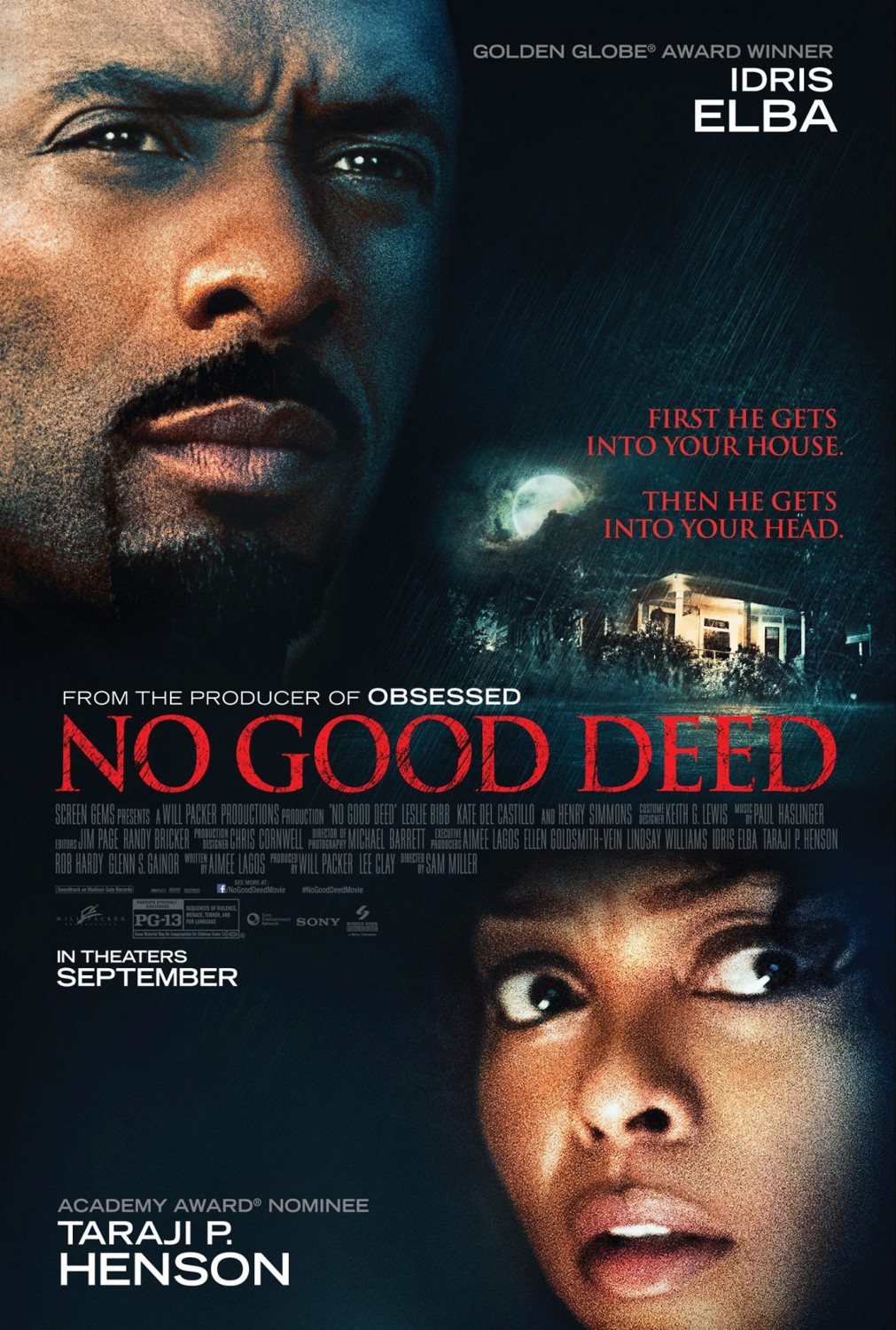
No Good DeedIf you are looking for a good group movie experience, filled with twists, turns, and surprises, then check out No Good Deed. Every once in a while, there comes a good suspense movie that does well in a date or group setting. With it’s quick pacing and ability to hook the audience within the first five minutes, this film will keep you on the edge of your seat from start to finish. A good horror film (yes, this falls into that genre), possess the ability to consistently keep the audience in a state of anticipation for what is to come or in a state of disorder. The classic format of a horror movie is order, disorder, and order again. In recent times, it is not surprising when a horror movie follows order then disorder. And, in less than an hour and a half, No Good Deed its all the pacing points for proper structure.

No Good Deed is a film about an escaped convict named Collin, played by Idris Elba, who wrecks his truck, during a storm, and asks to use the phone at the house belonging to Terri, played by Taraji P. Henson. Generous, but unsuspecting Terri invites him into her home and through a series of events, he terrorizes Terri and her two children. Seemingly cut off from the world, and having to protect her children first, Terri must find a way to escape from the clutches of the malevolent presence of and psychologically unstable Collin.

This is a good example of a film that truly belongs on television–specifically Lifetime or Lifetime Movie Network. It’s not that it’s a bad movie–quite the opposite–it’s an enjoyable movie-going experience; but, the quick pace, lack of exposition, and cliche turning points lends this movie to be more effective on a network versus a movie theatre. In other words, No Good Deed lacks the cinematic feel of a film but possesses an excellent television movie feel. It’s almost as though the producers originally had an idea for a TV movie that they decided, by throwing some notable actors in it, that it could be a theatrical release instead of on CBS (owned by Sony) or Lifetime.

**SPOILER ALERT** In order to discuss further some of the negative critiques of the film, it is necessary to talk about elements that could spoil the film for those who intend to watch it. If need be, you can skip to the last paragraph.

Although, there are many troubling issues with the writing, the one issue that seems to be the most bizarre and overlooked by the writers is the fact that the affair Jeffrey (Terri’s husband) is having with the, now, deceased Alexis (former fiancé of Collin) was supposed to be happening at a hotel. Ordinarily, this would be commonplace for an affair; but, by way of the fateful note that Jeffrey left for Alexis on her pillow, we know that they were clearly sleeping together at her house. Why now the need for a hotel??? Another error is the fact that Collin heads to Jeffrey’s house to seek revenge on him. But how the hell was he supposed to know that Jeffrey was or wasn’t going to be home? Seems to me, that some of the events and turning points were nearly forced to keep the quick pacing to tell the story in under an hour and a half.

All-in-all, No Good Deed makes for an enjoyable movie experience with your friends. If you have one of those free passes to your local theatre, this would be a perfect movie for the free pass because if has the TV flair to the plot and production value.