“Hunger Games: Mockingjay Part 2” movie review

Mockingjay 2Audiences witness a franchise and world-wide phenomenon come in for a mostly smooth, however anti-climactic, landing. The final installment in the Hunger Games franchise Mockingjay Part 2 over-promises and under-delivers. Despite that, the continued plot from Part 1 is carried out well enough and has many poignant moments and a few exciting sequences. You will also get to watch two of the best-written scenes in the entire franchise. Instead of a continued goodbye to Philip Seymour Hoffman, his few appearances in the film actually remind audiences that the majority of Part 2 was actually filmed in early 2014 and all the actors have long-since moved onto other projects and left the dystopian world of Panem behind. The first act of the movie begins abruptly and may bore you, but Acts Two and Three will deliver some impressive scenes and generate a great deal of excitement and anticipation. At the end of the day, The Hunger Games is one of the best examples of a cash grab with only Disney’s Frozen leading the pack for the ultimate superficial, absent of any critical value, cash cow.

Pick up right where you left off with Katniss (Jennifer Lawrence) having just survived the vicious attack from Peeta (Josh Hutcherson). By now, Katniss, President Coin (Julianne Moore), Gale (Liam Hemsworth), and Finnick (Sam Claflin) all realize that the stakes are incredibly higher than they ever thought. For now, they are on a mission for the survival of the rebellion and to keep Panem from imploding on itself and falling into complete chaos. Ignoring President Coin’s orders, Katniss stows away and joins a special operations team on the front lines with one goal in mind–assassinate President Snow (Donald Sutherland). With the end in sight, the rebellion infiltrates the capital and continues to press on toward the presidential estate in order to bring the thoughtless deaths and dictatorship of Snow to a close.

Over all, the movie does a good job of bringing the high-concept plot to a close. It also finishes its run on top as other films try to be a Hunger Games but fail to deliver the same value. You know you did something right when there are half a dozen other big-budget films and parodies that are based on similar concepts made popular in the franchise. The most prominent disappointment in Mockingjay Part 2 is the abrupt start and fairly anti-climactic denouement. This film cannot be entirely held responsible for the rough first act because Part 1 should have ended with Peeta strangling Katniss before we witness her in the neck brace. Starting Part 2 with Katniss in the neck brace without having seen her in it, in the previous installment, would have been a much better choice. Her recovery from the acute neck trauma was also a little rushed. It would have been more appropriate and added to the emotional power of the film to see her slowly recover as she makes her way towards Snow’s mansion. The chemistry between Katniss and Peeta is not as well played out in this chapter as it had been in the previous movies. Not having read the books, I am unsure if that is how it is supposed to be or the writers and director just didn’t feel the chemistry was important.  There are a few tense moments between Peeta and Katniss that show a quality of writing not often found in the rest of the franchise.

Although the writing throughout the films has not been a strong point–not that is has been bad–just that it is not as strong as it should be, there are two scenes from Part 2 that are emotionally powerful and very well written. Without giving anything away, there is a scene with Katniss and Peeta lying awake at night talking. The exchange of dialog is some of the best writing in the entire series; however, just when the writers were about to hit a homerun, it ends suddenly at the buildup. The emotional highs and lows of the relationship between Katniss and Peeta are seen in this brief portion of the movie. Towards the end of the movie after the capital has been won over and Snow is being held captive in his own estate, Katniss approaches him for what would be one of the last times. She finally comes face to face with her oppressor turned prisoner. If there was one scene selected for its contributions to the film in both acting, writing, and directing, this scene would be it. The tension felt between Snow and Katniss is so think that it could be cut with a knife. Truths are told and secrets revealed that are a game changer that comes out of left field (for those of us who have not read the books). In many movies, a scene like this may not contain much in the way of class, but Sutherland brings that sense of the notorious paired with high class that he is known for.

This is it! We finally get to the capital. Wait. It is already in ruins??? Despite the fact that some of the best scenes from the Hunger Games franchise take place in this last installment within the walls of the opulent, garish, lavish capital of Panem, the audience does not get to witness the decay and destruction of the city that flourished on the backs of those who begrudgingly took from their lands to support the lifestyle of the 1%. Where is the forced transition from, what amounts to, heaven to hell? The gold and silver lined streets, turning into ash??? There would have been some critical and intrinsic value in watching the city destroy itself amidst the house of cards that it build. Instead we get thrown in to the post-war Panem. Even for our characters, there would have been immense satisfaction in watching the capital pay for the shattered lives and broken families that proved the resources for their glutinous lifestyle. Just before the war comes to an end, there is a death scene that is handled quite poorly. There is no emotional windup or climax–it is just a quick death that you could miss by looking down at your popcorn or that text message. Audiences leave the world of Panem with some degree of hope for the once dystopian society that finally has a chance at a fair, democratic, and bright future.

It is definitely evident that this franchise fought hard and valiantly to stay relevant and alive for the past few years. From what I can gather, this last installment in The Hunger Games plays it closely to the book, with some exceptions that definitely could have been visually told better. It does what a final chapter should do and brings the narrative to a close by providing a degree of resolution. Even though there are many elements of the movie that could have been treated with more finesse and better developed, it is probably the best in the franchise. Whether you only watch the movies or you are among those who read the books and then saw the movies, this film should appeal to both audiences.

“007: SPECTRE” movie review

SpectreA brilliant Bond film and excellent followup to the wildly popular Skyfall. Director Sam Mendes pulls out all the stops in MGM and Columbia’s Spectre the 24th official title in the Bond 007 franchise. After the soaring success of the previous chapter in the Bond anthology, who would have known that this final appearance of Daniel Craig as the heartthrob MI6 “paid assassin” would be just as thrilling! Just the opening sequence of the movie will have you on the edge of your seat, and the many throwbacks to past Bond film plots or characters will capture your attention for the two and a half-hour runtime. Even Blofeld, the original Bond villain, and his fluffy white cat appear in this epic Bond story. The jaw-dropping action will satisfy even the most ardent and long-time James Bond fans. Whether you’re an old-school or new 007 fan, you are definitely in for a treat. Some of the most refreshing and getting-back-to-authentic Bond elements, of the Craig chapters in the series, is the lack of over-the-top and at times absurd gadgetry, and a return to the very essence of what makes this franchise stand the test of time.

After the tragic events at Skyfall and the destruction of MI6’s massive facility on the Thames, James Bond 007 (Craig) is following a lead in Mexico City thanks to a cryptic posthumous message from the former Agent M (Judi Dench). When the actions in Mexico City draw the attention of the UK’s new head of security and Agent M (Ralph Fiennes), 007 is both grounded and puts the very existence of MI6 in jeopardy. After an unauthorized mission to northern Africa, 007 learns of the sinister crime syndicate known as SPECTRE. Coming face-to-face with the leader of Spectre, 007 learns of a chilling connection between the leader and himself. From northern Africa to the Austrian Alps, 007 must race against the clock to stop a big surveillance data collection organization from being the eyes of the world, and take out the leader of Spectre before he has his hands in the security pockets of several countries around the world.

This final chapter in the Craig Bond series has it all: action, romance, espionage, intrigue, and car chases. But probably the best elements of the movie are connected to  getting back to the very core of what has kept this franchise alive for over 50 years and 24 official titles. Despite the success and popularity of the 90s Brosnan 007 movies, they tended to place a lot of significance on the futuristic and ultimately impossible gadgets. Understandable, because the 90s were a time of massive personal electronic device innovation and the dot com boom. However, this emphasis on the gadgets took away from the plot and character development. Still, those era of Bond movies were exciting and still popular today amongst mostly the newer Bond fans. Returning to the very essence of what make Bond the 007 that fans adore is what makes the Craig films unique and exciting–especially in Skyfall and Spectre where 007 truly comes into his own. We still get some gadgets and the famous Bond film cars, but there is a degree of believability and realism that exists in these films that did not exist in the 90s Bonds. Even though these are still high concept films that have over-the-top action packed sequences, these movies still have a sense of old-school espionage class about them. An interesting side note: there is definitely a hint of the plot from Tomorrow Never Dies in this current installment.

No 007 movie would be complete without an original song that is eerie, romantic, and mysterious all at the same time. The title song from Skyfall performed by the incomparable Adele was an outstanding work of music and lyrics. It truly embodied the film itself and cemented her career as a master of soul/jazz. I cannot say the same for Sam Smith’s performance of “The Writing’s on the Wall.” I was not all that impressed with his performance and I thought the song itself paled in comparison to 2012’s “Skyfall.” Despite the fact that I didn’t personally care for Sam Smith performance or the song, it definitely still had that Bond theme flare about it. Between the graphics and editing, you still knew that you were watching a 007 movie without needing to see the poster or title. Looking to the next vocal artist, I’d like to see Elle King perform the next Bond theme song after her very Bond-ish sounding “Under the Influence.” Regarding the film score, Thomas Newman shines as he so often does with his remarkable talent for capturing the soul of a film in the score that accompanies it.

Facing the popularity of Skyfall, it was definitely a monumental task for Mendes to direct this Bond film. And although I do not feel that Spectre is better than Skyfall and at times I felt that I enjoyed the previous one more, I still thoroughly enjoyed this present installment of the anthology. And to my pleasant surprise, Dame Judi Dench makes a small cameo appearance as the M we’ve had for nearly 20 years. In respect to the characters in and of themselves and their personal/interpersonal relationships with one another, I really felt that the chemistry between M, Q, 007, Money Penny, and Blofeld was right on the ‘money.’ There really isn’t much in the way of traditional or conventional character development but that is commonplace in high-concept films. However, the glimmer of development in both M and 007 was enough to show that these characters and actors were almost made for each other. It was never awkward or boring to watch their interactions with one another.

Ready for an actual spy movie filled with assassins, intrigue, espionage and romance–especially after having sat through Bridge of Spies??? Then definitely watch the next chapter in the Bond, James Bond 007 anthology SPECTRE! Prepare yourself for over two hours of excitement, explosions, and dynamic car chases. Return to old school Bond! Watch as many plot elements through the years and even the villain who started it all make it full-circle.

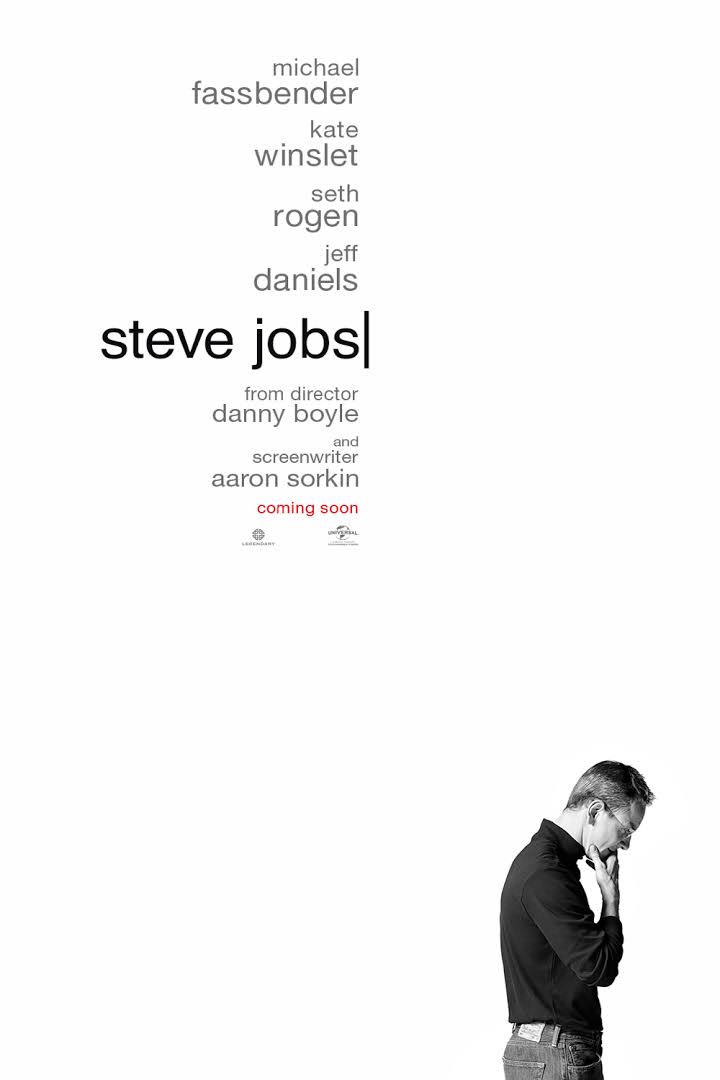
“Steve Jobs” movie review

SteveJobsA mesmerizing and controversial bio-pic. This seems to be the year for the biographical motion picture. Universal Pictures and Legendary’s Steve Jobs takes you on a journey through the most signifiant product launches of the late co-founder of Apple’s career. Despite the fact that Jobs is revered as a genius and one of the most influential men in American history, this movie does not shy away from painting an accurate portrait of his personal and professional life. Although he is loved and admired by so many people, his character is one that you will most likely dislike through most of the narrative. From open to close, you will be glued to your seat in awe and surprise. This is definitely one of the most intriguing and intense bio-pics I have seen in a long time. Throughout the narrative, there is a constant theme of control and design. Complete with a brilliant cast and impeccable writing, this is definitely one to watch out for at the next Academy Awards.

Steve Jobs is about the early career of the co-founder of Apple. You will go on a journey through the most important product launch successes and failures of Jobs’ (Fassbender) career. From being fired from the very company that he co-founded to the love-hate relationship he has with his daughter and the hatred for her mother, you will learn what prompted Jobs to make the decisions he did and how each decision affected his relationships with friends and colleagues. Discover why “end to end control” was so important to the designs of the MacIntosh and Apple computers.

Michael Fassbender truly shines as the genius behind Apple’s phoenix-like return from the ashes of its darkest days. Not only does he resemble Jobs in appearance, but he also captures the very essence of what made Jobs tick and why he became the success he was professionally. Fassbender also delivers powerful performances in his altercations with colleagues and his presumed family. The intenseness of his conflicts and triumphs transcends the screen and compels your attention through the entire film. Often in movies, you either want to love or love to hate the protagonist; and that element rings very true in this film. For nearly the entire movie, I hated Steve Jobs. Funny, because I use all Apple products. But, during the end of the third act, I made a radical shift and saw the glimmer of hope that has caused millions of Apple fans to adore him so much during the latter years of his career. More than anyone else, he believed in his designs and methods of product launches. Only his director of marketing Joanna Hoffman (Kate Winslet) seemed to be the one he confided in most or could control the man who was insistent on “end to end control” throughout his dynamic career. Winslet also delivers a commanding performance as Hoffman who stuck by Jobs from product to product, advising him when he wouldn’t hear of anyone else’s opinions. She is the single person who held helped the public not to despise him as much as most everyone else did behind the scenes.

So often I find that bio-pics can tend to romanticize the protagonist by glossing over the more negative events of his or her life. Not so with Steve Jobs. The remarkable element of the writing is the commitment to reality and just laying all the positive and negative events and encounters out there for the audience. Highlighting the more negative events is extremely important to this film because that is where the very dynamic character arc comes from. If you loved or hated Jobs the entire time, it would not be nearly as impactful. But because you will likely hate him for most of the movie until the end and then quickly turn a 180, that is where the magic of this movie lies. There are times that you think that he will budge from his stances on design teams and products, but then he is just as stubborn or relentless as he is throughout the story. Oddly enough, his penchant for complete control is what tanks and then resurrects the tech company. The story is gripping and whether you are an Apple product fan or not, this movie is an excellent example of how a completely candid bio-pic can still prompt the adoration of the public despite the dark elements and poor decisions in relationships with friends and lovers.

If you are an Apple product fan, this is definitely a film to catch because it takes you behind the sleek product displays and technology launches. Learning about Steve Jobs the man actually gives a new-found appreciation for the company he helped start, got fired from, and rehired again. The amazing cast and brilliant writing enables this film to be admired for its commitment to the art of biographical motion pictures.

“Bridge of Spies” movie review

BridgeofSpiesA spy movie with very little in the way of intrigue and espionage. Touchstone, DreamWorks, and 20th Century Fox’s Bridge of Spies is a very traditional biographical film. There is nothing innately wrong with it, but there lacks anything truly remarkable or memorable either. Tom Hanks plays a very Tom Hanks character and Spielberg provides us with a very classy historic movie. Perhaps it is all just as well because the Cold War was a war of information and not high powered action. And, that is pretty well what you get in this movie. The most thrilling scenes are ones that are already in the trailer. Even James Donovan’s (Hanks) testimony before the U.S. Supreme Court was anti-climactic. Despite the fact it is based on a true story, for cinematic purposes there should have been more emotionally trying scenes or surprise. We seldom get Cold War era movies, so this is a nice addition to historic/bio pictures. Although the descriptive “thriller” has been attached to this movie, I do not find sufficient evidence in the movie to support such a claim. It is a moderate drama–neither heavy nor lite. Perhaps if John Grisham had written a book on this event and that book adapted for the screen, the film would play off more accurately as a spy thriller. As it stands, it is a historic drama. Nothing more, nothing less.

Bridge of Spies is about a Cold War era spy swap in the late 1950s in East Berlin. Suspected Soviet spy Rudolph Abel (Mark Rylance) is apprehended by the FBI in New York and placed under the counsel of successful insurance attorney James Donovan (Hanks). In an effort to show due process, even to suspected spies, the U.S. government provides Abel with a trial by his peers. Following a conviction, Hanks persuades the sentencing judge to allow Abel to live in the event they need him as leverage to trade for captured suspected American spies in Soviet Europe and Russia. Quite the brilliant move because an Air Force pilot and graduate student were both captured by the Soviets shortly after the apprehension of Abel. Follow Donovan as he makes his way to one of the most dangerous parts of Europe during the height of the Cold War in an effort to successfully negotiate a spy swap.

There really isn’t much to add besides what I have already mentioned in my opening. This movie is very par for the course. Hanks and Spielberg provide us with the quality that we are accustomed to receiving from them. I was never bored during the movie, but I was never on the edge of my seat either. Typically, I look to espionage movies for some sense of surprise or intrigue; but, this one plays it like a typical drama based on a true story. As this is not a story or event that many Americans likely know about, it provides insight into what many of the operations during the Cold War may have been like. I do feel that the dialog and character development were lacking. Hanks and the rest of the cast pretty much remain static through the whole movie. Often in movies based on true stories, I like to see dynamic character arcs or redemptions. What I find in this movie is a realistic depiction of this event that likely felt more intense at the time than what is shown of the screen. Perhaps that is it. Maybe, I would have liked the movie a lot more had there has been a pronounced thrilling nature or contained emotionally intense scenes.

If you are looking for a thrilling movie of government espionage, then this is not it. If you are looking for a well-produced biographical movie based on a true story, then this is it. I am certain that Tom Hanks plays the role of Donovan accurately and I commend him for bringing this real-life American hero alive for the screen. At the end of the day, this is a good example of an accurate biographic motion picture and Spielberg proves that he can deliver a classy true story as well as he can an action-adventure movie.

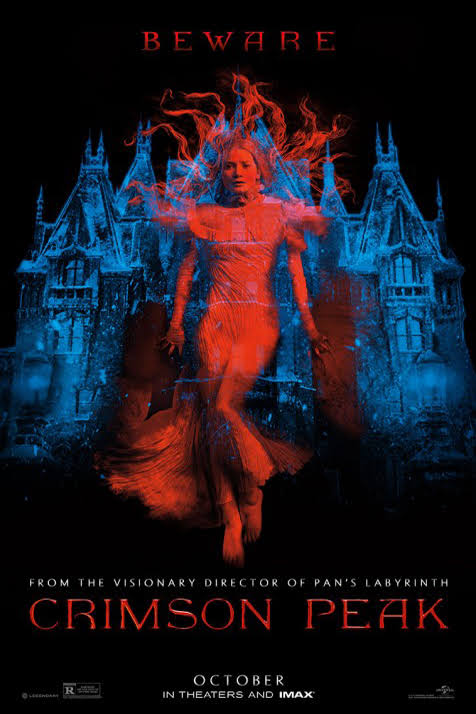
“Crimson Peak” movie review

CrimsonPeakNo flowers in this attic. From the studio that pioneered the horror film back in the early days of cinema, comes the truly avant-garde German expressionist film Crimson Peak. Universal and Legendary Pictures provide us with a thought-provoking classically produced horror film that contains prolific imagery that invites interpretation, even from the most veteran of film scholars. Visionary director Guillermo Del Toro lives up to his reputation as a master of the macabre. Although the dialog and acting are weak, the film is beautifully shot and will constantly have you on the edge of your seat in anticipation of what is about to happen. This is definitely one of those horror films that will undoubtedly make its way into film appreciation classes because of the vast material there is to dissect and explore. There is also a very self-reflexive element in the movie that is quite fascinating to think about. Not your traditional Halloween fair or ghost movie, this one part ghost story and one part mystery film is still a remarkable addition to the horror library because of the adherence to the very essence of what makes a horror film great.

Crimson Peak is about Edith Cushing (Mia Wasikowska), the daughter of a wealthy engineer in Buffalo, NY who is swept off her feet by the charming old English money Baronet Sir Thomas Sharpe (Tom Hiddleston). Following tragedy in Edith’s life in Buffalo, she marries Sir Thomas and moves to the countryside estate of Allerdale Hall in Cumberland, England with Thomas and his highly aristocratic sister Lady Lucille Sharpe (Jessica Chastain). Despite Sir Thomas’s family name, he and his estate, built upon clay mining, are virtually bankrupt. Hoping that she can help to revitalize Thomas’ family estate, Edith begins to move her assets over to England; however, after a series of encounters with specters of the night in the dark and dank mansion, she begins to feel like something is terribly wrong and her very life may be in danger of meeting the same fate as the ghosts and ghouls.

One of the most noticeable elements of the movie Crimson Peak is the commitment to a truly classically produced horror film in the vein of German expressionism and the avant-garde. Interestingly, it is highly appropriate that Universal Pictures released this film because the founder of Universal Carl Laemmle made it a staple of early horror films released by the then fledgling studio. Although there is no one single definition of what indicates a German expressionist film, common characteristics are: using extreme distortions in the production design to indicate inner feelings or subtext, a very dark and moody style of filmmaking, strategic placement of lighting to create harsh shadows, unique and emotional architecture, and creating a sense of disorientation. Tell tale signs of this cinematic influence in Crimson Peak‘s production design can be seen in the very design of Allerdale Hall. Due to the very artistic nature of German expressionism, there is also a high degree of avant-garde because of the experimental production style, particularly in how it relates to the mystery at the center of this movie.

Although there are many positive elements in this film, some of the negative elements are the underdeveloped dialog and, by extension, the acting, lack of exposition, and at times sloppy editing. Common in German expressionism and avant-garde cinema are these characteristics. Note, that does not excuse the film for not delivering but does help to understand why they can be found in such a high budget movie directed by such an accomplished director. Had the dialog been better developed and even fifteen more minutes of exposition (or backstory) has been added, then I feel the acting would have increased in quality and delivery. As far as the occasional sloppy editing, there is no explanation and could have definitely been carried out with more finesse. Part of what makes this such a beautifully macabre film is the cinematography and production design. There are even sequences that will genuinely make you squirm and cringe at the highly visceral action with a hint of gore.

If you are looking for a traditional ghost story, this is definitely not the movie for you. To quote Edith, “the ghosts are a metaphor.” However, if you are looking for a great movie that embodies the thrills and chills of the Halloween season, then this is one to catch in theaters this month. Because of the expressionistic style of filmmaking, I can definitely see the advantage of and recommend watching it in IMAX (provided it’s the 2D version). It has a little of everything that a well-written horror film needs: death, romance, disorientation, and mystery. For the filmmakers or film scholars out there, prepare to have your mind stimulated as you attempt to interpret what the various symbols mean beyond the more superficial plot of the story.