“Sisters” movie review

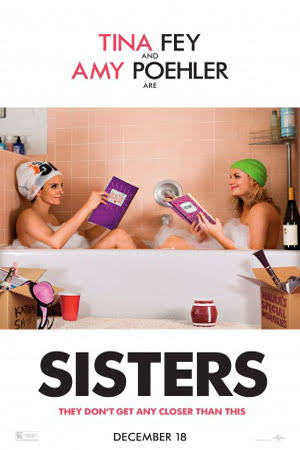
SistersA comedy that only Tina Fey and Amy Poehler could pull off! Since I had already seen my “movie of the week” when I screened 13 Hours, I used my Thursday night, which is typically reserved for the movie I review, to just kick back and relax with a comedy starring two amazing comediennes who have been coming into our living rooms for nearly two decades. At first glance, Sisters may seem like another crass, brassy, stupid comedy; but, a closer examination reveals that it is actually quite brilliantly structured and directed–the acting speaks for itself. For those who have studied film or entertainment in general, you are well aware that a well-written and directed comedy is actually drama in disguise. No story exists without conflict, and comedy is often frocked with conflict because that is where the “funny” or comedic “irony” comes from. Whereas this film is certainly not one that is made to be added to the library of great films or one that is meant to typify the art of cinema, it IS produced to entertain and bring about immense laughter from the audience. Sisters is a great way to spend a couple of hours with your sister or close friends and enjoy the uplifting message with a massive dose of Fey-Poehler comedy.

When their parents sell the family house in Orlando, sisters Maura (Poehler) and Kate (Fey) are requested to head down to the sunshine state to clean out their childhood room–which may as well be a bottomless pit of 80s and 90s memorabilia. With only one weekend to accomplish the near impossible, Maura and Kate are overwhelmed and  quickly become distracted with a desire to have one more night of youthful, wreckless fun before they say goodbye to the house in which they grew up. Each dealing with a source of negative stress in their respective personal lives, these two sisters decide to invite old classmates and friends to the party of the century to recapture their glory days. When the party begins to spiral out of control, Maura and Kate soon realize that their parents may not have a house to sell.

As there really is not a whole lot to dissect, in terms of the plot or technical components, I do want to take a moment to further highlight why this was a well-produced and directed comedy that is probably a little too underrated. Going in with fairly low expectations, I was delightfully surprised at how well the comedy was put together. Ordinarily, comedies like this one do not receive December releases because of the blockbuster or “Oscar” movies. So, I was curious as to why Universal related the film then it did. After having watched the movie, it was clear why Universal was confident in the December release because, in addition to having a comedic duo in leading roles, it is definitely a great movie to watch with your own sister or brother. The movie has great acting, a heartwarming story, and however over-the-top excellently written comedy.

If you do not laugh during this movie, then you are not alive. I cannot imagine a better cast for the film. That is probably because this is a unique brand of drama in disguise that Fey and Poehler can bring to the big screen. Both Maura and Kate feel like real sisters and deal with many issues that real-life sisters may deal with as they get older. The earthiness and realness of the characters bring about fantastic candor from the parents as well as confessions that have been kept secret between the sisters. Within this “let’s recapture our glory days” comedy is a love story that fits perfectly into the plot and does not feel jammed in there just to have romantic subplot. There are even times that you may identify very closely with the sisters, parents, or even some of the classmates.

It isn’t often that I truly enjoy a comedy such as this one, but the chemistry between Poehler and Fey is memorable. Whether you have a sister (or brother) or not, this movie is one that will make you laugh and perhaps even cry just a little.

“13 Hours” movie review

13 HoursAn excellent depiction of what happened on that fearful day, but poorly shown cinematically. 13 Hours: The Secret Soldiers of Benghazi is the latest Michael Bay film. Like a true Michael Bay experience, he wows audiences with spectacular battle scenes, stunning visual effects and sound design, and massive explosions; but, with that comes a sloppily handled ensemble cast, underdeveloped pacing and structure. Even though it was at first surprising that a Michael Bay film was getting a January (cinema graveyard) release, after screening it Tuesday night, it is evident why it received this slot versus a summer release. Although we are still learning about and experiencing the ramifications of what happened on that September evening, even though this movie definitely lacked in overall direction, I feel strongly that with what limited information has been released regarding this tragedy, Bay was able to translate the news footage, transcriptions, and government documentation to the screen in terms of capturing the visceral horror and terror that befell the CIA, special operations teams, and the Libyan Ambassador.

Michael Bay’s 13 Hours: The Secret Soldiers of Benghazi is about the tragic events in September 2012 that caused the deaths of an ambassador, CIA personnel, and ex-military special operations stationed in classified compounds in the Libyan capital of Benghazi. Get a glimpse into what it must have felt like to experience one of the most horrific tragedies since September 11, 2001. In this biographical war thriller, go behind radical, militant Islamic enemy lines and follow a band of six soldiers who took the initiative and disobeyed orders in a valiant effort to rescue US CIA and Consulate personnel from certain death.

Given that this is–or at least seems to be–an accurate depiction of the attack on the US Consulate and CIA Annex in Benghazi, one of the most conspicuous absences is any mention of President Obama or then Secretary of State Hillary Clinton. Obviously this film was not produced to evaluate the actions of the President and Secretary of State, their respective roles in this attach are indirectly an important element to the narrative of the film that should have at least been mentioned. When a filmmaker, especially one of Michael Bay’s caliber, takes on the daunting task of translating a real war-time event to the silver screen, it is important to include the notable individuals who contributed to the success or failure. Knowing that the focus of this film was on the six ex-military special forces, it was not necessary to focus on the Presidential cabinet’s actions, or lack thereof. Still, it should have been included on some level.

Like with any Michael Bay film, you are going to get amazing cinematography, visual effects, sound editing, and EXPLOSIONS; but, this biographical thriller lacks adequate pacing and plot structure. Furthermore, it is unlikely that the audience will feel any strong emotional connection to any of the characters in the ensemble cast. One thing is for sure, most people watching this movie will definitely hate the enemy. But, a movie like this one needs to go beyond a nearly unified hatred of the radical, militant Islamic terrorists and cause the audience to develop strong feelings and connections with the central characters. Despite having a slight connection to one of the soldiers due to witnessing his interactions with his family back in the States, Bay fails to further develop him or the other characters in terms of growing the relationship between the characters and the audience. Although there are deaths of great significance in this movie, it is likely that none of them will be tearful or pull at one’s heartstrings.

I feel that this film had potential to be another American Sniper or Saving Private Ryan but failed to include the emotional connection to the central characters and appropriately pace the film. It really isn’t the narrative in and of itself that is lacking–there is certainly a good story there–but the poor pacing and underdeveloped characters combine to occasionally cause the audience to feel lost in the events. Thankfully the film includes timestamps and locations to help the audience follow the course of events that lead up to the attack on the consulate. The sheer realism of the attack is incredibly impressive. There are even some shots that look very similar to the bombing of Pearl Harbor in Bay’s Pearl Harbor. Bay was successful at effectively combining the best of practical and visual effects to create an immersive experience for the audience.

Whether you come from the position that the CIA showed rampant incompetence, coupled with a lack of action from the President’s cabinet or you feel equally strongly that the CIA and President’s cabinet made the best decisions they could with the information they had, this film brings a recent war-time tragedy to life for the silver screen. You will definitely feel like you are in the midst of the action and get a feeling for what it must have been like for the soldiers to go against orders from the CIA to do what they felt was the right thing. For those who appreciate and thoroughly enjoy military or war movies, then this film is definitely for you. Because of the fantastic technical direction of the film, it is one that can be enjoyed by just about anyone. Despite the fact that it definitely has areas in which it greatly lacks, it is definitely visually driven and communicates this attack with realism.

“The Forest” movie review

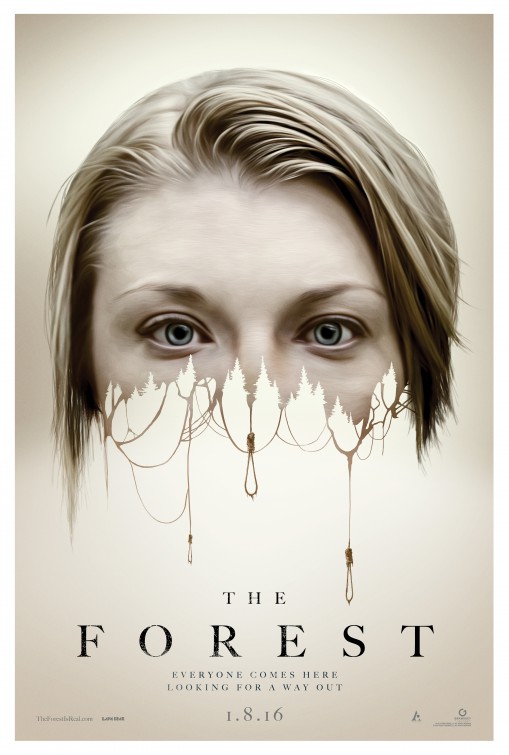
The ForestInto the woods…off to find a body. The Forest is a brilliant example of January’s reputation as a movie graveyard. Banking on its ability to over-utilize the cliche jump-scare to get a heightened emotional response from the audience, this film demonstrates little uniqueness in this sub-genre of horror; however, I gotta give it a little credit. It was successful in causing me to jump in my seat a few times and even cringe a little. If for no there reason, this film will possibly prompt you to lookup the legends of the Aokigahara Forest, surrounding the foothills and floor of famed and picturesque Mount Fuji in Japan. Starting off as a movie that feels as if it will have a slow burn but then pick up in the second and third acts, The Forest is more like an annoyingly dripping faucet that has a perpetual clog that you wish would eventually explode with excitement. There is definitely a sense of anticipation and anxiousness, but the movie fails to provide a thrilling release. The only intriguing element of the movie is that this fictional story is indirectly connected to true stories of the Aokigahara Forest. Unfortunately, the stories of people going into the forest with the intent to either commit or contemplate suicide is all too true. Furthermore, a friend of mine who lives in Japan told me that the forest really does seem to have a mystical power that compels people to harm themselves or others. Interesting. If you ever visit Aokigahara Forest, be sure to stay on the path and never remain in the forest after dark.

The Forest is about a young American woman named Sara (Natalie Dormer) who senses something has terribly befallen her identical twin sister Jessica. With the intent on finding her sister, Sara flies to Japan and begins to investigate the whereabouts of Jessica. Learning of the legends surrounding the mystical Aokigahara Forest at the base of Mount Fuji, Sara starts to develop a plan to rescue her. Unfortunately, the reputation of the forest scares the locals so much that she is unable to find anyone to help her. Just when all hope is nearly lost, Sara meets local Austrailian travel expert and writer Aiden (Taylor Kinney) and he contacts his guide friend Michi (Yukiyoshi Ozawa) to lead them into the dark and twisted pathways of the forest. Against the recommendation of locals and Michi, Sara and Aiden remain in the forest after dark to find Jessica, but they have no idea that they are about to encounter the tormented souls of those who are looking to add to their numbers.

The characters aren’t the only ones who stray from the pathway, the film itself strays from the pathway of a well-paced and developed plot. I am not sure if the movie is supposed to be self-reflexive in that it is about exploring dark, repressed memories that subconsciously torment the soul or if it supposed to be a superficial cliche horror flick that provides an hour and a half of mild to moderate entertainment. From poorly written dialog to including too many poorly placed flashbacks, this film is all over the place. I have often commented on my dislike for films that rely on flashbacks to support or tell the story. Every once in a while, there come films that actually utilize the flashback in a way that works extremely well–but those are few and far between–this is definitely not one of them. The first several minutes of the film feels like a ping pong match because the audience is constantly tossed back and forth between present day and 20-30 year old flashbacks.

I feel strongly that this is a horror film that could have really used much more character development for Sarah. Not that horror films are the place to find development amongst its lead characters, but the story being told here was actually a good platform for integrating that element into the narrative. It’s almost like the writers were going that direction, but failed to see it through. Films like this one are not produced to add to the artistic medium of visual storytelling or offer up any degree of legitimate critical value, but still these types of horror films should continue to the library of other horror films by adding something new–even a small contribution. That being said, the fact that the film does integrate true elements of local folklore and true stories of suicide in the forest does give the film a little something that many do not have–a direct connection to the horrific reality of a place that anyone can visit on their trip to Mount Fuji. After talking with my expatriate friend who resides in Japan, I do look at this film a little different since the narrative appears to hit very close to home for many who live with news of the dark side of that forest as part of their lives.

For what it’s worth, it’s a fun movie to watch if you are looking for some cheap scares. Like with most horror films, it is best enjoyed or appreciated in a group setting.

“Star Wars VII: The Force Awakens” movie review

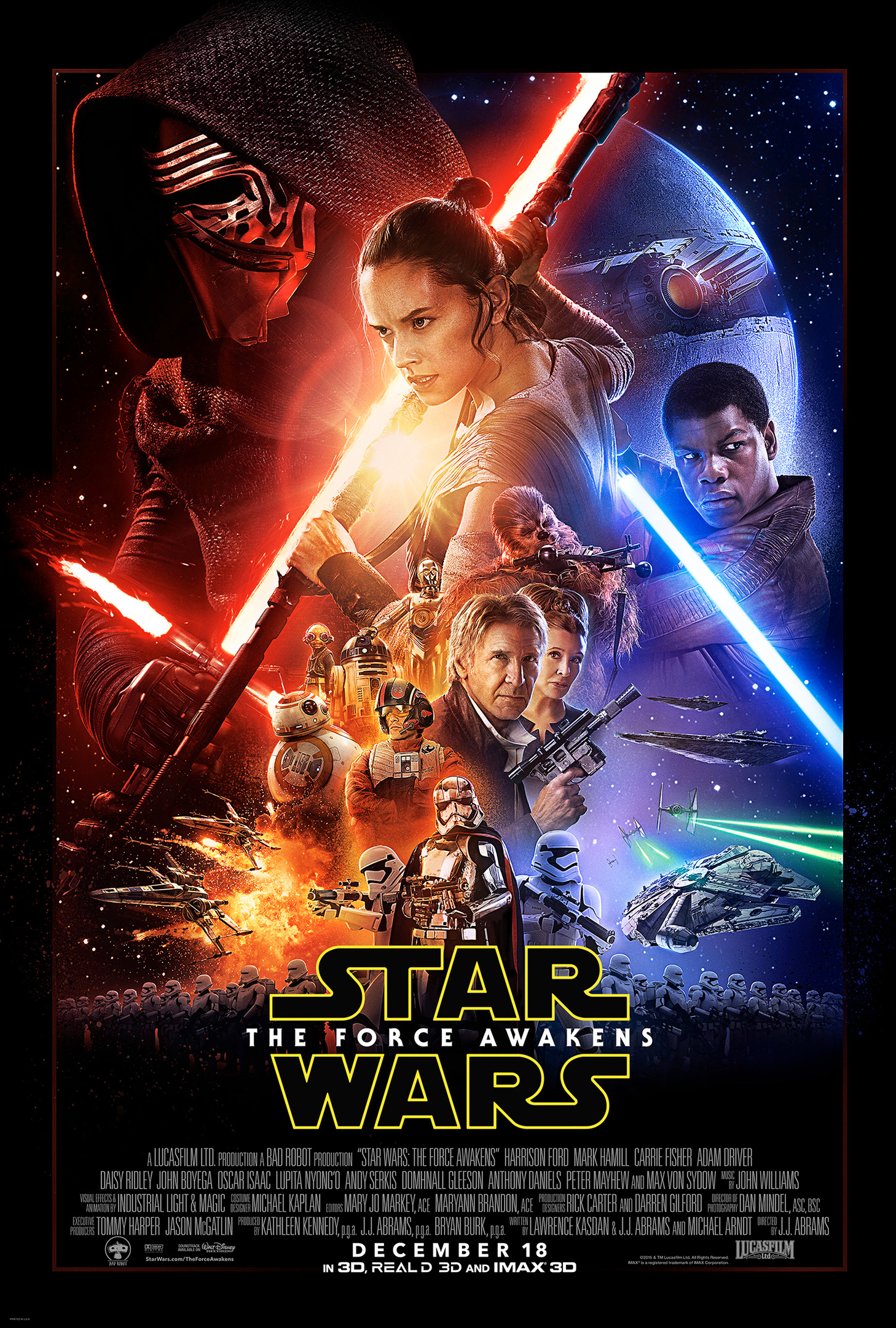
Star Wars VIIThe force awakens…then realizes it’s done this all before and should’ve stayed in bed. Return to that time long ago in a galaxy far, far away. Relive that first moment you saw Star Wars IV and fell in love with the franchise, because you are pretty much getting a plot so similar that you may wonder if the rest of this new trilogy will just continue to rehash and polish what’s all been said and done before. A more appropriate title for this visually stunning film would have been Star Wars: DejaVu or Star Wars: Revisited. No doubt that this film will indeed perform well this weekend; but that has a lot to do with the fact that so many people will view this film through an augmented reality and perceive it to be better than it actually is. The Big D can do no wrong, right??? All that being said, J.J. Abrams once again proves that he is a master at visual storytelling and his films are of a high caliber from a technical achievement perspective. The cinematography and editing are nearly flawless and really help to mesmerize the audience and impress even those who are generally not impressed by visual graphics and sound design. Watching the screen as familiar faces reprise the roles that cemented them in cinema history is nostalgic and heartwarming. Unfortunately, the writers should have spent more time developing a NEW story versus relying upon nostalgia.

With Luke Skywalker (Mark Hamill) in hiding, the Resistance, which has birthed out of the old rebellion, needs to find him in order to defeat the The First Order, a new world empire developed out of the ashes of the old Empire. In an effort to avoid capture, BB8 meets Finn (John Boyega) and Rey (Daisy Ridley). Through a series of events, this small band of rebels encounters the legendary general and smuggler Han Solo (Harrison Form). Working together, they need to get the information in this BB unit to the resistance so that The First Order may be stopped. Leading The First Order is Kylo Ren, a masked, dark, and menacing Sith under the direction of the Supreme Leader. Follow familiar and new faces on a journey through the galaxies to stop this new empire from destroying all that is good.

Put simply, this film relies too heavily on the previous movies, thus prohibiting a new story to “awaken.” It was made known early on that Abrams desired to create a new old-school Star Wars sequel to the original trilogy. And in many ways, he did just that. The problem is that it is way too old school and forgets that this movie was also responsible for relaunching the dormant (as far as theatrically released movies) franchise and introducing something truly new. He was so concerned with pleasing everyone–old fans and new ones alike–that he ended up not pleasing anyone who is willing to step back and actually examine the film as a film. All this film did was reuse past plots and forget to give the eager audience and fanbase something legitimately new after waiting so long. The overall plot, locations, and characters lack anything newly appealing. The movie even begins on a desert planet and ends with the destruction of a “not” Death Star–but it basically is–just larger.

With more than half of the movie consisting of space travel and battle sequences, you will wonder if you are actually playing Star Wars: Battlefront. Why? Because it looks and feels very similar to a highly developed video game that includes film sequences to transition to the different chapters or levels. Just pick one of the characters in the film and you can almost feel yourself moving them with your controller. One of the most memorable elements to the original trilogy is the nearly unparalleled cinematic villain–and the one who many try to be but fail–Darth Vader. Don’t worry, “there is another” as Yoda put it in Empire Strikes Back. However, this new “Vader” will leave you wondering how the writers thought he (Kylo Ren) could even come close to filling Vader’s boots and mask. From the mask to the red lightsaber, Kylo Ren appears to be just as menacing as Lord Vader. And there was some promise there. Unfortunately, the writers took any potential of a comparable sinister villain and essentially emasculated him when he removes his mask to reveal a guy in his 30s with luscious wavy hair. After that, it is impossible to take Kylo Ren seriously as a villain for the remainder of the movie.

Before you jump to the conclusion that the writing in general was poorly developed and executed, just wait a moment. Actually, the writing includes some comedic relief, moderately intense moments, with some pretty decent rushed character development, and sufficient exposition. The problem with the writing lies in the overly used plot elements and past Star Wars tropes. The script essentially lives in the past even though there are parts of it that want to live in the present. Leaving the audience thinking that they’ve seen this all before, the writers fail to include anything new and interesting. Instead of coming across as a much-needed sequel or revival, the film plays out as a reboot. There isn’t anything innately wrong with reboots of old, beloved franchises; but Disney and Abrams indirectly promised the sequel that never was but should have been after Return of the Jedi. Sequels are required to advance the story, introduce significantly new material, and move the plot along. The Force Awakens can easily be interpreted as 3/4 reboot and 1/4 sequel.

Visually, the film is cinematically brilliant! The sound design is also incredibly well executed. Even the score is beautiful. What one can appreciate about the score is that there is familiar music wrapped in a completely new score. Too bad the plot didn’t takes notes from John Williams on how to include the old but advance the new. There is no doubt that this movie will be nominated, if not win the Academy Awards in the technical achievement areas–and it deserves them. Honestly, I think some of the editing and graphics team from this movie should work on improving the graphics in the next Jurassic installment. Abrams promised that he would go back to practical effects and merely enhance them with digital effects, and he did just that. The combination played out very well and impressed me. He may not have delivered the movie that Star Wars fans wanted to see, but he did keep his promise to not rely on cheap digital effects as a large part of the design.

If you want to relive the first time you saw A New Hope, then here is your opportunity. It’s basically the same movie, but looks way more impressive. For those who wanted an actual sequel to resurrect this piece of Americana, then you may be disappointed. I really hope the next installment will give me something new. At the end of the day, the movie is certainly entertaining; and seeing Carrie Fischer, Harrison Ford, Mark Hamill, C3PO, and R2D2 on screen again, in their most iconic roles, is just plain cool and heartwarming. The nostalgia will certainly bring some to tears. And I also want to point out that this IS a fantastic film for a family, whether diehard fans or not, to spend some time together over the holidays at the movies.

“Krampus” movie review

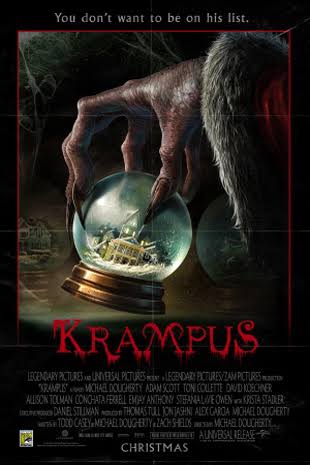
KrampusTwas truly a nightmare before Christmas! What would happen if Charles Dickens, Dr. Seuss, and the Brothers Grimm would combine their unparalleled literary social commentary and storytelling abilities for a Christmas movie? The answer is Universal and Legendary Pictures’ Krampus. Based on an actual legend of German origin, Krampus is the antithesis of Santa Claus. Whereas this narrative is not based soley on the legend per se, many of the insidious characters are. A Christmas horror movie is nothing new–recently watched Silent Night Deadly Night with a friend–but a movie of this quality, in terms of production design and plot is, and provides us with a movie that is equal parts a holiday and horror film. In an unconventional way, this movie highlights what Seuss and Dickens wrote about in their timeless tales: Christmas becoming more commercialized and about selfish material gain rather than the spirit of sacrifice, giving, and relationships. Just like Scrooge was so terrified emotionally and physically by the ghosts of Christmas past, present, and yet to come, that he believed in Christmas with all his heart, you may also call your behavior, this holiday season, into question as a result of coming face to face with Krampus.

You better watch out, you better not cry, you better not reject Christmas, I’m telling you why, Krampus is coming! For those who lose sight of the true spirit of Christmas and get selfishly wrapped up in their own negativity instead of wrapped up in love, ancient European legend speaks of Krampus (the shadow of Santa Claus) who visits the houses of non-believers who have turned their back on Christmas. Krampus is about a family that, much like yours, is getting together for the holidays. And most likely, just like your extended family, there are members who do not get along with one another–and even resent one another. The Engel family is about to find out the hard way not to lose sight of the magic this time of year. During the course of a day, young Max (Emjay Anthony) falls out of the spirit of Christmas after his dysfunctional family continues to squabble and rejects the spirit of the season. After he rips up his heartfelt letter to Santa in rage, Max unknowingly unleashes the spirit of Krampus and his fractured family must ban together in order to save their very lives from Santa’s sinister shadow.

Following a montage of what looks like Walmart or Best Buy on Black Friday juxtaposed against cheerful Christmas songs, the movie opens on a scene from a film adaptation of Charles Dickens’ A Christmas Carol. Krampus establishes the subtext of this unconventional Christmas movie up front. It is no surprise that there are many self-reflexive elements in this movie; but, it is surprising how well-executed the plot of this film is. Despite the fact the trailer was quite good, I had fairly low expectations for this film because usually Christmas horror movies are just campy. However, there are naturally exceptions to that trend in films like Tim Burton’s Nightmare Before Christmas or A Christmas CarolA Christmas Carol? Yes. For those who have read the masterpiece, you know that it is a very macabre story in many respects. It had to be. How else was Scrooge going to be so scared for his life and the future if he wasn’t terrified and truly desire to embrace the spirit of the holidays? Maybe A Christmas Carol film adaptations are not traditional horror films, but they certainly contain many horror elements. Krampus takes the idea of developing a horror film out of Christmas to a whole new level. One that is billed as a horror comedy, but it is really more of a traditional horror film.

Horror films, like other genres, often follow the “order–>disorder–>order again” plot structure, but there are times in which it is more like: “order–>disorder–>order–>disorder again.” As I have written in my own research and previously on my blog, horror is concerned with warping that which is otherwise safe or familiar in order to comment on a societal problem or trend. Not always, but many times horror films can enable us to look at gender roles, sexuality, racism, economic, and technological sociological factors in a different light either positively or negatively. That has always been the case since the days of Nosferatu to Psycho to Alien to Silence of the Lambs. Horror films usually have substantial twists or reveals; and one in Krampus definitely caught me by surprise. Just when you think everything is going to be fine and follow a more cliche path, you are blindsided! Although the dialog is typically not strong in a horror film, Krampus contains well-written dialog that is both funny and fitting. Regarding the dark-comedic content in the plot, the comedy is more subtle than prominent; although, watching a jack-in-the-box devour a small child has a degree of demented humor in it.

Like with Universal and Legendary’s Crimson Peak, German expressionism is presented quite well in Krampus. In my previous writings, I have highlighted that German expressionism is at the root of the American horror film. There is even an animated sequence integrated very well into the diegesis that contains copious examples of German expressionism with elongated buildings, gothic design influence, and the use of natural and artistic shadows. Not as pronounced, the rest of the movie clearly shows that German expressionism was included in the designs of the creatures, Krampus himself, and in the neighborhood. By using shadows and warping the perception of landscape and residential engineering, the otherwise upper-middleclass neighborhood looks like it jumped right out of Nosferatu. Whereas this may be an unconventional Christmas movie, it still very much embodies the holiday season. We are reminded to never lose sight of the spirit of sacrifice, tolerance, giving, and relationships. Furthermore, this movie is instrumental in encouraging us to not allow the holidays to become a mechanical reaction, but to truly allow the magic of Christmas to aid us in bringing cheer to those around us.

If the lyrics “he sees you when you’re sleeping, he knows when you’re awake, he know if you’ve been bad or good, so be good for goodness sake” were not creepy enough as it is, then knowing that the shadow of Santa will be unleashed and not come to give, but to collect, if you turn your back on Christmas, then they just became even more terrifying. Universal has proven for more than 100 years that they are the king of horror; and this newest addition to both horror and Christmas movies continues that tradition of a commitment to being the subject of our nightmares.