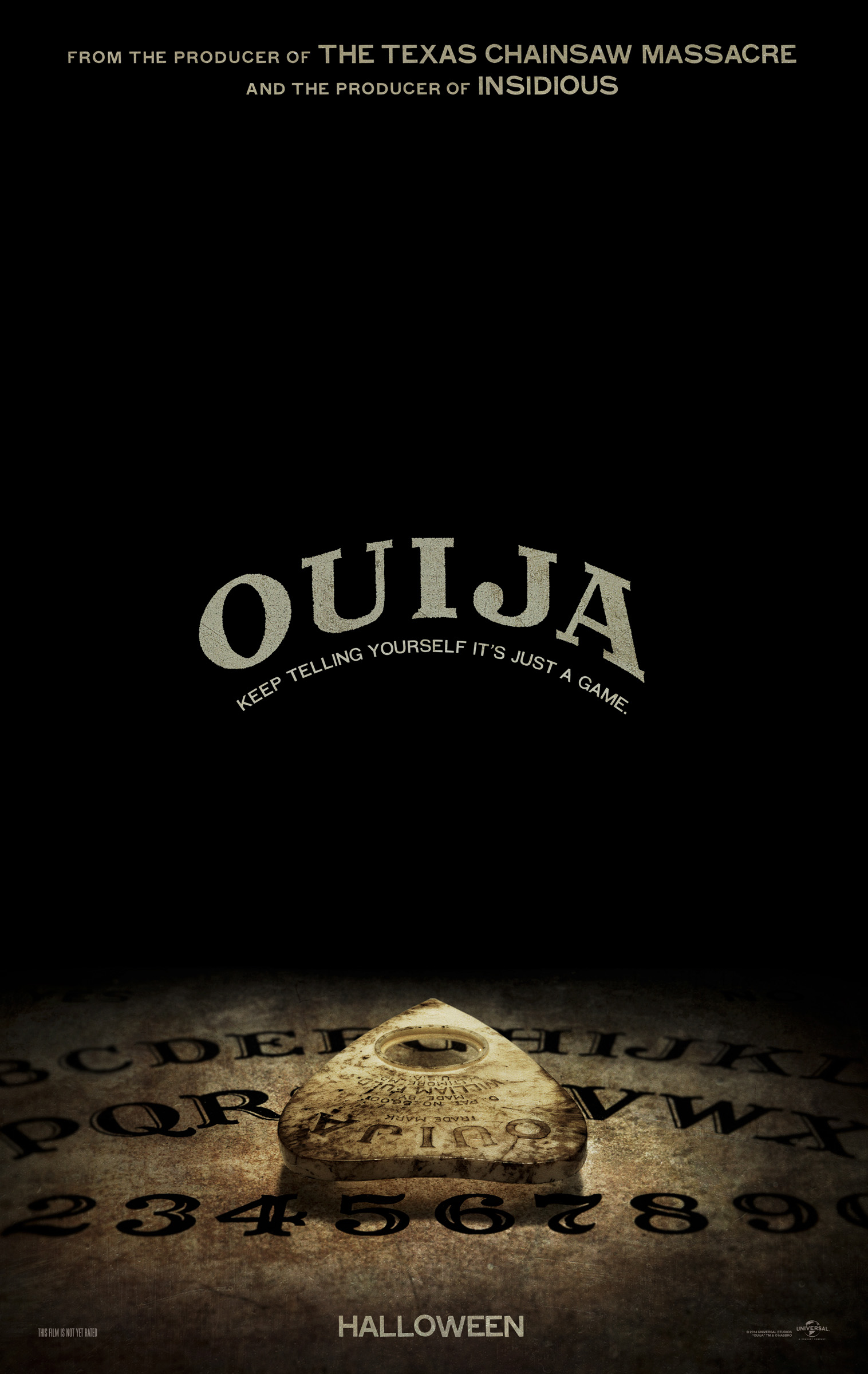
 “Hi Friend.” Inspired by Hasbro’s classic controversial board game, this season’s most anticipated and heavily marketed movie comes to theaters, but should’ve stayed in the box–the cable box, that is. Par for the course and by the book, this supernatural-thriller hits all the predictable marks for a Halloween season release, minus the visceral gore that many were likely hoping for. Instead, it employs jump scares, orchestral screeches, and a pretty decent cast. One thing’s for sure, if you were ever thinking of playing Ouija, you may rethink that after watching the movie. Not sure if Hasbro is trying to inspire people to buy their product or dissuade kids and teens from using the spirit board. After all, where do you go with an opening shot of the board being burned in a fire place? The movie is a good ride; but is better suited for a MOW (movie of the week) on Chiller, SyFy, AMC, or even LMN. It is a product you can buy, so maybe HSN too?
Ouija begins with the apparent suicide of a young lady in a stately upper-middle class house. Following the bizarre death, her closest friends desire to learn more about what drove her to an untimely demise. Upon finding the Ouija board in the deceased room, the victim’s friends use it to communicate with her in order to say goodbye and find out if there was foul play involved. After communicating with the dead hits too close to home and a spirit makes contact with the close group of friends, they realize that they have awoken something evil. It isn’t long before the group realizes that they haven’t been communicating with their deceased friend but with something far more insidious. It is up to this group of friends to overcome and break the connection with the spirit realm in order to save their very lives from meeting the same fate as their friend.
On the surface level, creating a horror movie from a board game sounds like a fantastic idea. But, when the product in question has been used in seances, since the 1800s, to communicate with the dead, is it really? For many who believe that this board is, or can be used, as a conduit through which communication with the spiritual realm is possible, this movie likely hits too close to home. The thin veil between the physical world and the spiritual realm is all too eye-rollingly literal in this movie. Even though Hasbro was hoping for another GI Joe or Battleship, the mystery and controversy surrounding this product prohibits it from being a glorified commercial for the toy company. But, it does make for a decent horror movie and helps to enhance the creepiness of the Halloween season.
Unlike other comparable horror movies featuring a mostly unknown cast, this movie is greatly helped by the strong cast of young people. In contrast to many horror films with a predominately “teenage” cast, there are no idiots amongst this band of friends. They are only persuaded to play the “game” when Laine (Olivia Cooke) twists their arms and promises to give up on talking to Debbie (Shelley Hennig) if they would play once. Although there are clearly teenage romances hinted at in the movie, the film lacks the classic “if you have sex, you will die” theme from classic horror movies such as Halloween, Friday the 13th, and Nightmare on Elm Street. The performances from each of the characters are convincing enough to carry the film, and helped the overall performance of the narrative. For fans of Insidious, there is a small but pivotal cameo appearance by Lyn Shaye (the character of Elise in Insidious) as a mysterious old women in a mental health hospital.
Although the movie is centered around traditional Ouija board play, like in Battleship and GI Joe, the filmmakers added their own creative touch in order to enhance the ability to set the terror barometer high in the minds of the audience. One of the dramatic elements created for the film is the ability for the game player to look through the eye of the planchette (the triangular shaped tool with a small window that moves around the board) and see into the spirit realm to catch a glimpse of the spirit with whom he or she is communicating. The filmmakers also employ the use of zombie-like trances and goulash apparitions to spook the audience and give the movie visual substance beyond an atmosphere of terror.
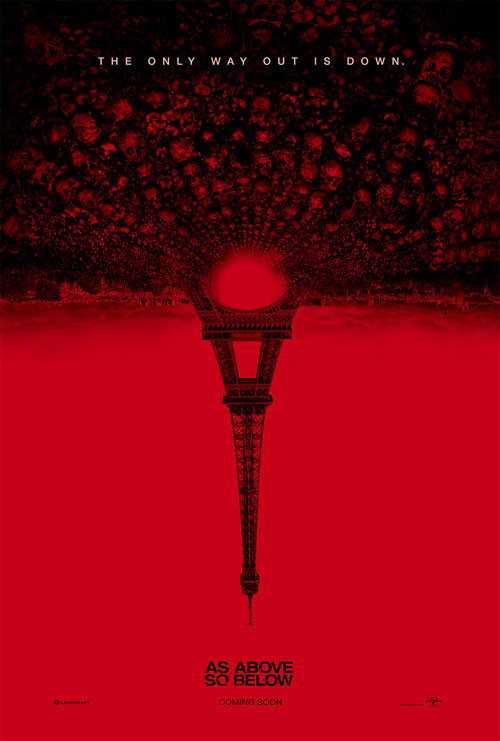
Less scary than Annabelle or As Above, So Below, Ouija will likely bring in much-needed profits for the legacy toy company just in time for the holiday season. As a filmmaker, it is refreshing to see the film released under the Universal Studios banner because Universal is the original house of horror, and has been scaring us since the 1920s. Unfortunately, this film suffers from a predictable cliche screenplay and relatively low-budget. But, if you are looking to kickoff your Halloween week with a scary movie that’s a fun ride into the spooky festivities and masquerade parties, then this is a great way to set the mood and get you in the spirit of the season.
Happy Halloween!