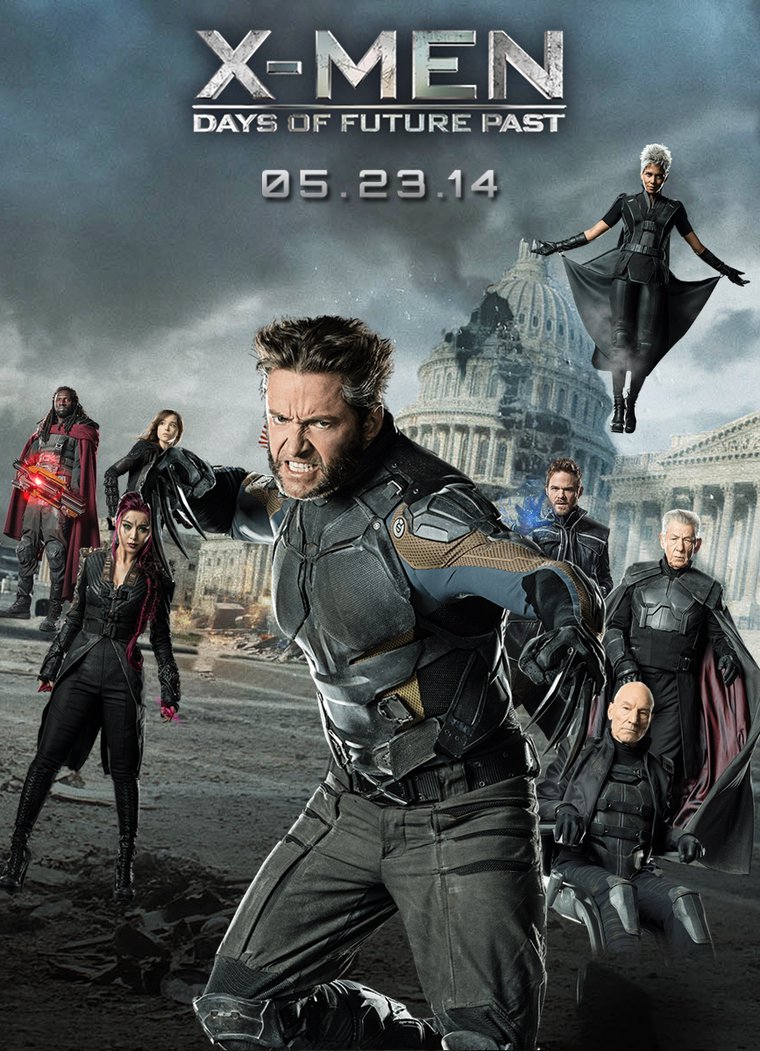
X-Men: Days of Future Past

X-Men: Days of Future PastSuch an incredible super-hero movie and kick-off to the Summer Blockbuster season. Spider-Man 2, X-Men, and the upcoming Maleficent are excellent movies to usher in the second biggest box office season of the year (second to the Holiday season). It’s also refreshing to see a movie that depicts a dark–very dark–bleak dystopian future that has the opportunity to be prevented. With a cast featuring Sir Ian McKellen, Sir Patrick Stewart, Hugh Jackman, Halle Berry, Jennifer Lawrence, and more, the movie will keep you on the edge of your seat the entire time. Director Bryan Singer has succeeded in topping his previous X-Men movies with the biggest installment in the 14-year, seven-movie X-Men franchise. But, just a word of caution, you probably want to bring along a teenager or comic book fan to decipher some of the plot points and guide you through the time-traveling pretzel-like plot.

In the most recent installment in the X-Men franchise, we are introduced to a Manhattan ravaged by war and destruction caused by the Sentinels on their quest to destroy all mutants–looks a lot like present Detroit. In their quest to destroy all mutants, the human race is all but eradicated as well. Held up in an ancient Chinese mountain fortress, a small band of mutants, including Storm, Wolverine, Xavier, and Magneto are taking their “last stand” against the indestructible adversary. Frenemies Xavier and Eric join together to develop a plan to save the mutants and humans from total destruction. Just goes to show that a common enemy can cause two other enemies to join forces. Wolverine’s conscious is sent back in time to 1973 in order to stop Mystique (Lawrence), who’s essentially gone rogue, from killing Trask, the inventor of the Sentinels–an event that caused the Sentinel program to evolve into the destruction of humanity.

There are many ways and plenty of opportunities for this film to have gone the way of “Spider-Man 3” (original trilogy), but thankfully it surpassed any and all expectations for this sequel/prequel/reboot, or whatever we are going to call it now. After a hiatus from the franchise, it is clear that the series has missed Singer, and what a triumphant return! After the failed “Wolverine” and “X-Men: Last Stand,” I was ready to write this franchise off as something that will merely be produced every three years in order for Fox to withhold the film rights from falling into the gloves of a Mouse. Through “X-Men: First Class” and today’s “X-Men: Days of Future Past,” Singer has been able to save the franchise and redirect its course of action for a bright future that will undoubtedly boost Fox’s pull at the box office. However, it will be difficult to join the masses that are enjoying this movie if you have not seen the, for good or bad, previous films in the franchise.

Lately, it seems like the producers and writers of the superhero genre films have finally figured out that a truly successful superhero movie will not only have amazing action sequences, eye-popping visual effects, but excellent acting and emotional pull (otherwise known as heart). And, this film has the aforementioned in spades. Everything from the cinematography to the writing, from the directing to the acting is done flawlessly. Although some of the characters do not get near the screen time as some of the others, they play an important part in the story. Instead of a kid’s comic come-to-life, we have an excellent work of cinema that honestly keeps the balance between narrative and stunning visual effects. For those with younger ears and eyes that may want to watch the movie, there is a quick shot of Jackman’s backside and an F-bomb. Unlike, the “Transformers” franchise, “X-Men” provides the audience with awesome action sequences, characters that the audience can fall in love with, and a story with passion.

If you haven’t seen the movie, and have seen the six previous films, definitely plan some time over the holiday weekend to watch it. And, if you have a friend who’s familiar with the comics, you should take them along. Sorry, Disney, I don’t think you are getting the rights to the X-Men characters any time soon, especially after the wild success of this most recent installment that has made up for all the cinema sins committed by many of the previous films.
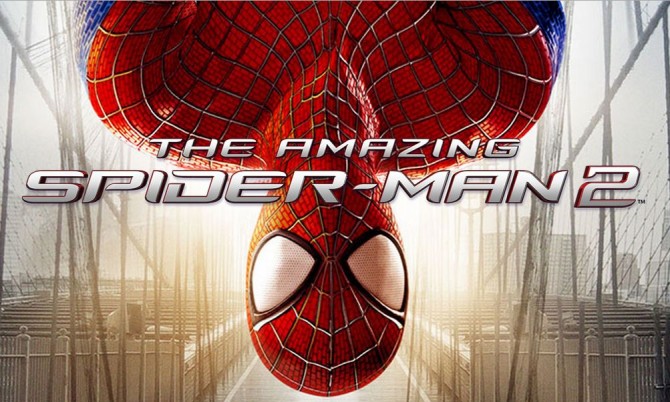
The Amazing Spider-Man 2

(c)2014 Columbia Pictures

(c)2014 Columbia Pictures

If you haven’t seen the “Amazing Spider-Man 2” yet, definitely make time to see this dynamic super-hero/action genre film. I’ve seen a lot of superhero movies, especially in the last decade, and none can quite compare to the ability of Andrew Garfield (Peter Parker/Spider-Man) and Emma Stone (Gwen Stacy) to capture the array of emotions in the way the characters were able to in this roller coaster of a movie. Although Director Mark Webb overstuffed the 2.5hr movie with multiple plot lines, villains, and changing sets, the chemistry between Garfield and Stone attempt to, and are successful at, giving this movie heart and soul.

Webb’s spring blockbuster is the sequel to the reboot of the movie adaptation of the original Marvel comic-books, which is another way of saying it’s a copy of a copy. But if the Spider-Man tale is about anything, it’s about gawky youth and surging powers. And the film-makers know this and keep the tone skittish and fresh. In this installment of the latest Spider-Man franchise reboot, Columbia Pictures (Sony) takes the audience on the ride of their lives. And, that isn’t even counting the experience one receives in the 3D version (for your information, I watched the standard definition version).

The movie opens, as supplemental installments in a superhero franchise often do, in the middle of a hot pursuit. No surprises there. Parallel to attempting to apprehend a foreshadowed villain, Spider-Man is close to missing his high school graduation and his girlfriend’s valedictorian speech. Coming of no shock, he is able to swing onto the stage just before his name is called to walk across it. In addition to the fast-paced, thrilling ride the audience experiences during the entire movie, Peter and Gwen experience an emotional roller coaster of their own. Facing his most powerful villain to date, Spider-Man must outsmart Electro (played by Jamie Foxx), a mutant who’s ability to control electricity makes him seemingly unstoppable. Everywhere electricity is, there is he. The origin of Electro seems reminiscent of Kathy Bate’s character in the classic Stephen King novel set to film “Misery.” Is Spider-Man able to outwit his nemesis? You will just have to watch the movie to find out. And, like any good orphaned superhero, Peter’s iconic Aunt May (beautifully played again by the accomplished Sally Field) finally tells his the true story about his parents’ death. During the third act of the movie, however rushed, we are introduced to one of the most famed villains in the Spider-Man franchise, the Green Goblin. The close of the movie will likely have you in tears. Honestly, I think this is the only superhero movie that caused me to cry.

New Yorkers can definitely appreciate the sequel for highlighting the metropolis that is so vital to the Spider-Man story. The “Amazing Spider-Man” (first one) felt confined too often to Peter’s bedroom, his high school and the Oscorp skyscraper, neglecting the city. Essentially this latest installment is one long series of postcards of famous NYC landmarks, one right after another; from the Williamsburg Bridge to Columbus Circle, even taking in forgotten subway stations once frequented by a certain US President. Until the third act of the movie, the majority of the scenes take place outdoors from Chinatown to Park and 56th. For those who have not been to New York City, there is so much more to the metropolis than midtown, which is often all anyone ever sees of the city in movies.

In truth, none of the many subplots or action sequences, have as much combustible power as the scenes featuring Peter Parker/Spider-Man and Gwen, benefiting here as did the previous film from the fizzy, tangible chemistry between Garfield and Stone. It helps that they’re also individually such interesting performers, both nervous fidgeters who always seem so giddy in each other’s presence, even when Peter gets all worried about keeping his promise to dead Captain Stacy (Denis Leary) to stay away from Gwen for her own safety and tries to split up with her. Hence, the roller coast of emotions throughout the movie as I mentioned earlier. Unfortunately, the movie suffers from being overloaded with subplots that cannot be fully developed and executed effectively to the satisfaction of the audience in a timespan of nearly 2.5 hours. This is most evident in the origin and development of Green Goblin, whose story seems stuck in the middle of acts two and three, just to quickly introduce him in order to save time in the next film. And, as much fun as it is to see Paul Giamatti’s charismatic character on screen, he too should have been left out to fully develop in future installments.

All-in-all, “The Amazing Spider-Man 2” will thrill audiences everywhere, even the ardent comic book fans who line up every Wednesday morning for new comic book day (this is a shout out to my friend Derek). Although it is nearly impossible to expect a 2.5 hour movie, or even a trilogy (or more) to be all inclusive of the information in the comics, Webb appears to do an excellent job at combing the best of what the comic books offer with the additional elements to tell a story visually on screen.

Oculus

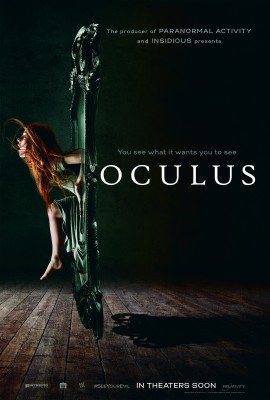
Oculus PosterDefinitely one of the scariest horror movies in recent years. “Oculus” is the feature film from Blumhouse that is based upon a short film by the director. The plot centers in and around an ominous gilded mirror whose origin is sketchy, at best. According to legend and circumstantial evidence, it is allegedly responsible for nearly 50 deaths in approximately 400 years. Two young adults who crossed paths with the mirror 11 years prior, must face “it” again in order to destroy the mirror. Having been recently released from a mental facility, Timmy reunites with his older sister Kayleigh on a dangerous mission to send the mirror back from whence it came. The audience will be totally engrossed in this spine tingling journey into the world of the mirror and its affect upon the reflection of the mind.

This movie could’ve just as easily been subtitled “Through the Looking Glass” or “Alice in Horrorland.” Unlike the recent movies such as “Insidious” or “The Conjuring,” “Oculus” does not rely upon jump scares to curdle the blood and cause the heart to race. It takes a much more Hitchcockian approach–the fear is in the mind of the audience. Hitchcock once said, “greater is the fear in the mind than the fear on the screen.” And, director Mike Flanagan has “suspense” in spades. Not that “Oculus” is without an ominous presence materializing behind a character; but the film is successful in creating legitimate fear in the minds and stomachs of the audience without having to result to cheap parlor tricks. The writers did an excellent job at blending the elements of a psychological thriller/suspense with some visceral body horror. However, there is little blood in the movie compared to many of its contemporaries. Unlike a typical horror movie, the enemy is an intimate object with molevalent powers of “perception.” Throughout the entire movie, you will ask yourself if what you are seeing is real or are you seeing what the mirror wants you to see.

Are their demons in the movie? Yes AND no. This is part of what gives this movie a unique blend of horror and suspense. And yes, I am aware of which “there” I used in the previous sentence. Within the context of the movie, the demons (never mentioned directly) are both real and objects of perception in the mind of the characters based upon their troublesome past (hence, the usage of “their” earlier). You only get a glimpse of apparitions throughout the movie…and seldom a clear one until the very end. The movie plays with both perception and memory. What the audience actually sees, what the audience thinks they see, and what the mirror wants you to see. Yes, this movie engages the audience nearly as much as it engages the main characters. You are definitely along for the ride from the moment the movie opens to the close. Turn after turn, the mirror thwarts any and all attempts to destroy it. But, it needn’t even move from the wall upon which it is hung. The question of whether the mirror is actually haunted or used as a dwelling place for evil is minimally explored–though, it is definitely cleverly answered at one point. Throughout the movie, the mirror is used as a “reflection” of the human condition in a macabre allegory.

Memory is a tangled web; it’s often rewritten or clouded by hidden terrors, fantasy, or that which we wish were true. We see what we are willing, programmed, or prepared to see and we are often psychologically “stuck” in certain moments from our childhood, events which we find a way to replay in a loop as our lives progress. Kayleigh has been metaphorically “trapped”, frozen in that childhood trauma until she must literally relive it. Mark Twain wrote in his book “Innocents Gone By” that we see what we want to see. It’s not so much what the mirror does to you, as much as it is a reflection of the damage we reap on our selves and others when rooted in dark and sinister fear. The mirror will have you second-guessing every move you make; and like a magician, while you are looking one way, it is screwing with your very conscious till you don’t know what is real and fantasy. Although the movie does an excellent job at developing the present and past story lines, at one point they converge; and, it does get a little confusing following the separate narratives. This could very well have been intended by the writers; but it would have been nice to have more clearly defined what time period each scene is in. Fortunately, the decor and furniture does help some to clarify this.

Like Hitchcock, Flanagan knows that the greatest fear he can create in a movie is to move the fear from the screen and place it in the minds and stomachs of the audience. But, “Oculus” is not without its faults. It was shot quickly and with a minimal budget. And, that shows through in the final cut of the film. It does not benefit from the lavish sets build for big budget horror films. However, this makes what it was able to achieve even more impressive, than had it benefitted from a big budget. Unlike “Psycho,” “Oculus” will not likely linger in your mind for a long period of time, and it will likely achieve its greatest success on Netflix, or another video-on-demand equivalent in the coming months. The movie is creepy and designed to give an audience a couple hours of sinister pleasure. There are many unanswered questions following the close of the movie. And, to get into all the questions would ruin the movie for those who have not seen it. But, one main questions that an audience should ask themselves when watching a movie with a typical villain (or evil presence) is what drives them to commit the atrocities they do? There needs to be some method to the madness. Even in “Saw,” there was a reason why Jigsaw was out to kill. And, in “Silence of the Lambs,” Jamie Gum had a desire to become a woman by building a human suit. The audience in “Oculus” is left wondering why the mirror does what it does. What drives it?

What will drive audiences to see this movie is what typically drives those who love to be scared. This movie will take many by surprise; because the audience is as much a part of the action, as are the characters on the screen whilst they battle the malevolent force of the looking glass. Everyone who watches this movie will take a journey, much like Alice, through the looking glass into a world of perception, reflection, and deathly memories.

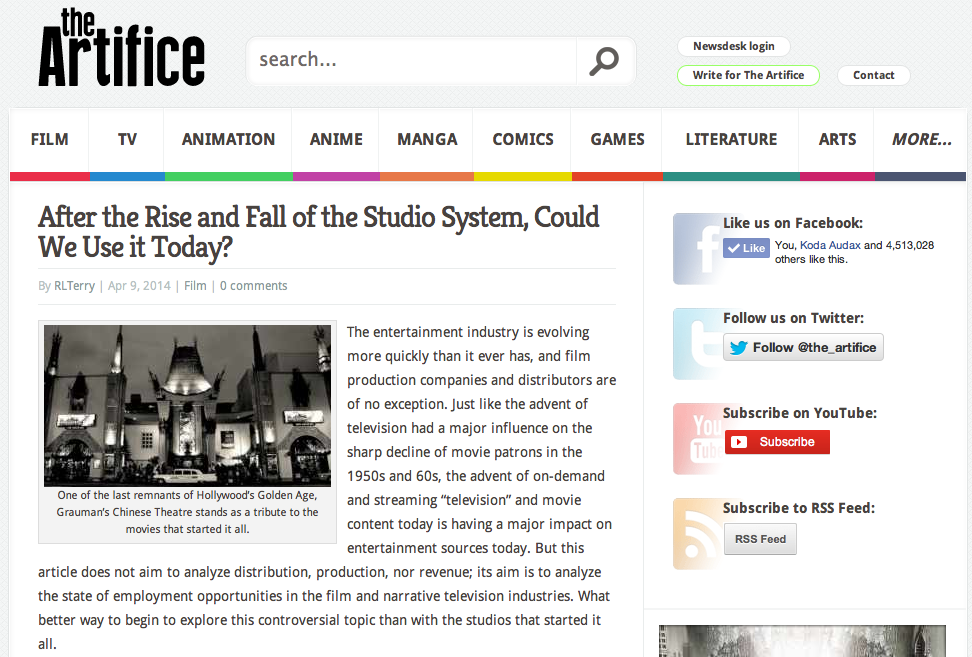
Could We Use the Former Studio System Today to Create Jobs?

My newest article on "The Artifice"

My newest article on “The Artifice”

Check out this article I recently had published on “The Artifice.” It talks about one hypothesis that by bringing back some semblance of the former Studio System, the entertainment industry could create more jobs. Click HERE!

Remembering Mickey Rooney

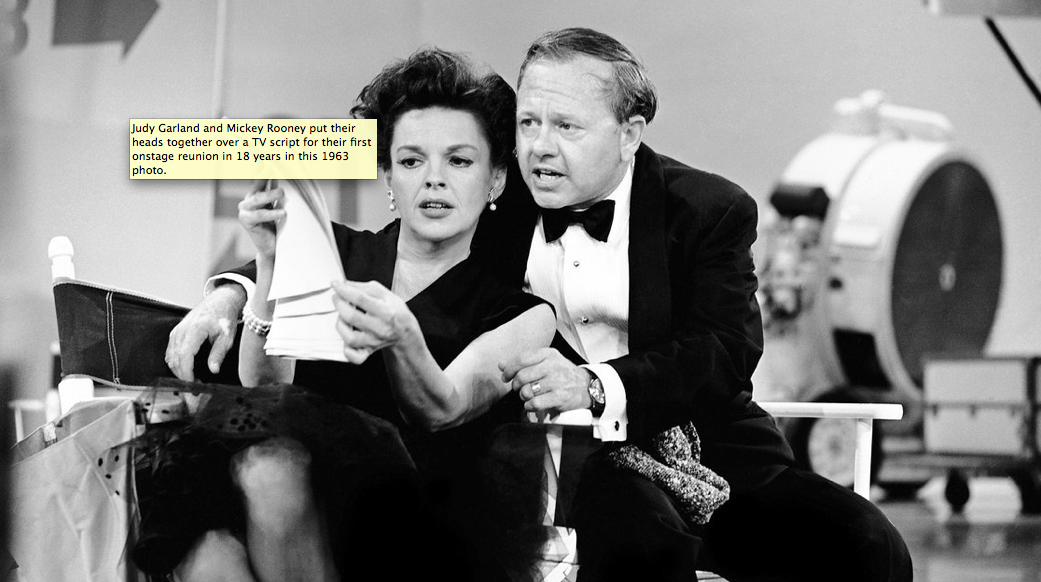
Judy Garland and Mickey Rooney put their heads together over a TV script for their first onstage reunion in 18 years in this 1963 photo.

Judy Garland and Mickey Rooney put their heads together over a TV script for their first onstage reunion in 18 years in this 1963 photo.

A true Hollywood Legend has passed away at the age of 93 on April 6, 2014. From the age of 6, Mickey Rooney has been entertaining audiences since Hollywood’s Golden Age. He will truly be missed. Even as recent as “Night at the Museum,” he has maintained a presence on the silver screen and your living room television. He starred in more than 200 films over the course of his career and received 2 Golden Globes, 1 Emmy Award, and 1 Academy Award. He was also honored with an Oscar as an adult. He received numerous nominations in many award categories over the course of his dynamic career. He truly represents the best of Hollywood talent. For the Disney fans and Cast Members out there, interestingly, Rooney claimed that, during his Mickey McGuire days, the series in which he first gained national attention, he met cartoonist Walter Elias Disney at the Warner Brothers studio, and that Disney was inspired to name Mickey Mouse after him; although Disney always said that he had changed the name from “Mortimer Mouse” to “Mickey Mouse” on the suggestion of his wife.

Rooney was among the last survivors of Hollywood’s studio era, which his career predated. Rooney signed a contract with MGM in 1934 and landed his first big role as Clark Gable as a boy in “Manhattan Melodrama.” A loanout to Warner Bros., brought him praise as an exuberant Puck in Max Reinhardt’s 1935 production of “A Midsummer Night’s Dream,” which also featured James Cagney and a young Olivia de Havilland (last still-living member of the principle cast of “Gone with the Wind”). Unlike contemporary Hollywood, the Studio System (abandoned in the 1950s/60s) developed stars in such a way that is unmatched by present day practices. It was a time in Hollywood in which they employed and contracted regular actors, crew, and other creative personnel to develop movies and shows. He was blessed in such a way that he made regular appearances that built his career to stardom. One could argue that a return to a modern-day studio system would provide more job opportunities for developing talent in the world of entertainment.

Not as well known to modern society and entertainment connoisseurs, is that Mr. Rooney enlisted in WWII to entertain American and European the troops during and after the war. He received a Bronze Star Medal for his efforts and dedication to providing quality entertainment during a time in which there were many reasons to be depressed. He was able to bring about smiles and laughter upon the troops. Even during the war, he lived up to his reputation of “putting on a show!” Along side his Bronze Star Medal, we was honored with many other awards from the military. In 2000, Mr. Rooney spoke at the Pentagon honoring the USO. Much in the same way Bob Hope brought smiles to the US military, Mr. Rooney did the same. His commitment to the US military will be a timeless memory cherished by those who benefitted from his talent.

Taking after Henry VII, Mr. Rooney also had several wives–8 in fact! In a sense, this provided a bottomless pit of material for comedians who would often craft jokes around his inability to stay married. Mr. Rooney’s first marriage was to then-future Hollywood starlet Ava Gardner, but fell apart before she become the star is is widely known as. Although he is widely known for his multiple marriages, during the later part of his life, Mr. Rooney became a born-again Christian and operated a ministry in California. Following his conversion to Christianity, his marriage to his most recent wife Jan Chamberlin lasted until his death.

Critically acclaimed actor Laurence Olivier called Rooney “the greatest actor of them all,” yet he was unlike many stars of old and contemporary. Just over 5ft, Rooney had elfin-like features and an energy typically more associated with a used car salesman than a star. But his flare for character acting and in-your-face comedy is what made him the star he was and will forever be. Furthermore, during the Depression, when the national sentiment was grim and sad, audiences loved his joie de vivre (French phrase often used in English to express a cheerful enjoyment of life; an exultation of spirit) and his down-home appeal. In 2001, Mr. Rooney told the “Palm Beach Post” that “I don’t retire; I inspire.” 

He will be greatly missed!

Read the NPR.org coverage of the story by clicking the link.