Interstellar

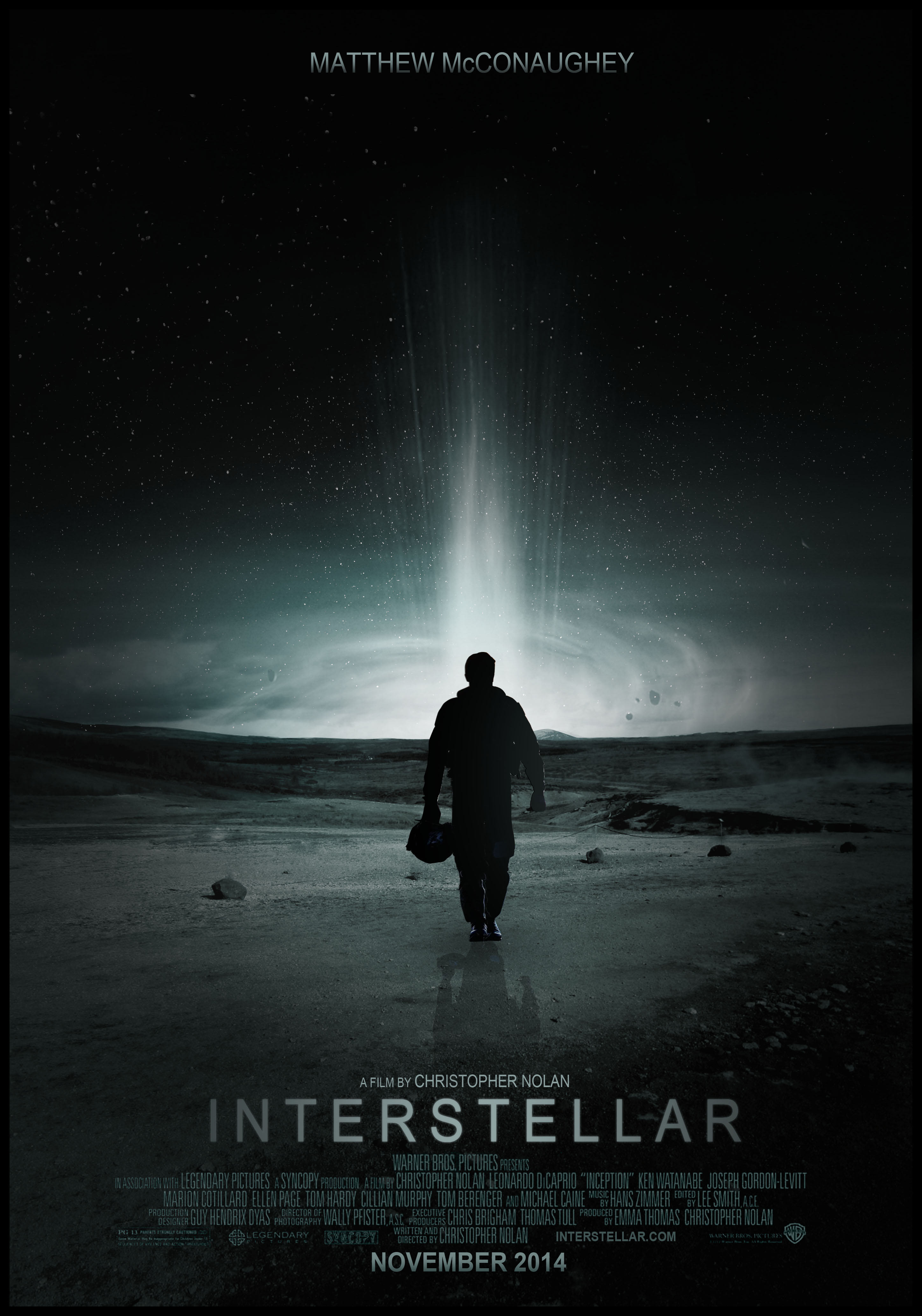
interstellarGet ready for the ride of your life…especially if you choose to watch this stunning, visually spectacular movie in a IMAX Dome Theatre. Christopher Nolan has done it again…he truly has the ability to impress and strike awe in the eyes and minds of the audience. This thought-provoking and astonishing movie will rock you down to your very core. Interstellar exceeds even what you thought Nolan could bring to the screen to create a magical, transformative movie experience that, much like Kubrick’s 2001: A Space Odyssey, will compel you to continue thinking about the movie long after you left the auditorium. And that curious desire to know more is mostly because the physics and logic, within this visual masterpiece, are never fully explained, and many elements left vague, thus causing the intellectually based narrative’s reach to exceed even Nolan’s grasp. Filmmakers are masters of creating worlds of fantasy, mystery, and wonder; but it’s encumbered upon the directors and writers to explain the logic and science that exists within the fictitious world, and that is where this film fails and leaves the audience unfulfilled.

Not taking place that far into our future, Interstellar is about a group of scientists and astronauts who have the responsibly to find another home for the human race, struggling to survive on a dying earth. Earth is struck with a plague of sorts that has ravaged the land, stripped it of nutrients, and covered it in dust. Corn is about the only crop left that can be grown but is slowly becoming extinct itself. Cooper (Matthew McCanaughey), a former NASA pilot turned farmer, is the father of two children whom he desperately wants to save from the dying earth. Contrary to what Cooper’s father-in-law warns him, he decides to join a secret mission to find a new home in another galaxy lead by NASA scientist Dr. Brand (Michael Caine). Joined by Dr. Brand’s equally intellectually brilliant daughter Dr. Brand (Anne Hathaway), Romilly (David Gyasi), Doyle (Wes Bentley), and the AI cyber soldier TARS, the five set off to places unknown. Leaving behind loved ones on a journey that will last for years, the intrepid explorers set forth for a wormhole that leads to another galaxy.

With the possible exception of Gravity, there is not any other film that can compare with the visual spender and awe-inspiring cinematography and soundscape that Nolan brings to the screen in his cinematic masterpiece Interstellar. If you have the opportunity to watch it in an IMAX Theatre (in particular a Dome IMAX), you will benefit from an hour’s worth of footage shot with IMAX cameras that the regular (even 4K) theaters cannot fully showcase in all its wonder. However, if you watch it in an IMAX Dome, you will have to get used to the cuts between the “360” footage and the regular format; distracting at first, but soon you accept and even find excitement and amazement in the scenes that completely envelope the audience. Scored by Han Zimmer, the music is beautiful and terrifying all at the same time. The soundscape truly captures the emotions and breathtaking views in the movie. Enabling the audience to feel like they are in space with the astronauts, the absence of sound in many of the space scenes, creates a feeling of helplessness and fear. Combine the brilliant direction and score with the talented eye of cinematographer Hoyte Van Hoytema and the meticulous cuts of editor Lee Smith, and you truly have a work of art.

Beyond the incredibly stunning visuals and breathtaking sound design lies an intellectually-based narrative that has so much potential but is never fully explained and follows no known logic–even within the realm of the movie itself. In many respects, the movie could be subtitled “The Suspension of Disbelief.” It is common knowledge that audiences have to employ the use of the “suspension of disbelief,” but the entire plot of a movie should not rely on the audience just accepting elements of the movie just for the sake of blindly making sense of the movie. I would love to have watched the movie with a theoretical physicists so I could have discussed the science and theory behind the plot of the movie. It would be quite difficult to discuss the shortfalls of the plot without giving away key elements and surprises in the movie, so I will not attempt to do so. However, there are definitely straw-man arguments and a reoccurring deus ex machina that serves to explain everything even though itself is never fully explained. As complicated as the plot was in Inception, it is more easily explained than many of the plot points in Interstellar. Essentially, Nolan has created a world in which you just accept the logic and scientific theories even though they do not make sense within the infrastructure of the movie.

Your imagination will be blown away in this visual masterpiece that will provoke you to continue thinking about the plot of the movie long after the credits roll and you get into your car. Questions like how and why will be the ones generating post-movie conversations in the car with your friends. Debating the science and logic in the movie will likely prompt college professors to build entire lessons around the story. Maybe that is what Nolan was hoping for…creating curious minds and enticing new explorers to be the next great minds in our future. Or, it is entirely possible that he just wanted to tell a visually powerful story that rests on fabricated theoretic physics. Either way, you will thoroughly enjoy the movie–except for the whole “how does that make sense?” Despite the beautiful mess of science the movie exhibits, you may still want to go along with the high-impact edge-of-your-seat ride.

Before I Go to Sleep

Before I Go to SleepActually, that was pretty good. Pay no attention to other reviews that have been written. Before I Go to Sleep is a pretty good thriller–if you don’t mind thriller cliches, that is. You’re neither going to witness Nicole Kidman’s nor Colin Firth’s best or a good performance, but you will get a fun thriller to watch this weekend. It basically follows suit with the rest of the October movies, in terms of cinematic quality, with the likely exception of Nightcrawler (from what other critics have written). Although I haven’t seen it yet, I plan to this weekend or next week. As the credits role, you will most likely feel as if you sat through a Lifetime movie with A-List actors. Despite the many cliche moments, there is a great plot twist that I did not see coming. Since the movie is only 1.5hrs, it launches out the gate like a sprinter, and keeps up a good pace for the run of the film.

Before I Go to Sleep is about Christine (Kidman) who suffers from a severe case of amnesia that causes her to lose her memories from any given day, while she sleeps, and wakes up feeling as if she is back to her 20s. Through her husband Ben (Firth) and a video diary, she is able to retain some of what she has learned each day. However, with the help of her psychiatrist, she uncovers something dark that could rock her world while she pieces together her past.

The movie opens with a very Hitchcock-ian ECU (extreme closeup) on Chris’ eye. This shot is very reminiscent of the final shot of Marion in Psycho as the camera slowly spirals out from her lifeless eyes. Much in the same way the much more comedic 50 First Dates plays out, this movie features a similar concept of narrative exposition from loved ones, newspaper clippings, and photographs. However, this is a much darker story than the comedic counterpart. Over all the cinematography, direction, and screenwriting is par for the course for Lifetime-esque films. But, this IS a theatrical release, so it falls short of where it should be.

The plot keeps you guessing and has you along for the ride from the very beginning. There are certainly unanswered questions like: why all of a sudden is she (Chris) able to slowly recall memories even though she has been stricken with severe amnesia for ten years? And, at what point did this psychiatrist become involved with Chris? She still lives in the same city where she had been prior to the accident, so why don’t friends ever come over or check up on her? I suppose, this is where one should employ the suspension of disbelief in order to enjoy this moderate thriller.

Not at all Oscar bait, but could very well be Raspberry bait; it’s one of those films you watch for pure entertainment value and enjoy the ride, as “TV” as it is. Thankfully, it sticks to an appropriate run time of 1.5hrs, and will keep your attention as long as you like Lifetime style movies. And, this critic enjoys them from time to time. Happy Halloween!

Ouija

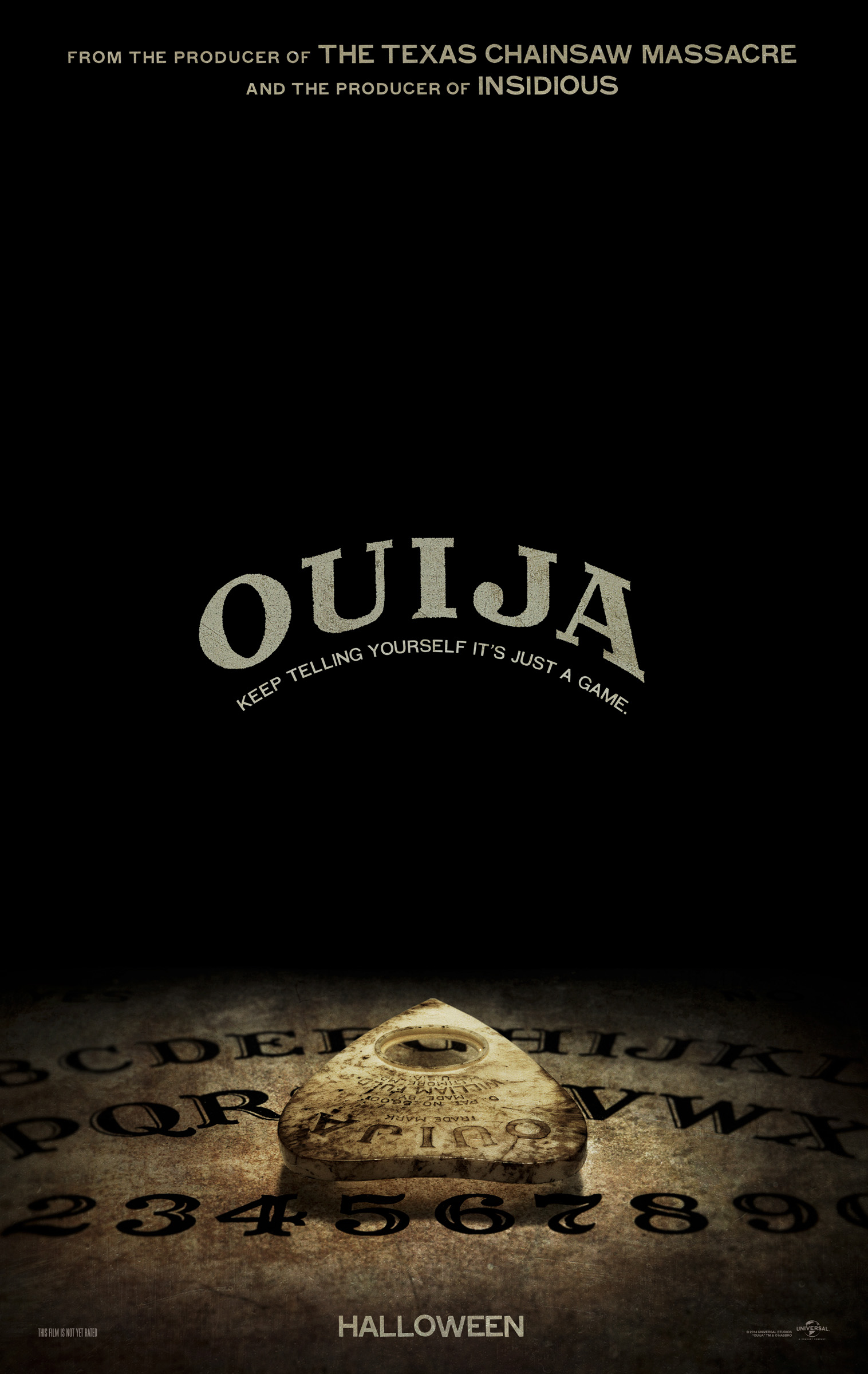
ouija-poster“Hi Friend.” Inspired by Hasbro’s classic controversial board game, this season’s most anticipated and heavily marketed movie comes to theaters, but should’ve stayed in the box–the cable box, that is. Par for the course and by the book, this supernatural-thriller hits all the predictable marks for a Halloween season release, minus the visceral gore that many were likely hoping for. Instead, it employs jump scares, orchestral screeches, and a pretty decent cast. One thing’s for sure, if you were ever thinking of playing Ouija, you may rethink that after watching the movie. Not sure if Hasbro is trying to inspire people to buy their product or dissuade kids and teens from using the spirit board. After all, where do you go with an opening shot of the board being burned in a fire place? The movie is a good ride; but is better suited for a MOW (movie of the week) on Chiller, SyFy, AMC, or even LMN. It is a product you can buy, so maybe HSN too?

Ouija begins with the apparent suicide of a young lady in a stately upper-middle class house. Following the bizarre death, her closest friends desire to learn more about what drove her to an untimely demise. Upon finding the Ouija board in the deceased room, the victim’s friends use it to communicate with her in order to say goodbye and find out if there was foul play involved. After communicating with the dead hits too close to home and a spirit makes contact with the close group of friends, they realize that they have awoken something evil. It isn’t long before the group realizes that they haven’t been communicating with their deceased friend but with something far more insidious. It is up to this group of friends to overcome and break the connection with the spirit realm in order to save their very lives from meeting the same fate as their friend.

On the surface level, creating a horror movie from a board game sounds like a fantastic idea. But, when the product in question has been used in seances, since the 1800s, to communicate with the dead, is it really? For many who believe that this board is, or can be used, as a conduit through which communication with the spiritual realm is possible, this movie likely hits too close to home. The thin veil between the physical world and the spiritual realm is all too eye-rollingly literal in this movie. Even though Hasbro was hoping for another GI Joe or Battleship, the mystery and controversy surrounding this product prohibits it from being a glorified commercial for the toy company. But, it does make for a decent horror movie and helps to enhance the creepiness of the Halloween season.

Unlike other comparable horror movies featuring a mostly unknown cast, this movie is greatly helped by the strong cast of young people. In contrast to many horror films with a predominately “teenage” cast, there are no idiots amongst this band of friends. They are only persuaded to play the “game” when Laine (Olivia Cooke) twists their arms and promises to give up on talking to Debbie (Shelley Hennig) if they would play once. Although there are clearly teenage romances hinted at in the movie, the film lacks the classic “if you have sex, you will die” theme from classic horror movies such as HalloweenFriday the 13th, and Nightmare on Elm Street. The performances from each of the characters are convincing enough to carry the film, and helped the overall performance of the narrative. For fans of Insidious, there is a small but pivotal cameo appearance by Lyn Shaye (the character of Elise in Insidious) as a mysterious old women in a mental health hospital.

Although the movie is centered around traditional Ouija board play, like in Battleship and GI Joe, the filmmakers added their own creative touch in order to enhance the ability to set the terror barometer high in the minds of the audience. One of the dramatic elements created for the film is the ability for the game player to look through the eye of the planchette (the triangular shaped tool with a small window that moves around the board) and see into the spirit realm to catch a glimpse of the spirit with whom he or she is communicating. The filmmakers also employ the use of zombie-like trances and goulash apparitions to spook the audience and give the movie visual substance beyond an atmosphere of terror.

Less scary than Annabelle or As Above, So BelowOuija will likely bring in much-needed profits for the legacy toy company just in time for the holiday season. As a filmmaker, it is refreshing to see the film released under the Universal Studios banner because Universal is the original house of horror, and has been scaring us since the 1920s. Unfortunately, this film suffers from a predictable cliche screenplay and relatively low-budget. But, if you are looking to kickoff your Halloween week with a scary movie that’s a fun ride into the spooky festivities and masquerade parties, then this is a great way to set the mood and get you in the spirit of the season.

Happy Halloween!

The Judge

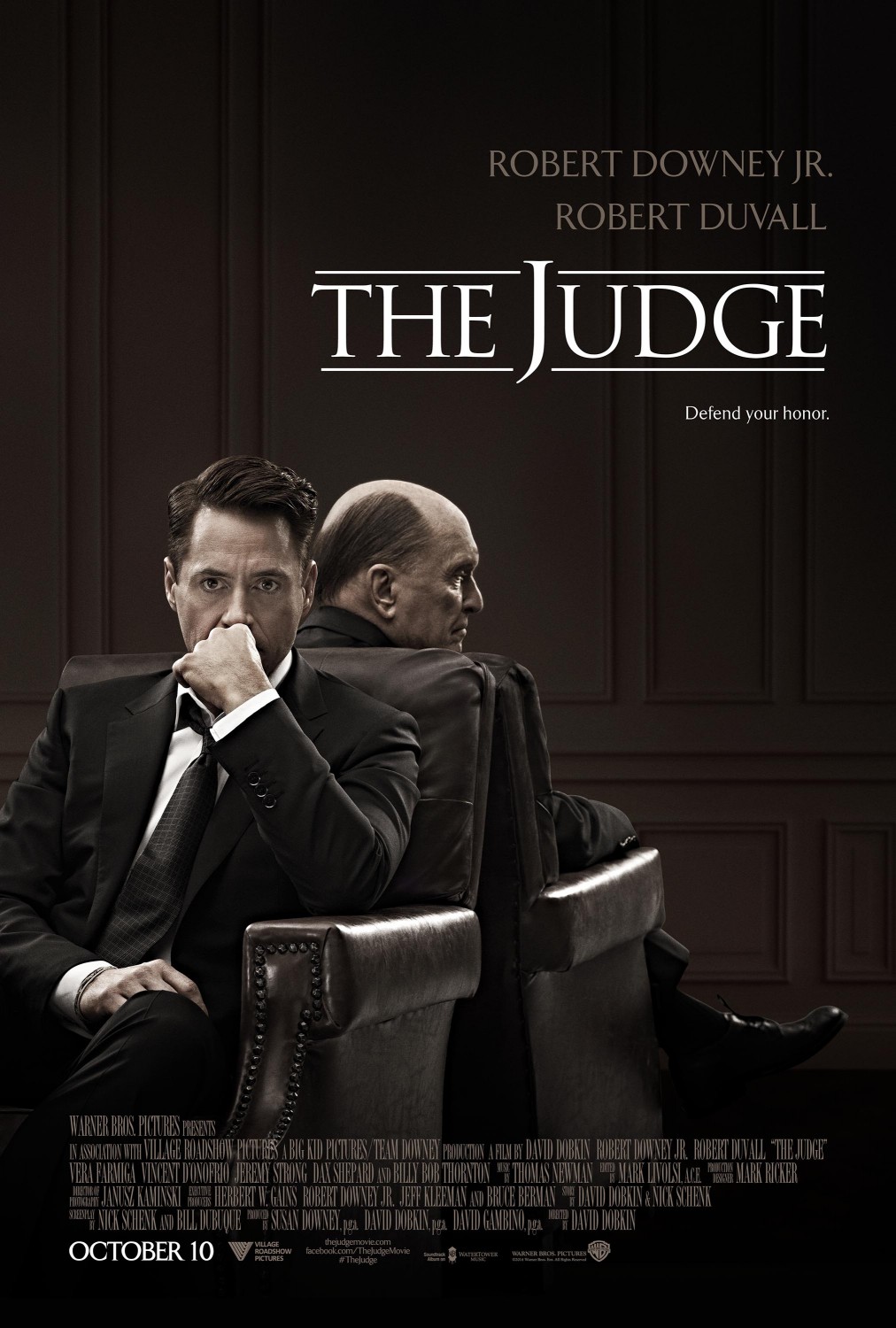
The-Judge-PosterIncredible! This film will definitely blow you away. Honestly, the most gritty and gut-wrenching crime-drama that has come to the silver screen in a long time. Both Robert Downey Jr. and Robert Duvall give the best performances of their respective careers. The emotional roller coaster of a film, will take you on a journey into the lives of a father and son who couldn’t clash more than oil and water. Follow this gripping story of family, justice, and estranged relationships as the very passion, with which the screenplay was written, is felt in every frame and even offscreen. There is no stone left unturned in this unabashedly adult earthy drama that will simultaneously prompt feelings of disgust and laugher throughout the masterpiece. Although we are still a ways off from calling Oscar noms, this one is likely destined for that coveted Best Picture nomination, as well as others.

It is hard to believe that the same director who brought us Wedding Crashers and Fred Clause brings us this uninhibited drama about the murder trial and dysfunctional relationship between the highly respected veteran small-town Judge Joseph Palmer (Duvall) and big-city defense attorney, and savior of the unsavory white-collar criminal, Hank Palmer (Downey). The Judge is about the “big city lawyer Hank Palmer who returns to his childhood home where his father, the town’s judge, is suspected of murder. Hank sets out to discover the truth and, along the way, reconnects with his estranged family” (IMDb). Having first desired to work with an attorney in the quaint Norman Rockwell-esque Indiana hamlet, after the state sends the steely prosecutor Dwight Dickham (Billy Bob Thornton), Judge Palmer must turn to his estranged son. Facing the past he so desperately wants to disconnect from, Hank must work with his obstinent and incorrigible father to develop the defense for his father’s murder charge amidst mourning over the loss of a loving wife and mother of three sons.

This is the first heavy drama–actually drama period–from David Dobkin. It is very likely that when Warner Bros. and Village Roadshow studio executives reviewed his screenplay that they stated to themselves “but this isn’t funny.” And, they would be correct. Until now, Dobkin has supplied audiences with outlandish comedies. However, back in 1998, his breakout film Clay Pigeons was his first attempt at a crime-drama. And even though it was filled with sinister crimes and macabre themes, at the end of the day, it was still a comedy. The Judge is a complete 180 from the past Dobkin films. If it was unclear whether he could prove himself to be a serious filmmaker–reaching emotional depths seldom reached by directors–this old-fashioned return to the power of “story” will convince you that he is destined to create cinematic masterpieces in the future.

Seemingly a chorus line that even Marvin Hamlisch would be proud of, occurring at regular intervals, skeleton after skeleton emerges from the dark closets of this prominent family. And each one forces the respective family members to face them despite the past traumas. Each Palmer family member is a different character archetype. There is eldest brother Greg Palmer who was destined for the major leagues but after a severe car accident in his youth, his promising baseball career was snatched from his grasps. Next to him in age, is Hank. And, the youngest sibling is Dale who suffers from a cognitive disorder prohibiting him from being completely autonomous; however, he is great with an 8mm video camera that ironically captured both the dark and memorable moments from the family and serves as a sort of exposition, filling in the gaps from the past. As the epitome of a family patriarch, Judge Palmer is the anchor for his family, with the exception of Hank who wants next to nothing to do with them.

Beyond the edge-of-your-seat criminal trial proceedings, ultimately, it is the father-son relationship that is truly put on trial before the audience. Screenwriters Nick Schnek and Bill Buboque have so carefully and meticulously crafted the story that the audience will always be wondering whether Hank and Judge will go full force at one another; and, will be forced to wait until the end to behold the no-holds-barred emotional fight between the two strong-willed individuals. Accompanying the brilliant direction and writing, cinematographer Janusz Kamiski will use the camera lens to tell the story of anguish and reconciliation beautifully. Thankfully, the movie includes some humor sprinkled throughout the film, and this can likely be attributed to Dobkin’s penchant for humor. Had this been left out, it is entirely possible that the movie would be too emotionally heavy and draining.

Highly recommended for anyone who loves witnessing true-to-life characters in real-life situations. Due to repeated usages of adult language, it is not a movie for children. But, it is an inspirational movie for anyone who is either currently dealing with or has dealt with dysfunctional/reconciled father-son relationships. If you loved the story, chemistry, and uninhibited dialog and action in Kramer vs Kramer and the timeless classic tear-jerker Terms of Endearment, you will truly enjoy experiencing the powerful story in The Judge.

Gone Girl

Gone GirlPrepare for the ride of your life! This spellbinding crime/mystery drama will have you on the edge of your seats from the time acclaimed director David Fincher opens the film with an incredible cinematic shot of Amy to the time the credits roll. If you have been lucky enough to have not read the book prior to watching the film, you will be glad you waited*. There are few directors who can visually capture the very essence of a novel cover to cover, and that is exactly what Fincher has done. If you have read the book, rest assured that Fincher stays true to the novel (90%) and the few minor changes that were made were actually good changes for the film. In fact, I would even venture to say he improved the original novel with his indelible sleekness. From the writing to the directing, from the acting to the cinematography, David Fincher will captivate your attention for the entire 2.5hr roller coaster of a movie.

Gone Girl is a crime-mysery-drama based on the best-selling novel by the same name. Reminiscent of the infamous Scott Peterson case of the early 2000s, this movie is a deliciously twisted movie about Nick Dunne (Ben Affleck), an unemployed writer turned community college creative writing instructor, who reports his wife Amy (Rosamund Pike) as missing to the authorities on the day of their 5th wedding anniversary. Nick and Amy are the most picture-perfect couple, or are they? Because of Amy’s parents being world-famous writers, the case is picked up by the local and national media quickly. Although the investigation first begins to look for the intruder/kidnapper who ransacked the house, after a bizarre turn of events, the investigation places Nick in their crosshairs. Still claiming innocence despite the circumstantial evidence piling up against him, Nick and his sister Margo (Carrie Coon) hire famed defense attorney Tanner Bolt (Tyler Perry) to help solve this missing person’s case. Determined that his wife is still out there, Nick mounts his own counter investigation into the whereabouts of his wife. But is this just to throw off the authorities? Did he actually do it (as was the case with Scott Peterson case)? And, if so, why? All these questions and more can only be answered by watching this amazing work of cinema. Dive right into this twisted and bizarre thriller that takes places in the most nondescript places away from the hustle and bustle of the city. As soon as you think you’ve got it, guess again!

Aside from the brilliant direction of David Fincher, this movie benefits greatly from the screenplay written by Gillian Flynn, the author of the original best-selling novel. This proves to be an excellent move because the movie is so incredibly close to the book. Fortunately, the facts that were changed to benefit the structure and pace of the movie, were strategic stings that actually enhanced the narrative. Because this movie is a mystery movie, I won’t be discussing any of the minor changes. But, if you’ve read the book, you will be delighted at watching the images seamlessly leap off the pages and onto the screen. Not every literary writer can make a successful transition from writing novels, which are internally driven, to screenplays, which are visually driven, but Flynn has proven her ability to adapt a screenplay beautifully. It’s almost as if she started with page one of the novel and wrote the dialing, visual elements, and stage directions as they appear in the novel and transposed them to the screenplay.

Ben Affleck truly gives the performance of his career in the role of Nick Dunne. He has stepped up his game in such a brilliant way and it shows throughout the entire film. One can easily draw the conclusion that, after having made a name for himself as a successful director, that he has gained greater insight into improving his acting skills. Interestingly enough, Affleck walked off the set of another film in order to act in a David Fincher masterpiece. The role of Nick Dunne was a perfect suit for Affleck, as it captures his stunning good looks and apathy, with occasional aloofness and cockiness, in regards to the disappearance of his wife. His performance truly puts the audience in a place of whether to sympathize with him or by repulsed by him. And, throughout the movie, you will be asking yourself whether or not you believe his story of the disappearance and the story of their marriage.

Contrary to the name recognition that Ben Affleck, Tyler Perry, and Neil Patrick Harris receive in this movie, there is a strong possibility that you did not know who Rosamund Pike was prior to her excellent portrayal of Amy Dunne. However, after this impeccable performance, you will not soon forget her name. From the moment the movie opens on a closeup of her gazing into the camera, you know that she is going to completely sell her character. From her devilishly good looks to her complicated (and we all know what a “complicated” women is) attitude and high society demeanor, the audience is caught at a crossroads as to how to receive her. Much like the audience is asked whether or not to believe Nick, the audience is faced with whether or not to feel sympathy for her. Throughout the story, she reveals how her marriage actually was, or does she?

The film also benefits from an excellent supporting case of players. Kim Dickens is outstanding as Detective Boney. Carrie Coon plays the role of Nick’s twin sister Margo with an amazing performance that highlighted both the sibling rivalry and the unconditional love sib lights should have for one another. In a stark contrast to How I Met Your Mother‘s Barney, Neil Patrick Harris is awkwardly wonderful as Amy’s ex-lover Desi from boarding school. Rounding out the cast of notable supporting players is Typer Perry as the brilliant  defense attorney Tanner Bolt.

As this movie could easily be a dramatic depressing soul-sucking story, Flynn and Fincher add the occasional satirical joke and dark humor related to “perfect marriages” and searches for rich white women. These subtle humorous elements coupled with the dark and twisted story create an uncanny atmosphere for this crime-drama to unfold. In addition to being a narrative crime-drama mystery, it’s also a self-reflexive crime-drama mystery in how it deals with the sorted circus surrounding the search for Amy. It’s self-reflexive in that the movie comments on the infrastructure of a missing person’s search when the person is of a high profile in a community.

Rounding out the beautifully orchestrated Fincher film is the breathtaking cinematography and well-crafted coloring that is standard equipment on a Fincher cinematic work. If you are familiar with the editing and coloring of a Fincher film, you will notice similarities between films like The Social Network and Fight Club and Gone Girl. He worked with the post-production house Digital Domain and with cinematographer Jeff Cronenweth to give the film the “Fincher” look, which both is aesthetically pleasing and, in its own way, helps reveal the subtext of the film. Although not as prominent in the film and juxtaposed against the gritty plot, the score provided by Trent Reznor and Atticus Ross, is very much like the innocent music one may encounter in a spa or meditation retreat.

This is not your Agatha Christie or Lifetime crime-drama, it is a journey full of perfectly crafted twists and turns that keep the audience guessing the whole time. Well, those who have not read the novel that is. Get ready to be captivated by the stories of love, betrayal, murder, and mystery in this masterpiece adaptation of the best-selling novel not for the faint of heart or “sensitive” movie patrons.

*My recommendation is to NOT read the book prior to watching the movie to keep the element of mystery in tact.