The Hobbit: The Battle of the Five Armies

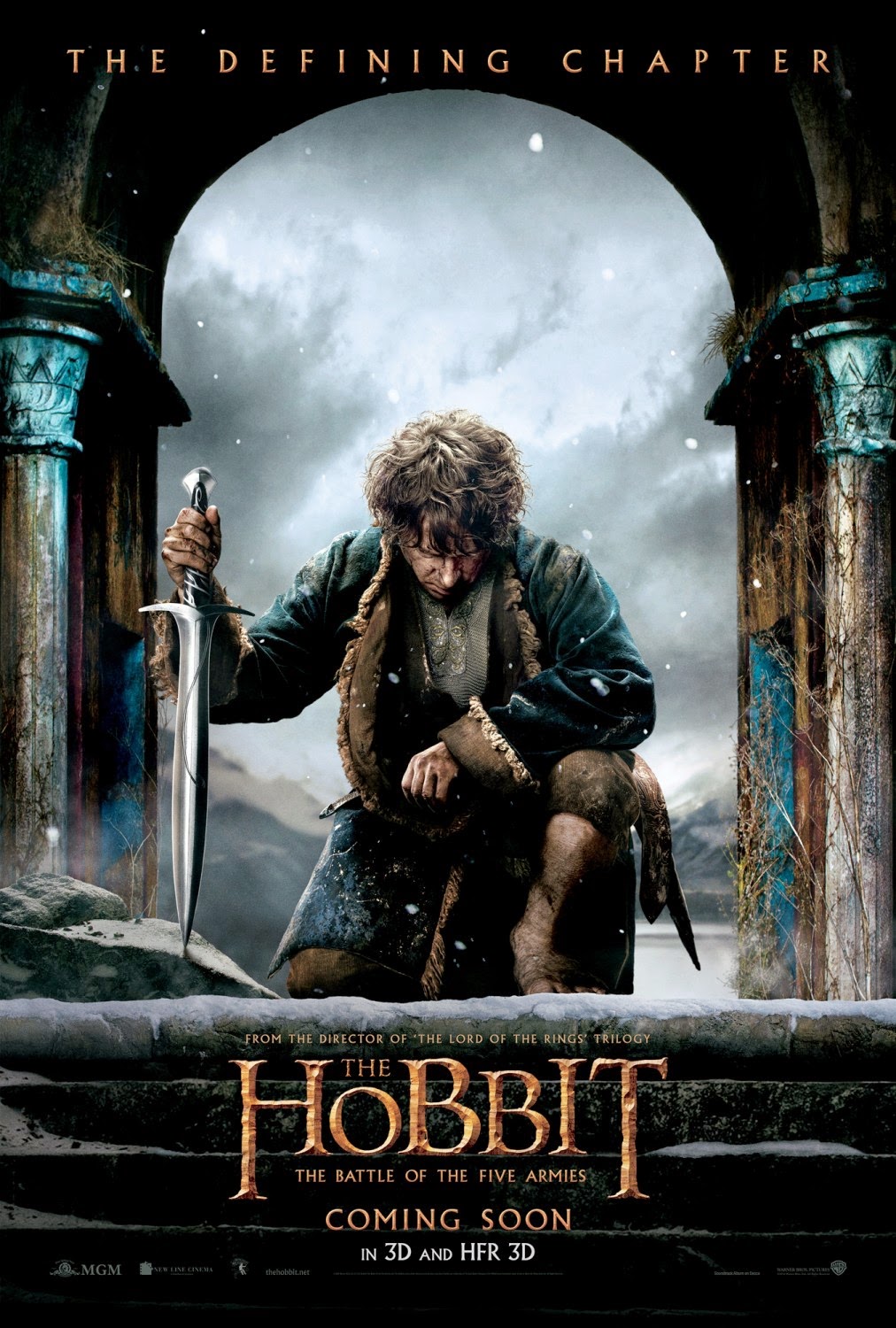
Hobbit PosterThe defining chapter in the Hobbit Trilogy is anything but. Beyond the impressive visuals and all-too-familiar sweeping landscape shots that are the hallmark of Peter Jackson’s directing, the movie leaves the audience feeling empty and unfulfilled. However, as disappointing as this last installment was, it was still better than the previous two. The best thing the second movie had going for it was Smaug, and in this last chapter of the nearly short story turned into three movies, but he dies off faster than Anne Hathaway in Les Mis. One thing is for sure, Norma Desmond would be quite proud of the movie, seeing as that the amount of diegetic dialog probably amounts to 15-20minutes of the 2hour movie. But, it is called Battle of the Five Armies, so that is pretty much what you get. A little exposition, a little setting up of the Lord of the Rings, from Lady Galadriel, Saruman, and Gandalf, but mostly just massive battle after massive battle. It was quite boring.

The final chapter of The Hobbit trilogy begins with the defeat of Smaug and quickly moves to the Lonely Mountain where the dwarves stake claim to the treasure and kingdom that was once theirs. Falling prey to “dragon sickness,” Thorin begins to succumb to the magic of the massive treasure and becomes consumed with the search for the Arkenstone. With Lake Town destroyed by the dragon, the people move to reclaim Dale for their own. However, the dark shadows in the east are rising and Orks take to the battle theatre to stop the Elves, Men, and Dwarves from claiming the Kingdom of Erebor for themselves. Thorin must overcome his sickness in order to help defeat the evil lurking at the base of the mountain. And, peoples that are very divided from one another must join forces or die.

This is one of those movies where there really isn’t much to talk about. You have the death of Smaug and a long sequence of battles that finally culminate at one massive battle for Erebor and Dale. The beginning is quite exciting with Smaug wreaking havoc upon Lake Town and her people. After waiting for a year to see Smaug in action–the actual desolation of Smaug that really wasn’t seen in the second movie–he dies during the prologue. Before you think that you’re going to get a lot of narrative exposition setting up The Fellowship of the Ring, think again. Beyond seeing the Witch King of Angmar and Sauron’s fiery eye, there isn’t much to tell. Lady Galadriel, Saurman, and Lord Elrond put up an amazing fight against the undead kings of men and the reawakened force of Sauron, but that’s pretty much it. I recognize that this is the closing chapter so it isn’t smart to add lot of new information, but because it is part of a larger story, there should have been more effort put into setting up the following LOTR trilogy. Bilbo makes appearances here and there, and somehow manages not to die in battle, but there is very little of the hobbit in the series that bears his namesake. Dialog, exposition, and story truly suffer in this movie. If you want to see epic battle scenes very well and impressively executed, then this is a movie for you.

If you prefer a movie with a compelling or intriguing story, with memorable characters, then this movie is not for you. I am glad I saw it so I can close out this trilogy, but I don’t think I will be rushing to get it for myself anytime soon. It is quite apparent in this final chapter that Peter Jackson has gone from a boyhood Tolkien fan to a fan of money. His first trilogy captured the very essence of The Lord of the Rings books (says fan Jen Wead), even though certain elements had to be cut because film is a visual medium. He put so much emphasis on the dragon and kills off his star even faster than Janet Leigh in Psycho. Maybe this movie will see better reviews from the ardent fans. But, that is not likely the case.
Exodus: Gods and Kings

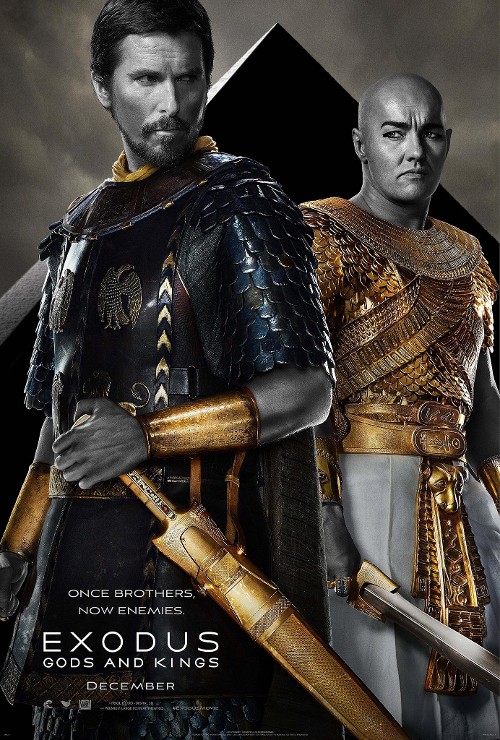
ExodusAlthough Ridley Scott is considered by many critics, film academics, and filmmakers to be one of the greatest directors of all time, like with the last couple of films, he disappoints again with the Biblical film adaptation that is probably the most difficult to ruin. Exodus: Gods and Kings needed to be another Gladiator but instead it is more like Prometheus. The story of Moses and the enslaved children of Israel is an epic story that needs very little to be successfully translated to the screen because of the prolific amount of material that makes up a story that is engrained in the conscious of many. It’s been nearly 70 years since the Cecil B. DeMille’s cinematic masterpiece The 10 Commandments and nearly 20 years since Prince of Egypt and both of those films tell a much more compelling story than this tragic retelling of the oh so familiar tale. With a travesty of a screenplay coupled with painfully terrible acting and missing the mark on so many crucial elements to the story, this film is not destined for any Oscar list, but could make the Raspberries.

Exodus: Gods and Kings is the most recent film adaptation of the Biblical (and Torah) story of Moses, Pharaoh, and the children of Israel. It chronicles the prince of Egypt from his high rank as a general in Pharaoh’s army, into exile, to raising a family, from an encounter with a representation of God to demanding Pharaoh to free the enslaved Hebrews. It ends with the crossing of the Red Sea and quickly introducing the 10 Commandments.

You have to work pretty hard to ruin the story of Moses…but that is exactly what Scott did with his most recent film dedicated to his late brother Tony. This Biblical epic has everything a film needs: the parting of the Red Sea, plagues, death, violence, and a dysfunctional family. It’s all there!! How could Scott have missed it? The movie starts out well enough because it adds some family backstory that is not included in the Biblical text, which does greatly help to understand the relationship between Pharaoh, Ramses, and Moses. However, this was better accomplished in DreamWorks’ Prince of Egypt. But, conspicuously missing from the beginning of the movie is baby Moses in the basket being picked up by Pharaoh’s sister Bythia. Instead, we get some very rushed exposition from Nun (Joshua’s father) in a bizarre encounter between Moses and the Hebrew elders. Fortunately, the infamous plagues were showcased pretty well, but they too were rushed and all divine epic-ness was nearly sucked out of them; and Moses just stood by virtually clueless as to what was going on. For someone that was supposed to be the earthly mouth of God, Moses was often internally confused and insecure with his confrontations between him and Ramses.

And talk about that burning bush experience. I am not sure if Scott failed to read the passage, watch C.B.’s masterpiece or the DreamWorks film, but he completely botched the catalyst for Moses’ return to Egypt. There was nothing special about it, and it came off as a delusional dream. Actually, there is no reference to the burning bush at all in the burning bush scene. Probably the most contentious point for Jews, Christians, and Catholics is the fact that God is represented by a little British boy who does not address Moses with any authority and instead talks to him as Moses’ conscious embodied. We at least get the “I Am.” The boy who represents the voice of God never even refers to the children of Israel as his people–always Moses’ people. The scene leading up to the burning bush included a torrential rainstorm. How epic would it have been to have seen the burning bush ablaze amidst a storm!?! But, instead it’s treated as a cliche and boring dream sequence.

The character dynamics and acting were as awful as the script itself. Coming across as a History Channel original movie more than a work of cinema, this film’s actors suffered from lack of direction and inspiration. There is not one performance that stands out–not one. Each and every performance is equally lackluster and one dimensional. Even the massive battle scenes lacked shock and awe. If only Scott’s writing team spent as much time in detailing and crafting the script as his graphics, prop, and camera teams did in recreating the ancient empire with great detail. The balance that must be struck between narrative and spectacle, in a story such as this one, was very much off balance. Probably the most disappointing part of the movie is the parting of the Red Sea. This should be the most climactic part of the movie that impresses both the audience and the characters on the screen. Sadly, it does neither. We barely see the sea part for the Hebrews. Apparently, it happened very slowly while they were all sleeping??? Very little comment is made beyond something to the effect of “oh look, we can cross.” With today’s modern computer assisted and generated visual effect technologies, this should have been treated much better and used as the piece de resistance. Instead we get a very anticlimactic drying up of the Red Sea. Scott tried to make up for it after the Hebrews cross by having tsunami sized waves rush Ramses’ army and crash onto the ground to close the sea back up. Where was this spectacle when it parted? And again, Moses is clueless as to what God is doing and acts utterly surprised.

When Scott needed to provide movie-going audiences and the arts community with another Blade RunnerAlien, or Gladiator, he produces cinematic schlock with terrible performances from notable actors, underused performances from others, and a tragically misguided and depressing script. And, the well-executed technical achievements do very little in helping to overshadow the empty and awful screenplay. With 2.5 hours of run time, you’d think the movie would have turned out so much better. All it does is leave the audience with feelings of disappointment and a lukewarm “meh.” Looks like C.B. still wins the best retelling of this classic tale of Biblical and historic proportions.

The Hunger Games: Mockingjay Part 1

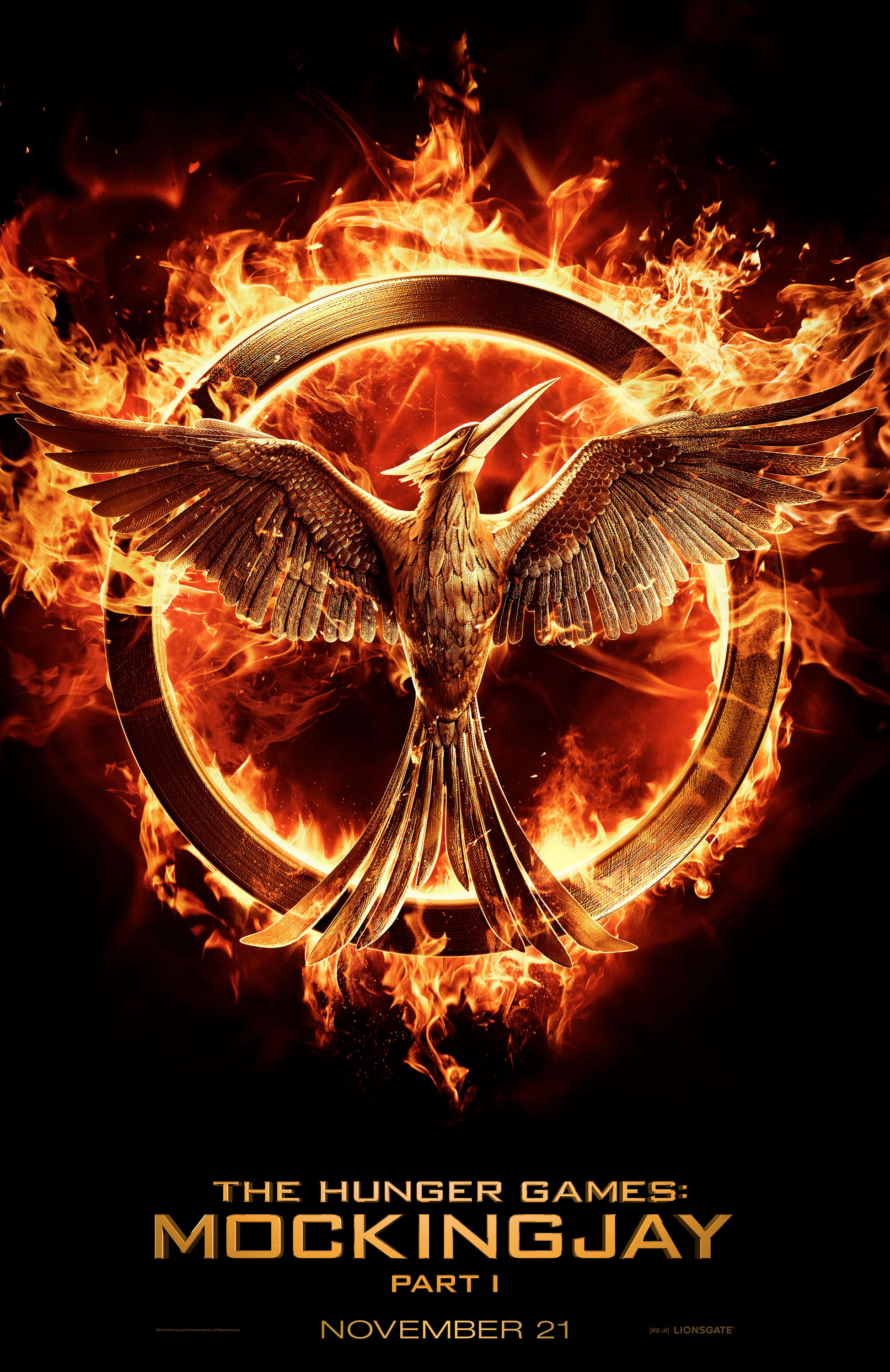
mockingjayProbably the best “games” movie yet, Mockingjay Part 1 takes the audience back to the dystopian world of Panem at a time that there is talk of revolution against the seemingly utopian capital that prospers while the rest of the world is in turmoil and eternal servitude. Although it is the best in the franchise of movies so far, it falls short of where it should be. Most notably, the movie takes Oscar winning and nominated actors and makes mediocre performers out of the them. Even though his screen time is brief, Hutcherson is the only actor who sells his character, especially in the final moments of the film. Lacking in quality of dialog and performances, this film fails to live up to the expectations of the audience in such a successful franchise of movies and best-selling books.

Following the destruction of the games’ theatre and District 12, Katniss (Lawrence) finds herself battling her inner demons and psychological instability in the thought-forgotten and destroyed District 13. It is here that she is confronted by the president of the rebellion President Coin (Moore). Though somewhat reluctant at first, Katniss decides to be the face of the rebels after she realizes her entire home district was destroyed along with most of its people. Known as the Mockingjay, Katniss becomes a new kind of celebrity–one who is Martin Luther King-like or a de facto Joan of Arc. The over-arching goal of the film is for a small band of rebels to break into the capital and rescue Peeta (Hutchinson) and the other victors from the clutches of President Snow (Sutherland). In this movie, Katniss becomes a full-fledged leader of a rebellion.

A common theme throughout the movie is the director’s and writers’s belief that Katniss is actually more exciting than the revolution in and of itself. This is seen in the weak dialog and performance given by Lawrence, as well as most of the rest of the cast. Ironically, the performance of most of the characters is indicative of the lackluster rebellion propaganda video Coin and Plutarch set to create to generate enthusiasm in the hearts of those who desire to overthrow Snow and the capital. Unfortunately, the character development and exposition are lacking in this third installment of the franchise. However, the director and writer are not fully to blame because Mockingjay is arguably the weakest book in the series. This is where the producers of the film should have made sure the director and writer added and modified material to be more visually compelling in order to sell the story, characters, and setting more effectively.

Film scholar Linda Williams, who principally studies horror, has written that there are four elements that are required for any successful horror (or, can also be used to describe action/adventure/fantasy) movies, and those elements are: narrative, spectacle, setting, and characters. Beyond the definitions of each, there lies a great importance in each of them. In order for this genre of movie to be truly successful (beyond box office numbers) and artistically important is to have vibrant, unique, visual settings. The settings in this film are barely distinguishable from any given dystopian world that we have been inundated with over the last few years. It needs dynamic strategic characters through whom the story can be advanced, and this film has overly used or one-dimensional characters that are less than memorable (with a few exceptions). The narrative needs to be told with sufficient exposition to immerse the audience into the story, but enough spectacle to keep the attention and to advance the plot visually. Both narrative and spectacle are not kept balanced, and leave the story feelings very par-for-the-course.

The biggest element that the previous movies had going for them was the proliferation of action sequences that kept the anxiety levels up and hastened the pace of the film. This film, however, should have played it closer to the book by having more action and less camera work by the ragtag crew. One thing the movie does very well, is showcases and highlights the fact that our society, even today, is heavily mediated. Throughout the series, the narrative and characters often comment on the mediation of society. Mediated in that most everything is documented, broadcasted, recorded, with the applications of gatekeeping and filter applied. It shows the dangers of a society who loses themselves in the technology of broadcasting that which should not be seen. Film critic Adi Robertson comments on the idea that Katniss has become that which she actually opposes.

“The most positive interpretation of Mockingjay is that it’s a daring postmodern step past simple satire of the reality TV-loving masses. Katniss was a hero of action in The Hunger Games, taking her sister’s place in the Games and manipulating the Capitol into changing the rules to save her. She was a hero of reaction in Catching Fire, unwittingly playing out her part in a larger scheme. Now, Mockingjay is creating its own version of David Foster Wallace’s hero of non-action in Infinite Jest: not a character “beyond calm, divorced from all stimulus” but one that genuinely has no existence or effect beyond her appearance on a screen within a screen. A character who, after years of manipulating her appearance, has actually started to become television” (Adi Robertson, 2014).

Hopefully this film is like the Halfblood Prince Part 1 in that is is setting up the audience for the amazement and astonishment yet to come. Hopefully, the editors and director can craft Part 2 in such a way that the characters are as exciting as the rebellion, the setting becomes more distinguishable from its counterparts, and the dialog generates excitement for the rebellion in the heart and minds of the cinema audience as well as the characters in the movie itself.

Nightcrawler

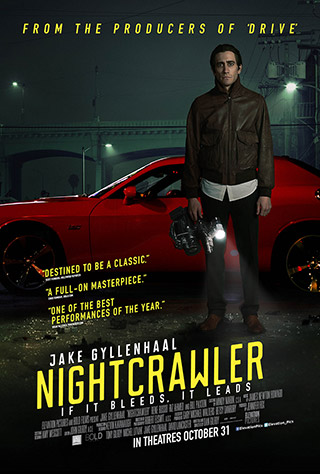
NightcrawlerGet ready for the “ride” of your life, as you follow Lou Bloom (Gyllenhaal) on an energizing and exhilarating race to be the first to the scene of newsworthy catastrophic events. One thing is for sure, you will never watch the news the same way again. This self-reflexive movie delves into the world of capturing the worst days in people’s lives and constructing a story worthy of airtime. Full of characters you will love or love to hate, this movie is destined to be regarded as the most exciting movie about the business of television news after Mad City. Gyllenhaal gives the best performance of the year in this death defying roller-coaster of a movie. Whether you’re a news writer, camera operator, news director, or just like a thrilling movie, you will definitely have to make time to see this excellent work of cinema.

Nightcrawler is about petty thief turned television news cameraman Lou Bloom who steels and pawns in order to buy a camera to document tragic events in order to sell them to the highest bidding television news station. After several setbacks, he finally has his debut! And, that is just the beginning. He soon perfects his craft and turns the tables on his employers so that they need and want him. Primarily working for one struggling news station, he drives the nightly ratings up by being the first at every crime scene–even before the police. Determined to be the best, he dominates the market and drives out the competition. Being the best sometimes means bending the rules and taking one’s chance with death, and Bloom will stop at nothing to be the best and to have his name known around the city as the best nightcrawler capturing tragedies, deaths, and bizarre accidents on camera in a way that no one can match.

First highlighted in Hitchcock’s Psycho and a common thread in many horror/suspense films, Nightcrawler is constantly focusing on “eyes.” Throughout Psycho, the audience is faced with the bird’s eye view of Phoenix, the eyes of the real estate customer, Marion’s boss, the highway patrol officer’s, Norman’s, Marion’s lifeless eye, and most notoriously, the ever-whatchful eyes of mother. In the same vein as the Hitchcock masterpiece and foundation to the modern horror/suspense genre, this film follows suit by spending an incredible amount of time on “eyes.” Not always the eyes of the characters, but sometimes the eye of the camera–the lens. But, like any magic show staged by the best magicians, this film calls attention to not what is necessarily seen on screen (sometimes the screen within the screen) but what lies on the edges of what we see. THAT is where the true magic and story lie. The magician tells the audience to look stage right for the magic, when all along, the real magic is happening stage left. The term used to describe what happens on screen in a film is mise en scene. Destined to become a neo-classic, this film is the best self-reflexive film about the creation and sensation of television news after Mad City. It’s self-reflexive in that the entire movie is about the production and creation of that which the movie is based upon.

But it would be a mistake to suggest that this movie is told from Lou’s point-of-view, much less that it endorses his behavior. It’s too attuned to the anxiety and misery of the people he manipulates to validate such a reading. But it does put a subtle editorial frame around Lou’s odyssey. Nightcrawler is the blackly comedic, Neo-noir, night-people thriller that I wanted the Travis-Bickle-as-Superman fantasy Drive to be. Like Drive, it could be described as the best picture Michael Mann never made: a film about a private, ruthless loner who pursues his dream his way, always, and whose path through the world is marked by the bloodstains of the people he’s rolled over. In addition to Lou’s perspective, we get the points of view from the news director (Nina), his counterpart, and the news audience. It’s a comprehensive and dynamic story that seamlessly combines the perspectives of each of the elements to create the thrill ride that is as sensational as the stories on screen.

This film marks Dan Gilroy’s début as a director. He wrote the screenplay for The Bourne Legacy with his brother Tony, and although Nightcrawler is much less of an action movie, the pacing of the plot is remarkably adept, and we never have long to wait before the next bend in the road. More often than not, this being Los Angeles, that means a real bend. Lucky Lou reaches a smashed-up vehicle before anyone else, and, having taken a minute to weigh his options, drags the unconscious body of the victim into the pool of the headlights, the better to frame the disaster in style and give viewers a clearer look. He is like a Billy Wilder hero (Kirk Douglas’s unscrupulous reporter, say, from Ace in the Hole) transplanted to the land of David Lynch. The difference is that, where Lynch, in Wild at Heart and Mulholland Drive, follows those who stagger away from car wrecks, hurt and haunted, Gilroy remains with the haunter, who only stands and stares.

A film that should be shown in every television news production class, Nightcrawler is sure to transport anyone who watches it into the unscrupulous underworld of scooping the next station over to make a mark on the ratings charts. This is also a great film for any media ethics class because it provides the audience with fantastic material to discuss questions of how far is too far.

Terms of Endearment

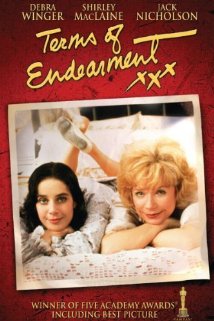
TermsOfEndearmentThrowback Thursday! Winner of five Academy Awards, including Best Picture in 1984, Terms of Endearment is a great example of a beautiful and dynamic story. Combine the remarkable story with the incredible all-star cast, and you get an instant American classic. The narrative is touching, heartwarming, funny, and gut-wrenching. Covering the thirty-year lifespan of the relationship between a mother and daughter, this movie will have you laughing one moment and crying the next. From a mother-daughter story to the story of a charmingly eccentric woman who, in her 50’s who finally permits herself to fall in love; and the chronicle of a troubled marriage between a young professor and his whimsical bride. It’s one part dark comedy and one part heavy drama.

The movie’s about two remarkable women and their relationships with each other and with the men in their lives. Aurora, the mother, is played by Shirley MacLaine. She’s a widow who lives in Houston and hasn’t dated a man since her husband died. Maybe she’s redirected her sexual desires into the backyard, where her garden has grown so large and elaborate that she either will have to find a man pretty quickly or move to a house with a bigger yard. Emma, her daughter, played by Debra Winger, is one of those people who seems to have been blessed with a sense of life and joy. She marries a guy named Flap, played by Jeff Daniels, who teaches English in a series of Midwestern colleges; she rears three kids and puts up with Flap, who has an eye for coeds. And, Freud would have a hay day with the relationship that is formed between MacLaine’s character and the retired astronaut next-door Garrett Breedlove, played by Jack Nicholson; she is both repulsed by and attracted to him. Winger and her husband hit rough patches that they have to pull through. All of this is told in a series of perfectly written, acted and directed scenes that flow as effortlessly as a perfect day, and then something happens that is totally unexpected, and changes everything.

A lesser movie might flail hopelessly between such drastic extremes, and ”Terms of Endearment” does falter here and there. But it somehow manages to incorporate a great many dramatic threads. If it doesn’t always do so with the utmost grace or economy, neither does it ever fail to be enormously appealing, thanks to the bright, witty, larger- than-life performances that James Brooks has elicited from his stars. After a while, though, the film seems to relax about establishing its own cleverness, and it moves on more comfortably to follow the characters and their lives.

There are some lovely supporting performances in the film too; most notably John Lithgow’s as the bashful Iowa banker who becomes Emma’s lover after encountering her in the supermarket. Mr. Lithgow plays this entire episode clutching a canned ham in his left arm, yet he manages to make this touch seem sweet rather than sardonic. Danny De Vito is also quite good as Vernon Dahlart, whose name captures the flavor of his character and who is one of the many Texan moths around Aurora’s flame. As Flap, Mr. Daniels seems pleasant but ordinary, without the immense scale of the three other principals. This doesn’t seem to be the fault of the performance, but rather that of the screenplay. As written, Flap is an indistinct character.

This is a wonderful film. There isn’t a thing that I would change, with the exception of a lack of background on the characters, and I was exhilarated by the freedom it gives itself to move from the high comedy of Nicholson’s best moments to the acting of Debra Winger in the closing scenes. She outdoes herself. It’s a great performance. And yet it’s not a “performance.” There are scenes that have such a casual piety that acting seems to have nothing to do with it. She doesn’t reach for effects, and neither does the film, because it’s all right there. If you’ve never seen this American classic, you definitely need to plan to, and add it to your list.