

Uniquely overflowing with creativity, innovation, and a fantastic sense of style. Greta Gerwig demonstrates an imaginative, effective approach to adapting a legacy IP and toy line for the big screen. Unfortunately, that same level of thoughtful craft does not extend into the story, which is mostly structured and paced well, save a side plot that just crowds the main story. However, the film contains heavy-handed themes rooted in a rather warped worldview.
Barbie and Ken are having the time of their lives in the colorful and seemingly perfect world of Barbie Land. However, when they get a chance to go to the real world, they soon discover the joys and perils of living among humans.
For everything the film does exceptionally well, ultimately, it fails to inspire constructive criticism; rather, its lack of challenging dominant ideologies in popular media proves to be the film’s undoing when there is little change from beginning to end. On a more positive note, I love how the film conveys the idea that toys are our way of working through the complexities of life during our early childhood years. Furthermore, Barbie is a doctor, mother, lawyer, scientist, nurse, and anything she wants to be, which should communicate to everyone that each and every one of us can be anything we want to be (provided we set realistic goals and work towards them).
Before I dive further into my critique of the ideologies the film hammers, I’d be remiss if I did not spend time praising what the film did well–and it did a lot very well! Honestly, applied postmodernist ideologies aside, the film is exceptional! I absolutely love the whole aesthetic. The sets, costumes, and music make you smile from the moment the film opens. In fact, the opening number(s) are enough to make even the most frozen of hearts melt with glee! You will feel transported back to being a kid, when imagination was king (or queen, as it were).
Everything in Barbieland is colorful and bold, and yes many, many pastel pinks, blues, and purples. The land, costumes, vehicles, and houses truly feel like they are life size versions of their toy counterparts. And that’s because everything in Barbieland is a copy of a toy. Often times, when there is an outfit, house, car, or anything really that currently is or was one offered in the Barbie toyline, it is highlighted by a popup describing the item. There are even Barbie and Ken dolls that were once offered but since discontinued, and the film spotlights those as well. The scale and scope of design is unbelievable! If I hadn’t seen it on the screen, I wouldn’t believe it possible to create Barbie land in a live action film.
There are elements of the various sets that are two-dimensional just like in a Barbie playset, and these 2-dimensional concepts are seamlessly woven into this 3-dimensional world. The level of charm in the aesthetic of this movie cannot be understated. The stylistic design continues into the cinematography and lighting as well. More than effective, the lighting and cinematography goes to the next level by applying an emotive dimension to the camera movement. Furthermore, this same thoughtful approach is carried over into the overall montage of the film.
On top of calling out real toys in the Barbie line, Hellen Mirren’s narrator goes beyond the expected to provide both diegetic and non-diegetic commentary. She also breaks character so to speak in order to call out humorous (yet truthful) observations from the very apparatus of the filmmaking.
Nearly everything works incredibly well in this film, except for one very important part: the story. Not limited to the plotting and characters, but this also includes the various (heavy-handed) themes and social commentary. Ostensibly, the portrait of society that Barbie paints is one that grossly misrepresents real life. And while the world in which we live is not perfect, the world as it is portrayed feels more like a toxic feminist worldview that simply does not exist. Yes, this is a work of fiction, but when providing commentary on real world observations, there is a balance that must be struck between exaggeration, for dramatic or humorous purposes, and how the world is (in order to make it relatable). By portraying a world that does not exist through a highly toxic, warped worldview, the film fails to evoke or affect any positive (or constructive) change. The film, which is meant to reflect a imaginative expression of the real world is ultimately relegated to a feminist fantasy.
For example (and I am oversimplifying for the sake of time) at the beginning of the film, the Kens are viewed by the Barbies as second-class citizens. Which, I get it, Gerwig is communicating to audiences that women are considered second class citizens in her personal opinion. That simply isn’t true–not in the Western world, anyway. Was it true at one time? Yes. Is it true today? Not so much. That doesn’t mean that gender relations are without flaws; but it’s not the toxic interpretation of patriarchy that is painted by Gerwig over and over and over again. Skipping to the end. After all the adventure has been had and presented conflict resolved, the Kens are still thought of as second-class citizens of Barbieland. The movie begins and ends at ostensibly the same point.
The logic presented lacks support by real world observations. The worlds that are painted by Gerwig depict a Barbie world in which Ken is irrelevant devoid of agency, and depicts a real world in which women are devoid of agency and live to serve men. Again, this is simply not true, and incredibly unhealthy to convey to audiences. Why? Because in the real world, little girls that play with Barbies (and to a lesser extent Kens) can be whatever they want to be. They can be the doctor, mother, scientist, CEO, nurse, or explorer.
The world of 19th century gender roles and heteronormative values is not the case today. But, because Gerwig demonstrably embraces dangerous ideologies rooted in applied postmodernism, she continues to war against a machine that is no longer as problematic (and rightly so) as it was in the early to mid 20th century. However, without this militant culture war, feminism (and by extension, applied postmodernism activism) feels it has no purpose, so the war has to continually be waged in order to continue to justify the need for it in modern society.
Had this movie told a similar story to Disney’s “Life Size” (the 1990s “Barbie” movie starring Tyra Banks and Lindsay Lohan) but paired it with Gerwig’s phantasmagorical, stylistic pink world, that would’ve been the Barbie movie we needed today.
There were so many missed opportunities to lean into healthy, constructive ideas that the film presents (and then overshadows with toxic ideas). For example, the film touches on ideas such as the importance of imagination, childhood play, growing in confidence, and identifying one’s purpose. These are all great! Not just because they are so very important and largely missing from messages in the media, but because they are relevant and relatable. Yes, there should be movies that are geared to one group or another, but even when gearing a movie towards a particular group, it’s important to have something in there that allows the film to be appreciated by all AND can inspire constructive conversations of how we can use the film as an analogy of real life in order to make it better.
Exploring, discussing, and addressing our problems doesn’t mean revenge is acceptable; it means treating everyone equally, fairly, and constructively. Build bridges to overcome conflict, don’t alienate the very people that you need to count on to help you make changes for the better. Humor is a fantastic tool to use to address problems, but not when the goal of the humor is to be disparaging and fails to represent a particular group in a reasonably fair manner–honest–but fair.
I love the whole look of the film; there is so much creativity to appreciate. From the homage to 2001: A Space Odyssey to all the real-life Barbie toys, and yes even a hint of Aqua’s smash hit Barbie Girl. If you watch Barbie, and you bring your kids, be prepared to discuss the heavy handed themes presented in the film.
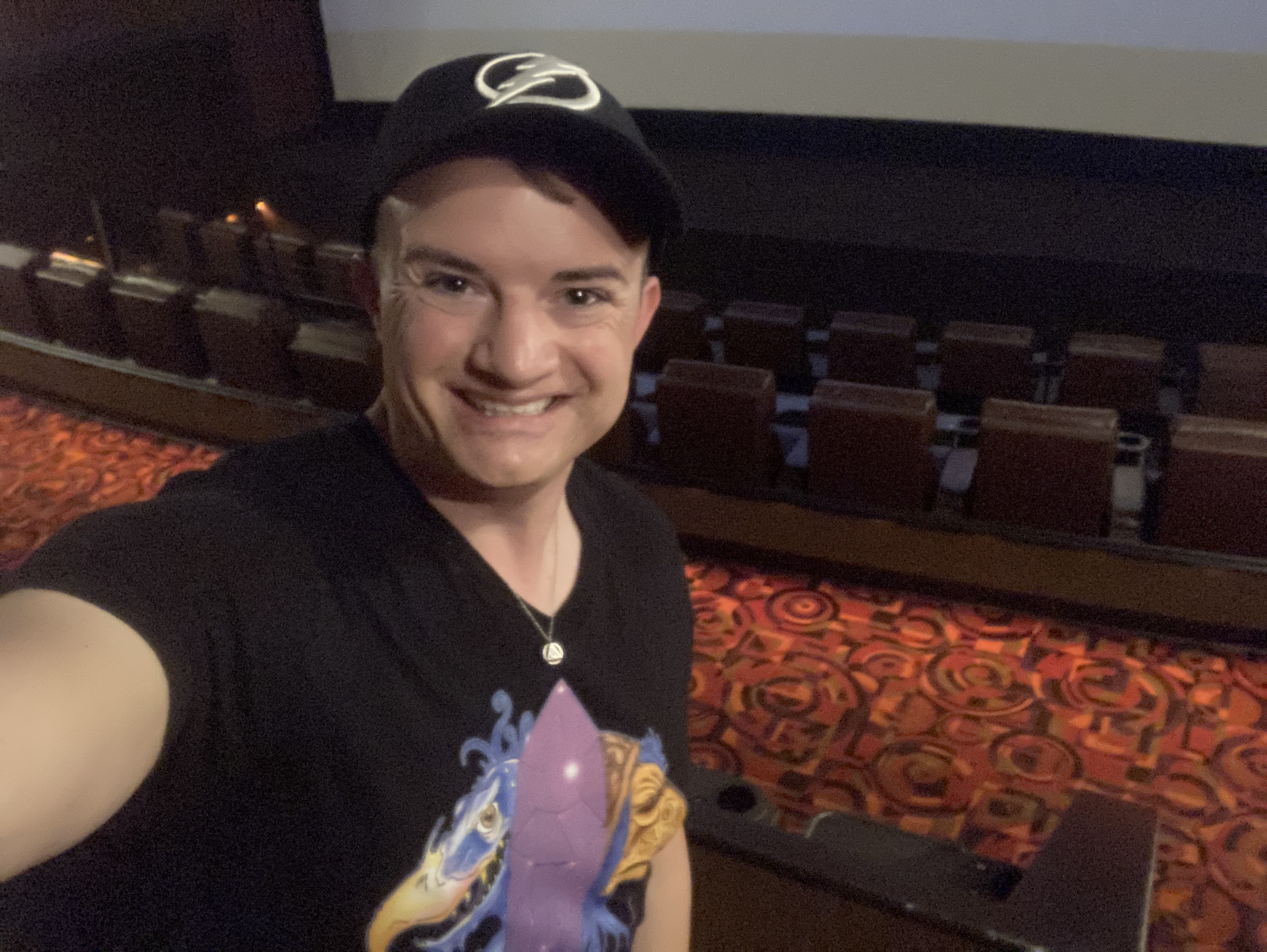
Ryan teaches Film Studies and Screenwriting at the University of Tampa and is a member of the Critics Association of Central Florida and Indie Film Critics of America. If you like this article, check out the others and FOLLOW this blog! Interested in Ryan making a guest appearance on your podcast or contributing to your website? Send him a DM on Twitter. If you’re ever in Tampa or Orlando, feel free to catch a movie with him.
 R.L. Terry ReelView